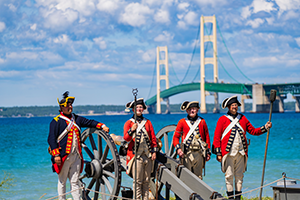

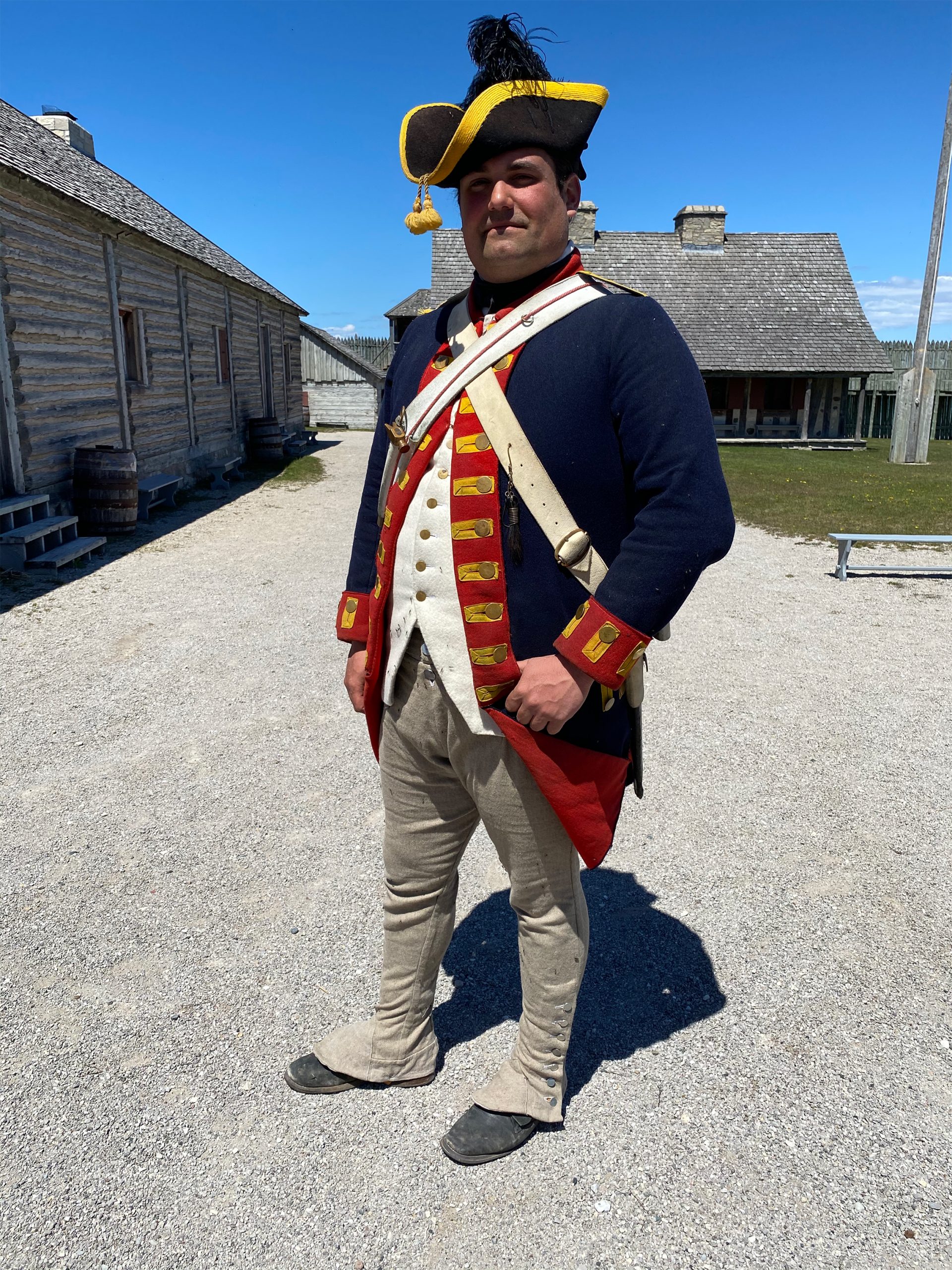
 In the 1770s, the common uniform of the British soldiers stationed at Michilimackinac and elsewhere around the world included a shirt, a waistcoat, a pair of breeches, a regimental coat, and a hat, along with accoutrements and accessories including stockings, shoes, and gaiters. The waistcoat, breeches, and regimental coat were all made of wool cloth, while shirts were linen. This uniform, broadly governed by regulations introduced in 1768, was comfortable and functional for the soldiers to wear while they performed guard duty, fatigue work, drill, and any other tasks that may have been assigned. In theory, it also served as the combat and campaign uniform.
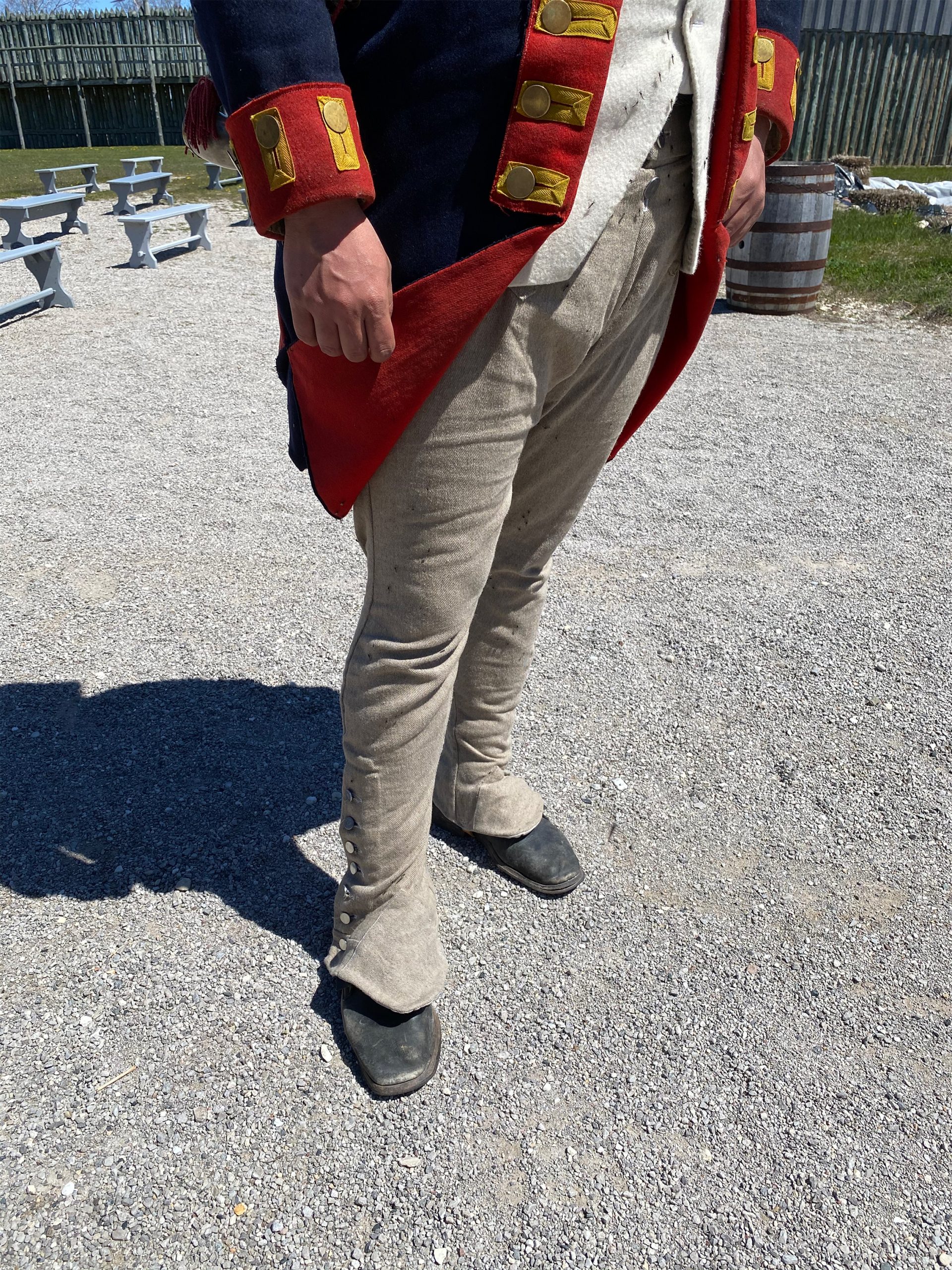
 As the American Revolution intensified in the mid- to late 1770s, and increasing numbers of British soldiers deployed to North America to fight the rebels, soldiers began receiving a new type of uniform legwear. Alternately called trousers, gaitered trousers, or overalls, these garments were constructed like breeches at the top but extended all the way down the leg, ending in a fitted ankle that covered the top of a soldier’s shoes. Trousers were usually constructed of linen, but also occasionally of cloth- one 1779 letter to an artillery soldier based at Detroit noted that blue cloth was being used for trousers, while brown was issued in other theaters. Button on the lower seams allowed the trousers to be well-fitted, especially through the calves, creating a look not unlike a modern pair of skinny jeans. Trousers such as these were not unique to the military in the 1770s, but they were a newer type of garment in British fashion. As a single piece of clothing, they eliminated the need for separate breeches, gaiters and stockings to cover the leg and consolidated the soldier’s legwear into one garment.
 Due to the complexities of how the British army supplied and dressed soldiers in the 18th century, trousers were never truly uniform in the sense that they were issued to every soldier on a regular basis. However, records from individual regiments show that they were part of the uniform for most soldiers fighting in North America. Already a practical garment, in some instances trousers were an expedient when normal sources of uniform clothing became unavailable. In early 1777, for example, a Royal Artillery officer in Montreal ordered “all the old tents” to be “cut up into Trowsers for the Men.” The tents, made of sturdy linen, provided the raw materials for soldier-tailors to transform into trousers at a time when American naval activity had disrupted the normal flow of supplies to the British army in Canada.
From about 1777 onward, trousers were an increasingly common part of the uniform worn by British soldiers in North America. Although breeches also remained in use (several regimental orderly books note tailors sewing both trousers and breeches for the men), trousers were regularly worn on campaign, in warm climates, or simply as part of the everyday uniform. This year at Colonial Michilimackinac, we continue our extended look at the Revolutionary era at Mackinac by focusing specifically on 1776. On your visit to Colonial Michilimackinac see if you can spot our interpretive staff wearing these clothes, and ask them about what they’re wearing! Visit our website for tickets and more information.
Interested in learning more about historic clothing? Greatcoats: Another Winter Garment, Surviving the Canadian Climate: British Winter Uniforms, A New Gown at Michilimackinac.
Editors note: Thanks to Mark Canady for providing some of the historic resources used for this post.