
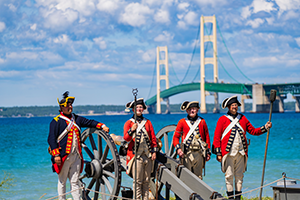

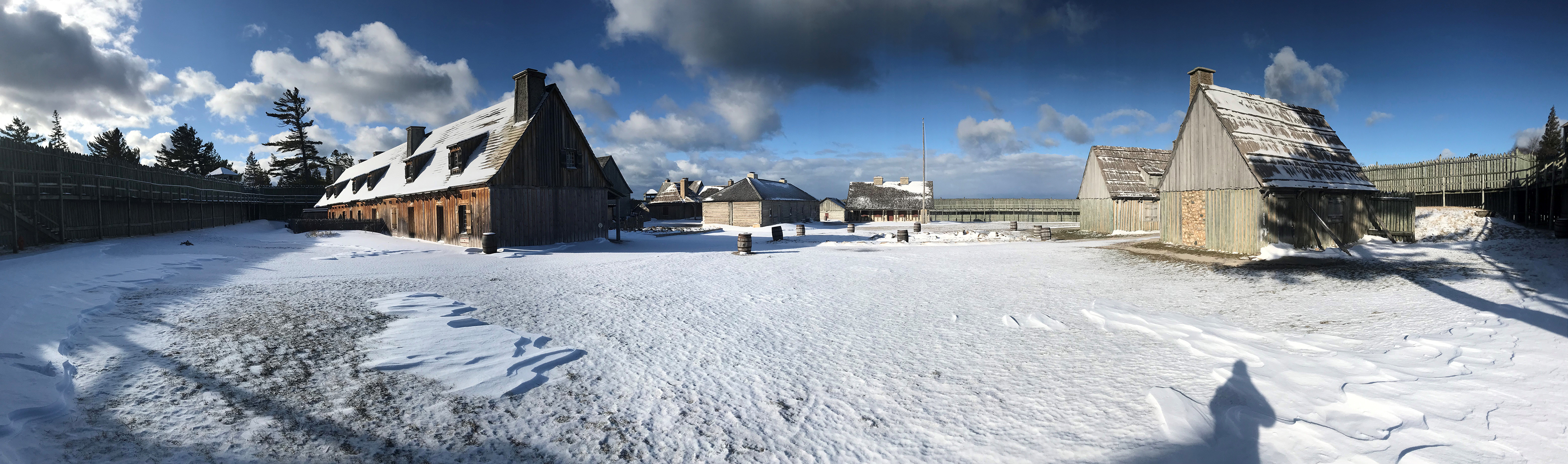
When guests visit Colonial Michilimackinac during the summer months, they see historical interpreters dressed for pleasant weather in the 1770s. During the American Revolution, many people lived at Mackinac during the summer, returning to larger communities like Detroit, Montreal, or Quebec during the winter. However, a small group of soldiers and civilians lived here year round, and visitors often wonder: 250 years ago, what did they do they when it got cold?
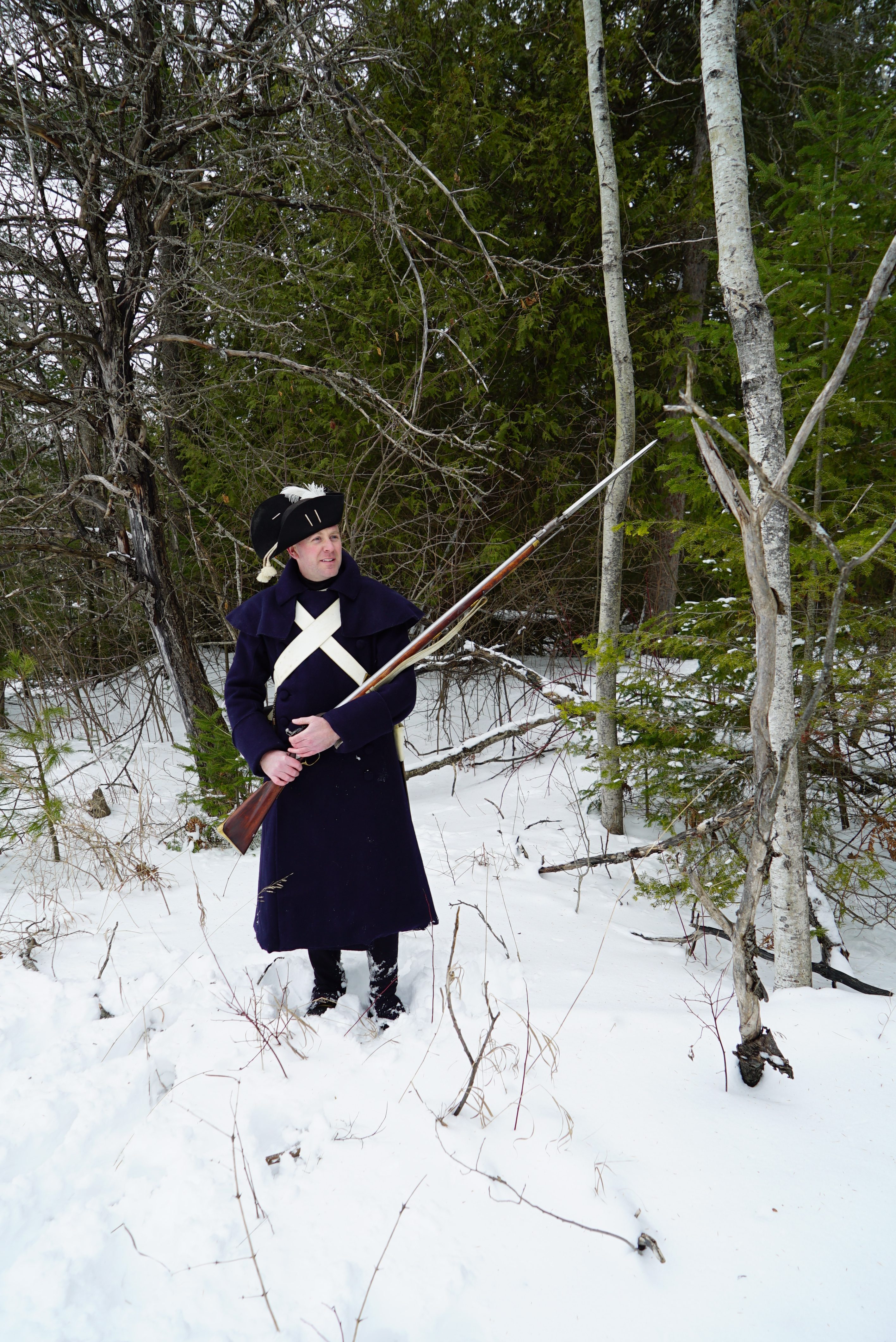
In the 18th century, men at Michilimackinac had a variety of options for cold-weather gear. Perhaps the most common was the capot, a hooded wool coat originally of French-Canadian origin which tied or buttoned across the chest. Capots could be new made from wool broadcloth, or a similar garment could be constructed from a blanket. By the mid-1770s the British army in Canada issued soldiers blanket coats, leggings, and caps. Yet another foul weather garment, worn by both soldiers and civilians, was the greatcoat.
Greatcoats were common throughout British society by the middle of the 18th century. A large overcoat with calf-length skirts, deep cuffs, and a small cape over the shoulders, greatcoats provided protection against cold and wet weather. Greatcoats were usually constructed from thick wool, sometimes called bearskin (not actually the skin of a bear, just a heavily twilled type of wool with a shaggy nap). The capes could either be worn down, falling over the shoulders, or buttoned up over the wearer’s mouth and nose for additional warmth. Greatcoats came in several colors and could be trimmed with ribbon or velvet, especially around the collar and cape, creating a fashionable piece of outerwear. As with blanket coats, the military adopted greatcoats for soldiers. In the British army, greatcoats were not issued to individual soldiers, but each company received a small number of coats which the soldiers shared when posted on guard duty. Army greatcoats were typically blue, and A related civilian garment, the surtout, offered similar protection against the elements, but was typically more fitted and lacked the falling cape.
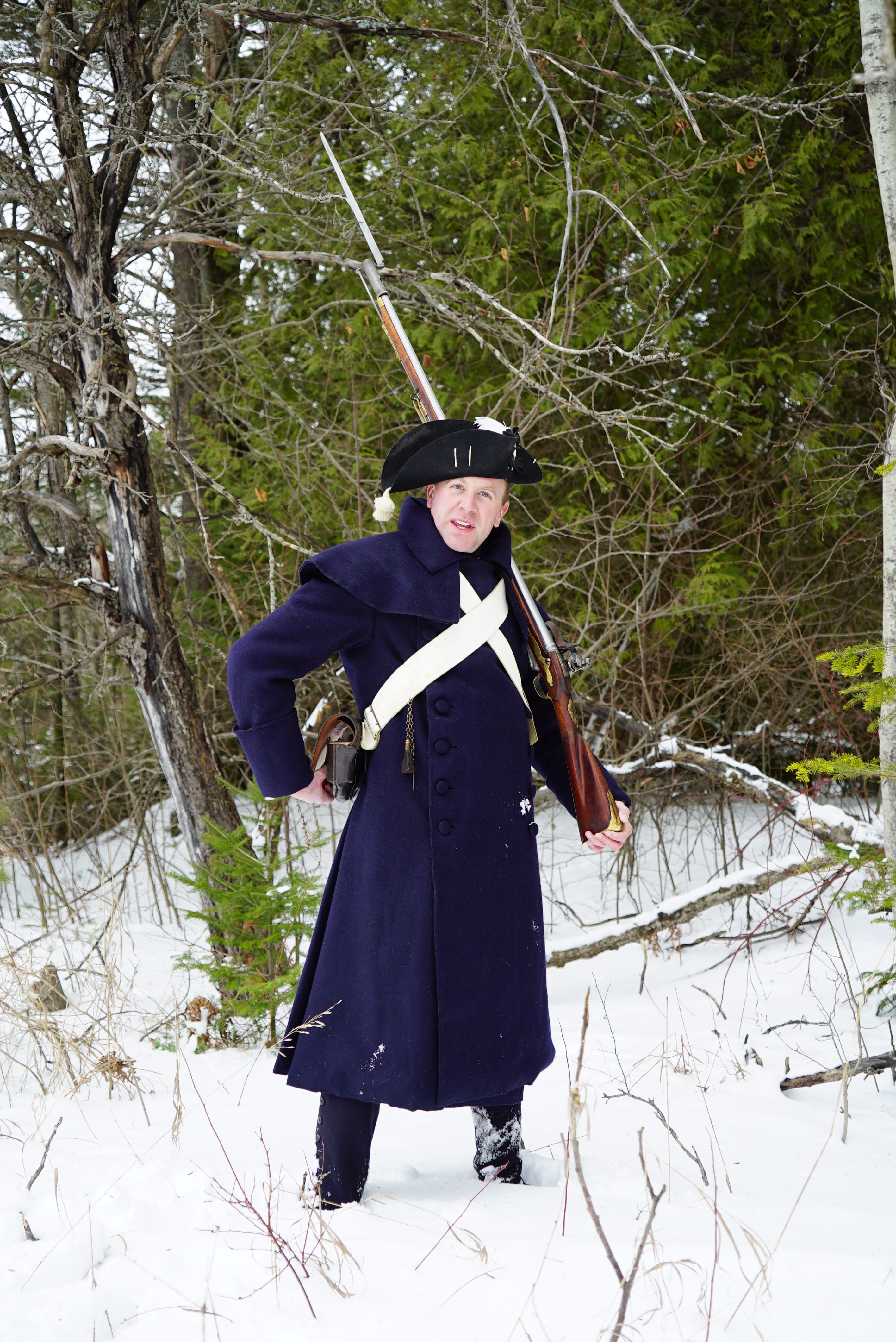 We have several greatcoats in our interpretive clothing collection at Colonial Michilimackinac. Funded in part by the generosity of Mackinac Associates, these greatcoats will help keep out interpreters warm as they travel the state for our education outreach programs as well as future wintertime special events at Michilimackinac.