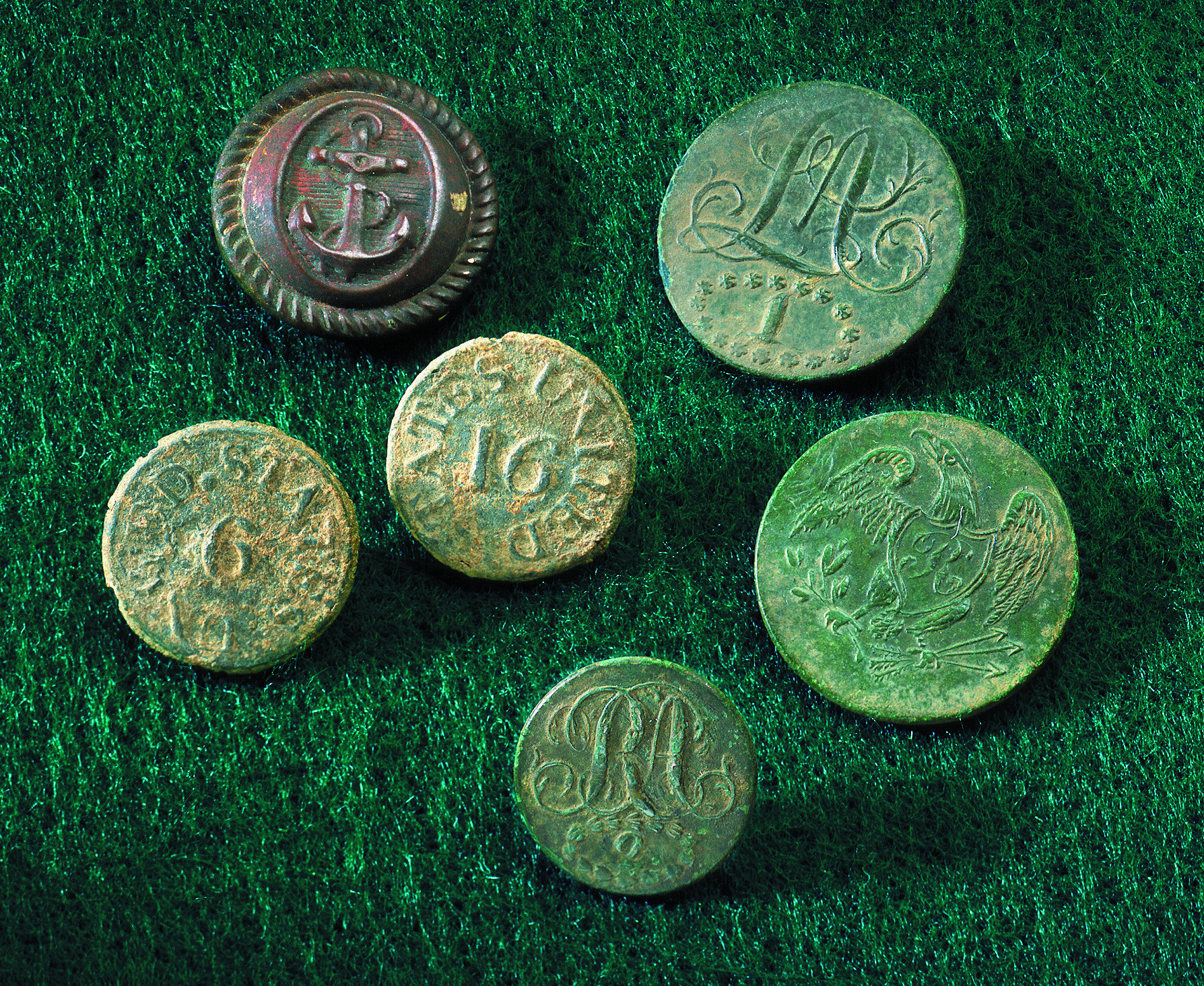
East Blockhouse Buttons
The foundation of the east blockhouse was repaired during the recent restoration of the Fort Mackinac wall and other masonry work at the fort. Numerous buttons were found around the


The foundation of the east blockhouse was repaired during the recent restoration of the Fort Mackinac wall and other masonry work at the fort. Numerous buttons were found around the
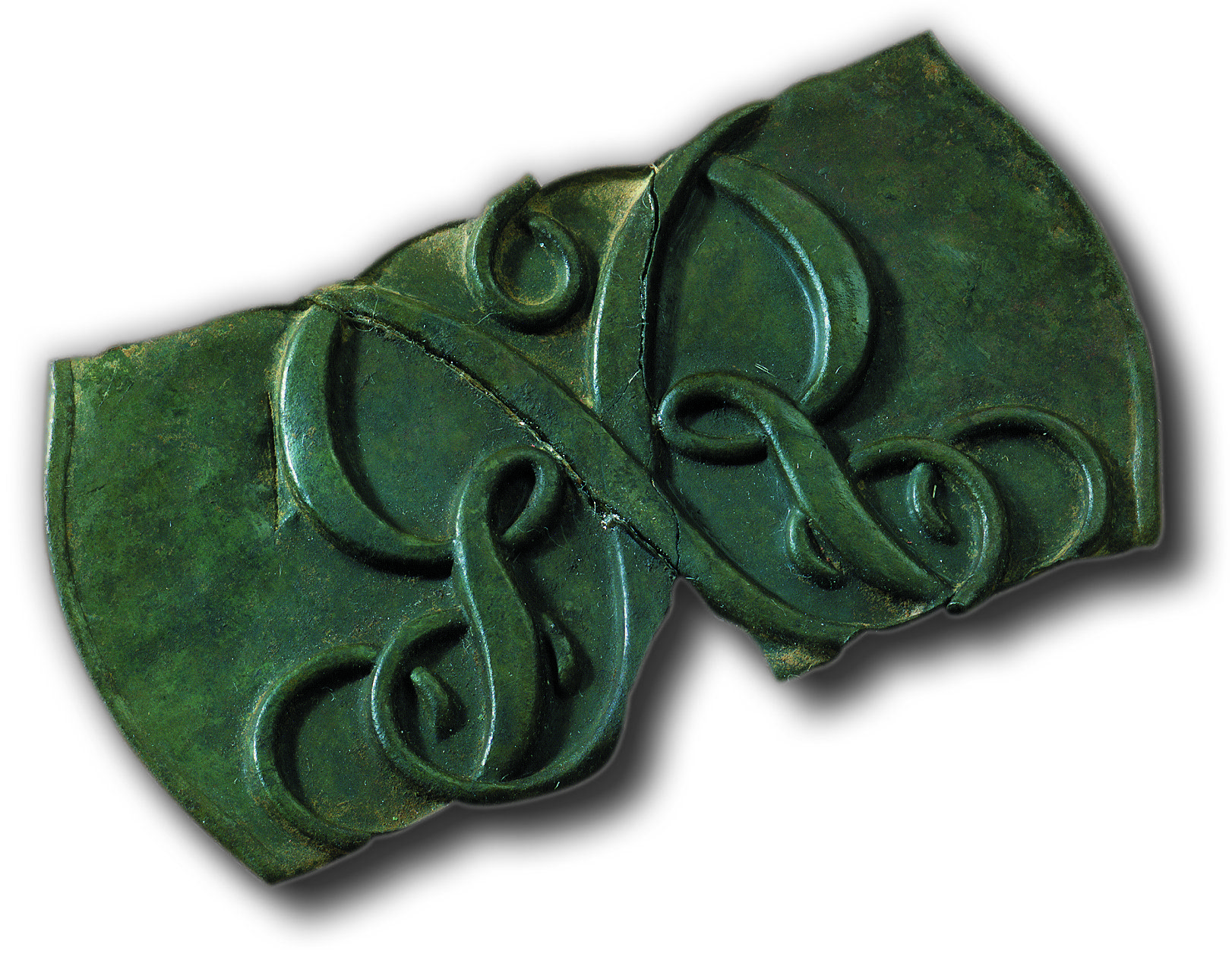
This hat plate fragment is from a “Belgic” shako, first issued to British troops in 1811. This equipment did not arrive at Mackinac until the autumn of 1813. This style
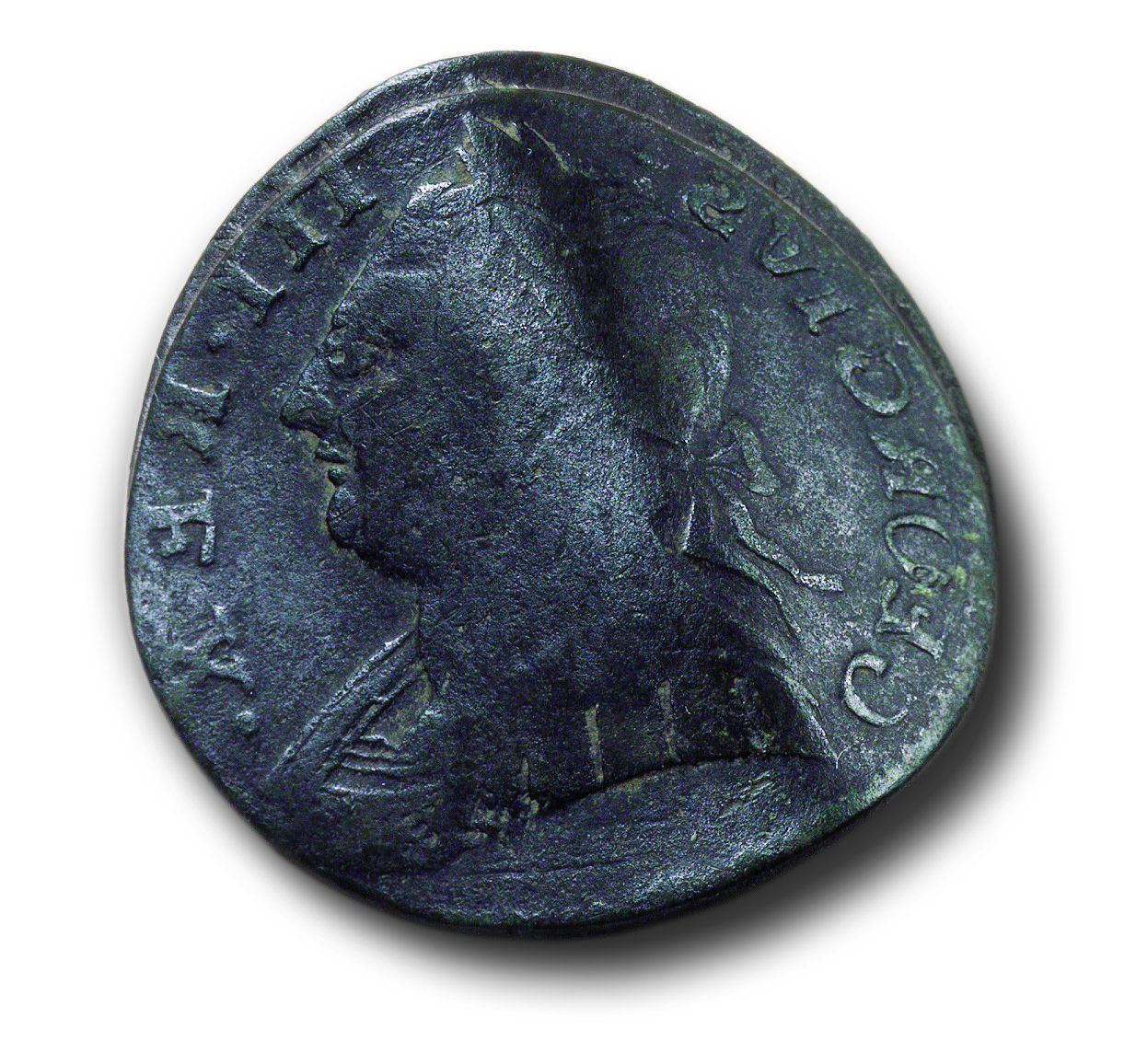
This 1776 George III halfpenny actually predates Fort Mackinac. It was found during the restoration of the fort wall. One of the soldiers who helped build the fort between 1779
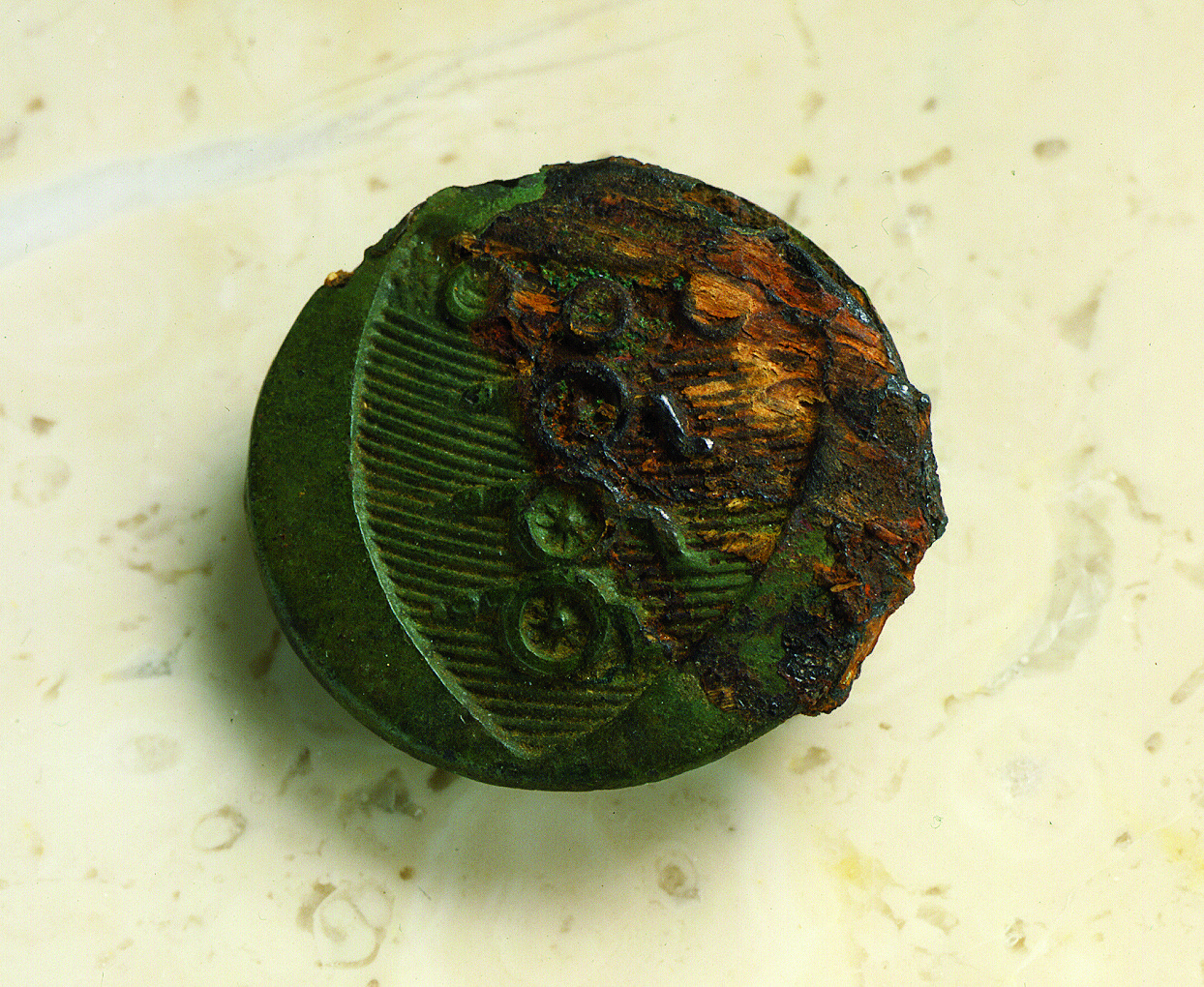
A few men from the Royal Regiment of Artillery were stationed at Fort Mackinac during the entire early British period (1779-1796). This gilt officer’s button from that regiment belonged to
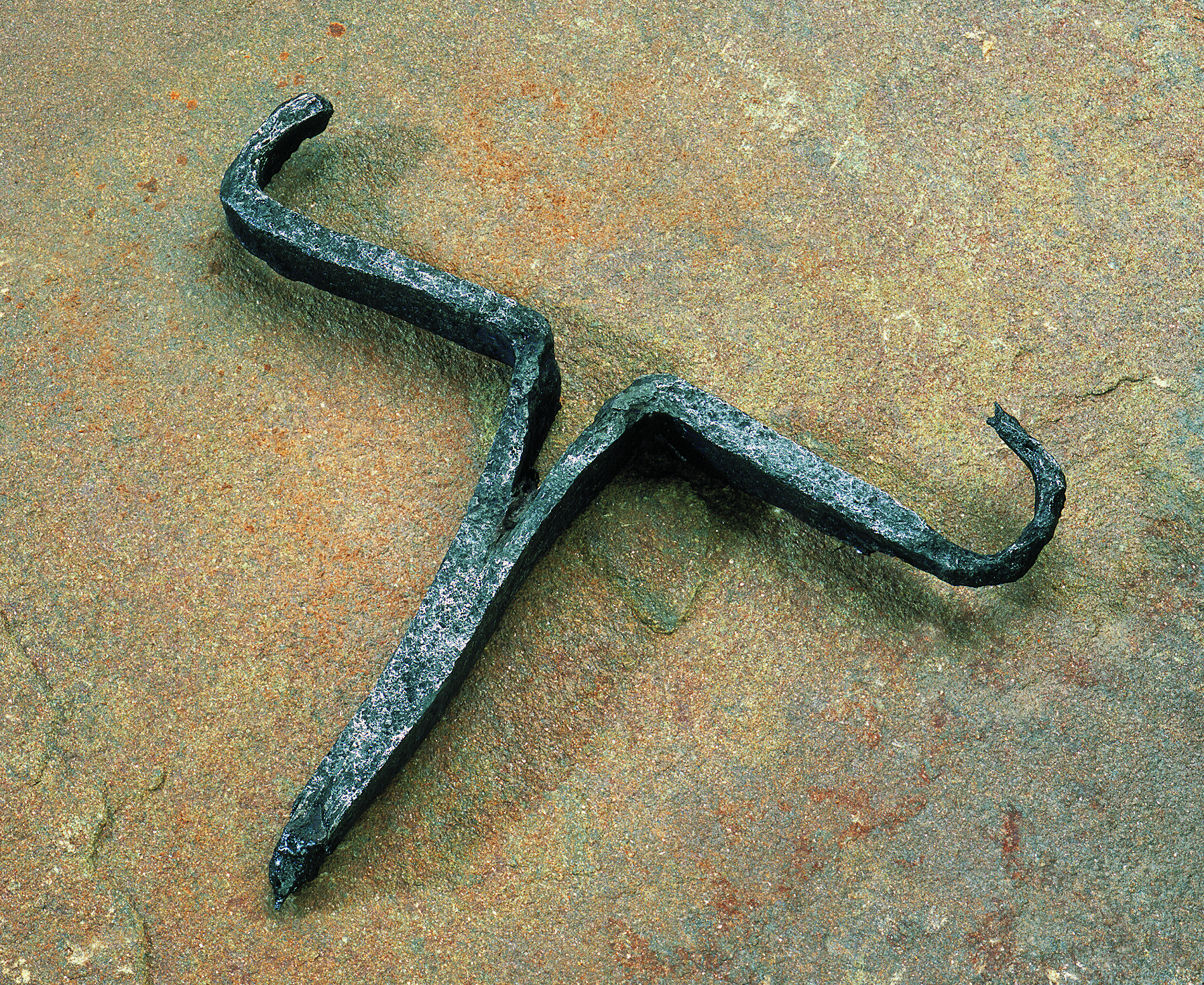
The provision storehouse was one of the buildings moved from Fort Michilimackinac to Fort Mackinac, where it was located behind and under the 1828 post hospital. Its location was excavated
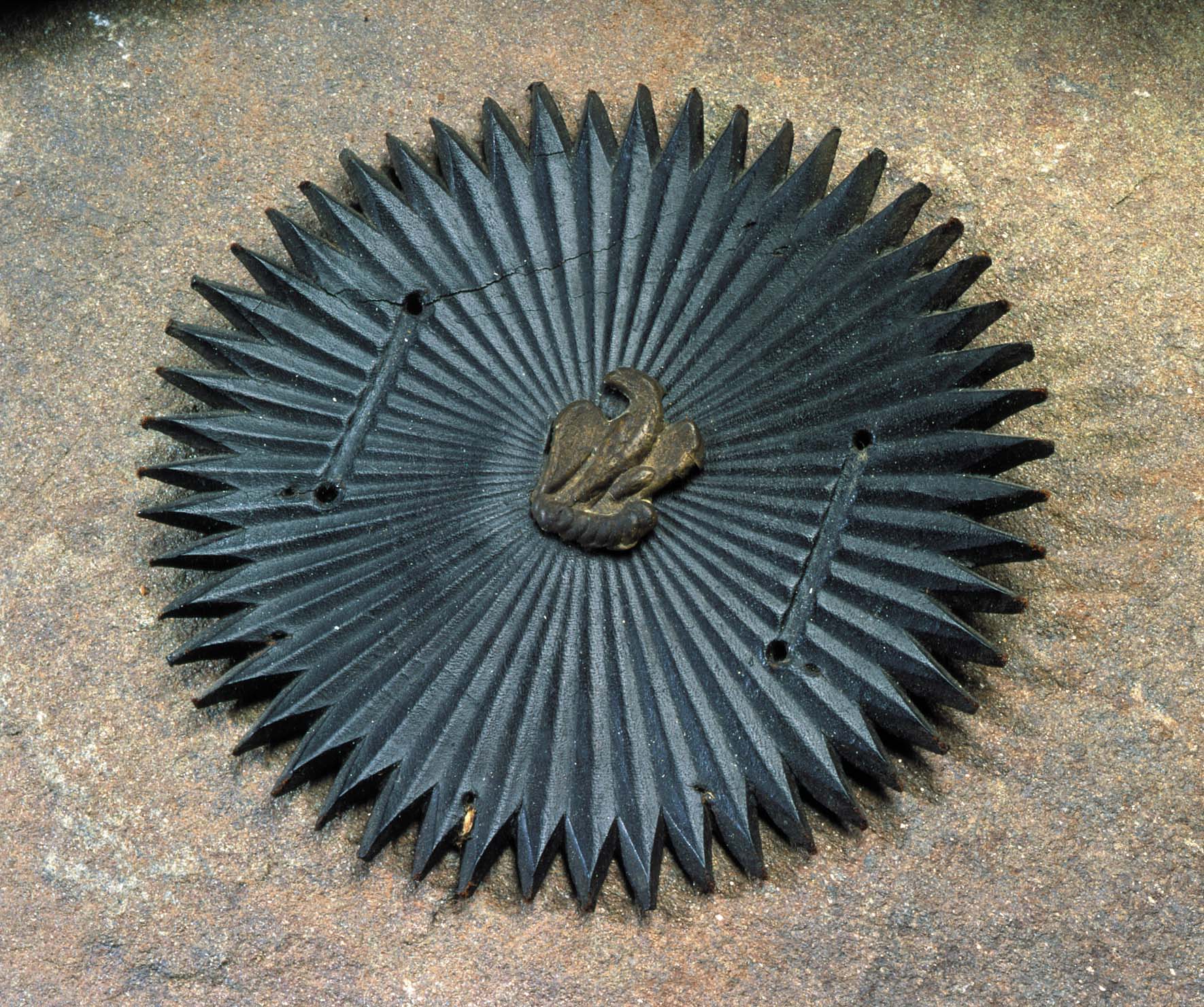
An artilleryman at Fort Mackinac between 1802 and 1808 wore this leather cockade with brass eagle. Workmen restoring the East Blockhouse in 1967 found it on top of a ceiling
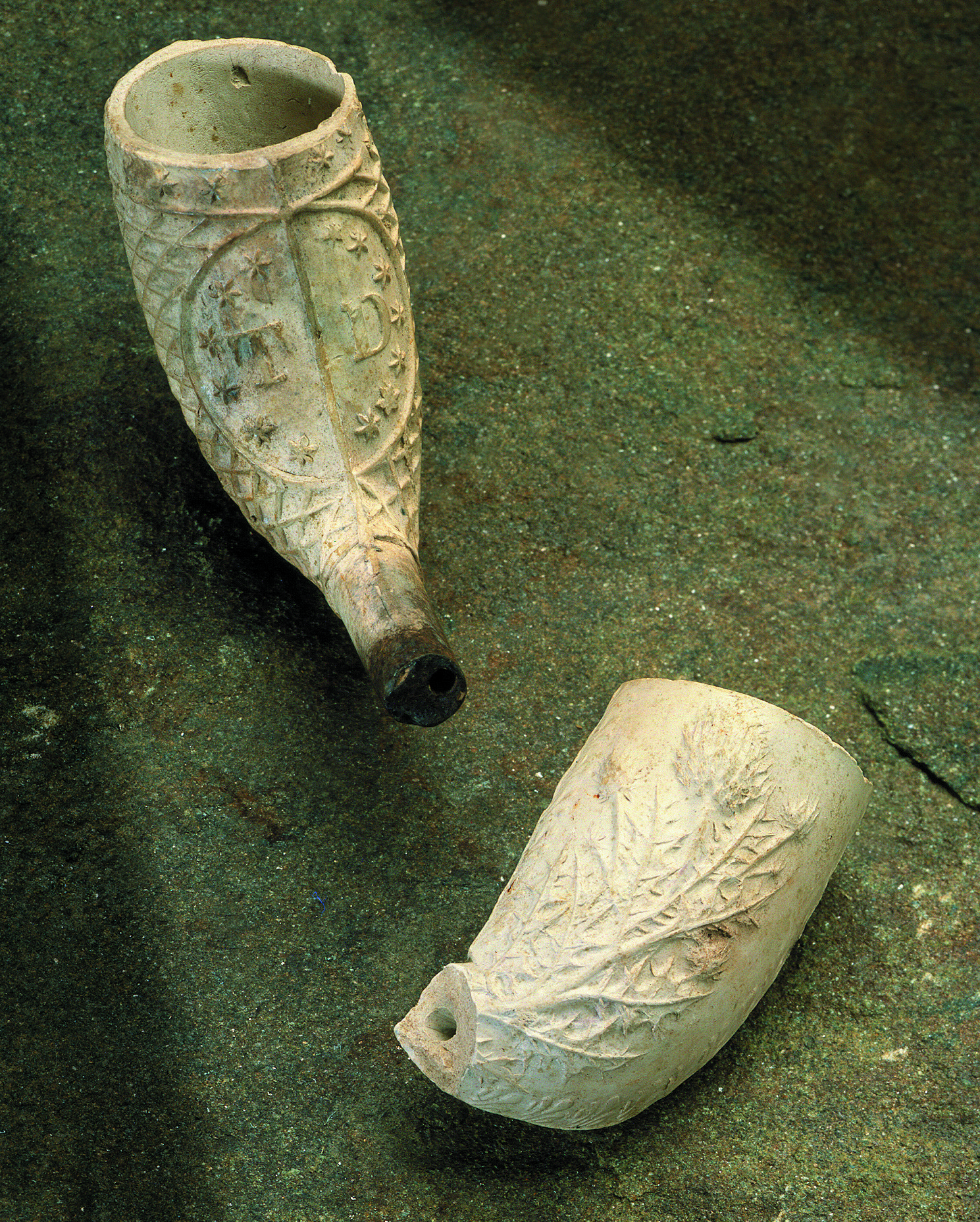
White clay pipes are commonly found at British and American sites dating from the eighteenth to mid-nineteenth century. We find them at both mainland and island sites in the straits