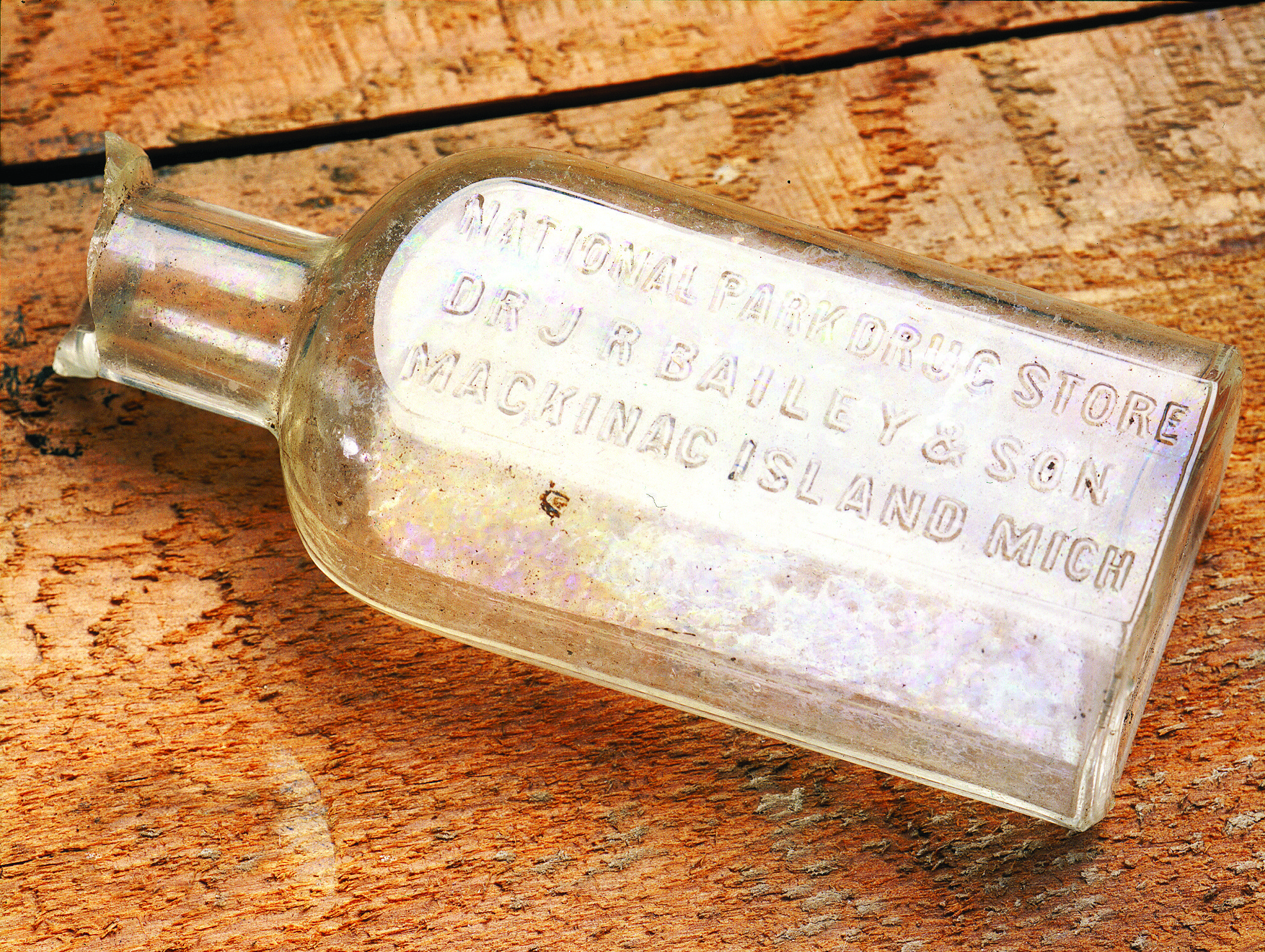
National Park Drug Store Bottle
This pharmaceutical bottle was manufactured for the NATIONAL PARK DRUG STORE, DR J R BAILEY & SON, MACKINAC ISLAND MICH. The Bailey family ran a pharmacy and general store for


This pharmaceutical bottle was manufactured for the NATIONAL PARK DRUG STORE, DR J R BAILEY & SON, MACKINAC ISLAND MICH. The Bailey family ran a pharmacy and general store for
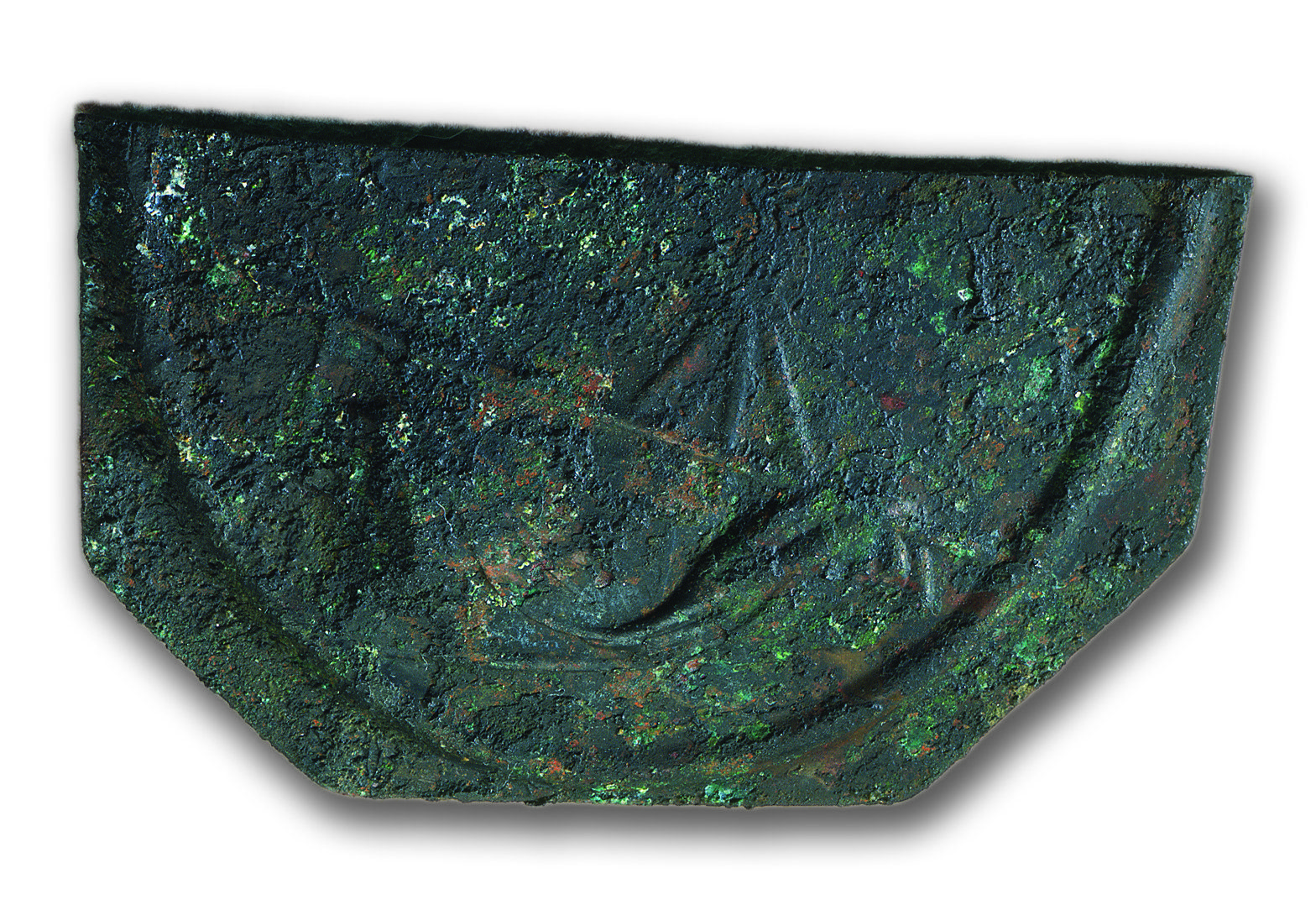
This is the lower half of a plate that would have gone on the front of an American infantryman’s hat from 1814 to 1821. The design, though difficult to make
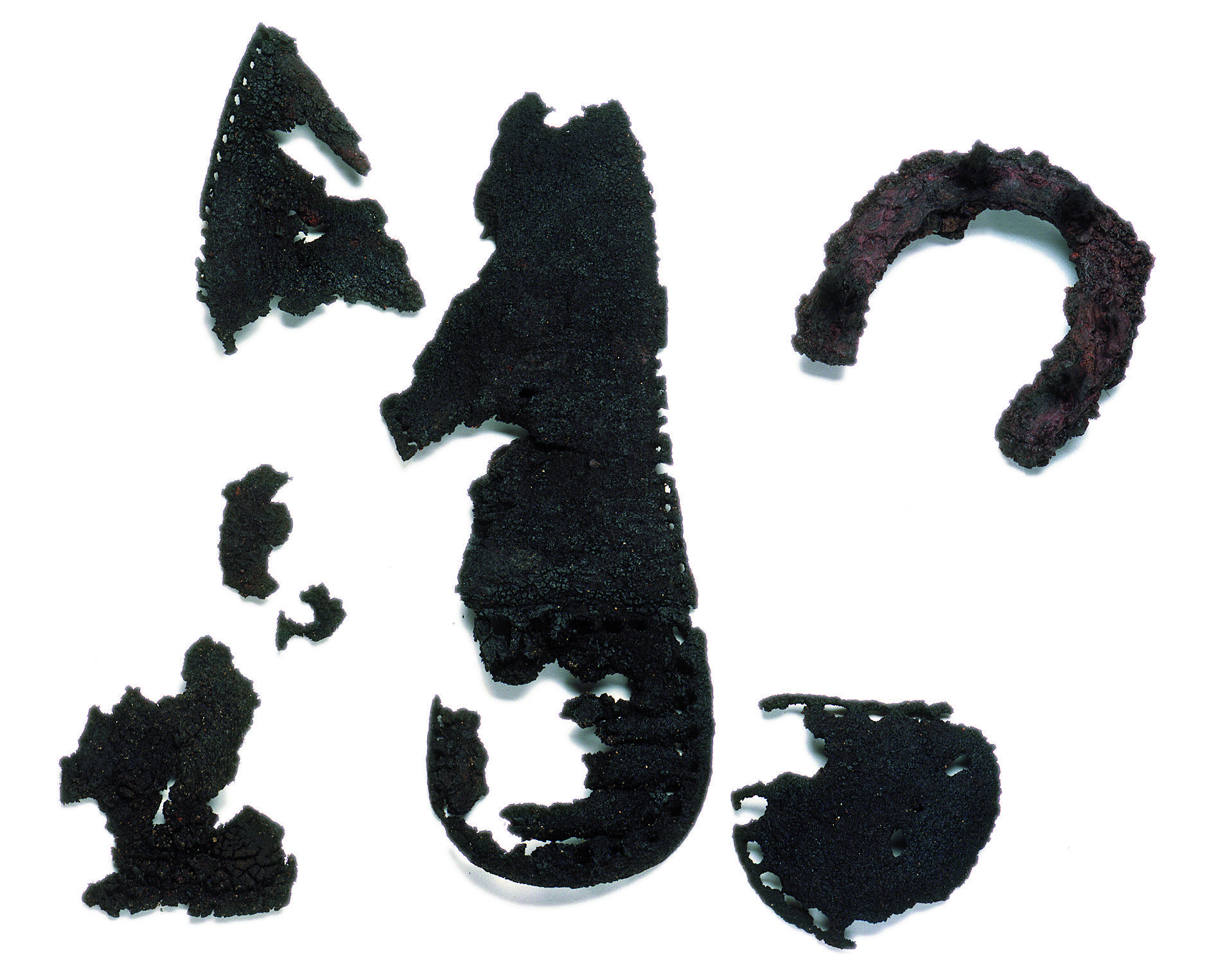
Following the War of 1812, the rooms of the provision storehouse building were used for a variety of other purposes. In 1816 one of these was housing tailors and shoemakers
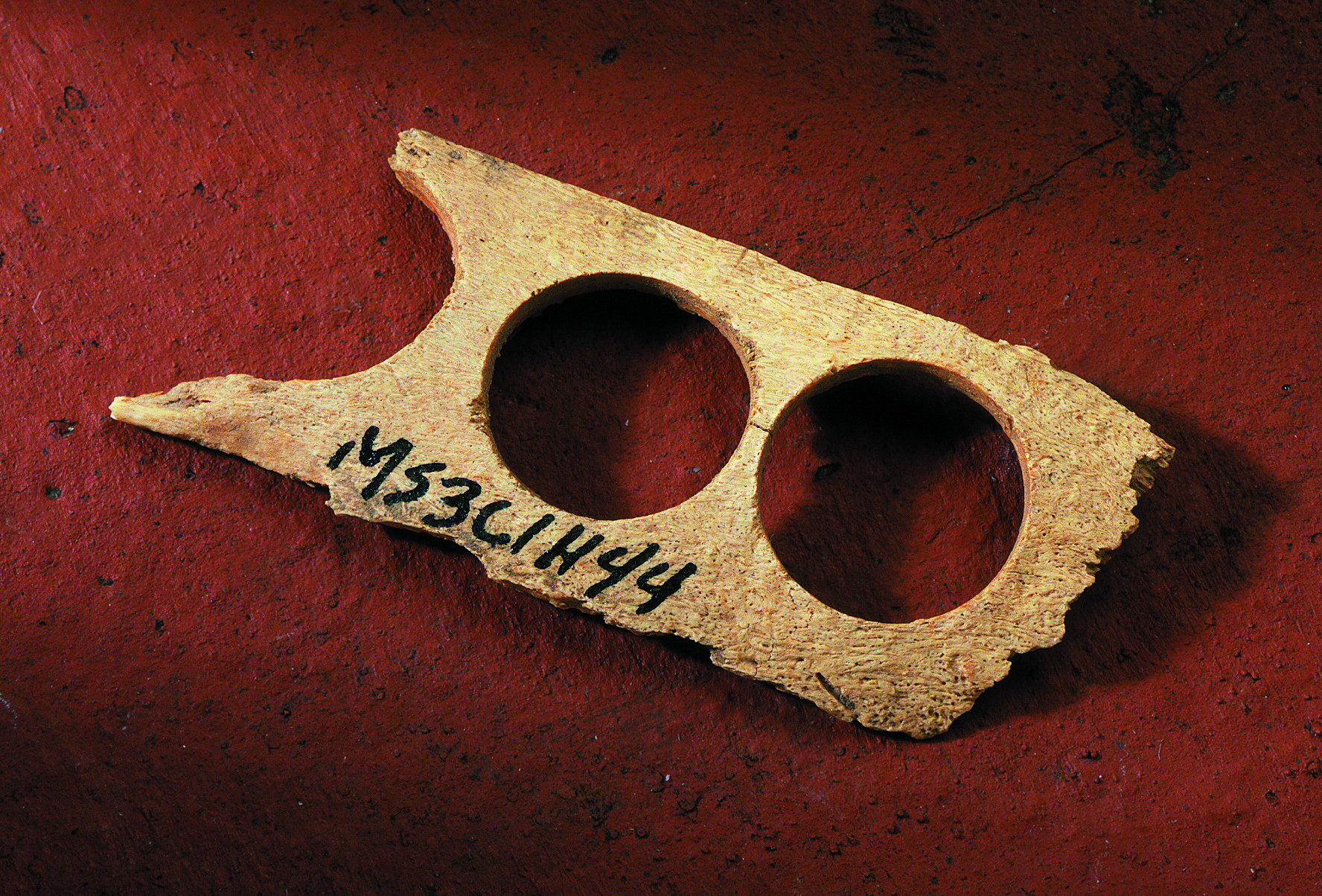
This piece of bone is scrap from the making of bone button backs. A circular drill was used to cut bone discs from flat pieces of animal bone. These bone
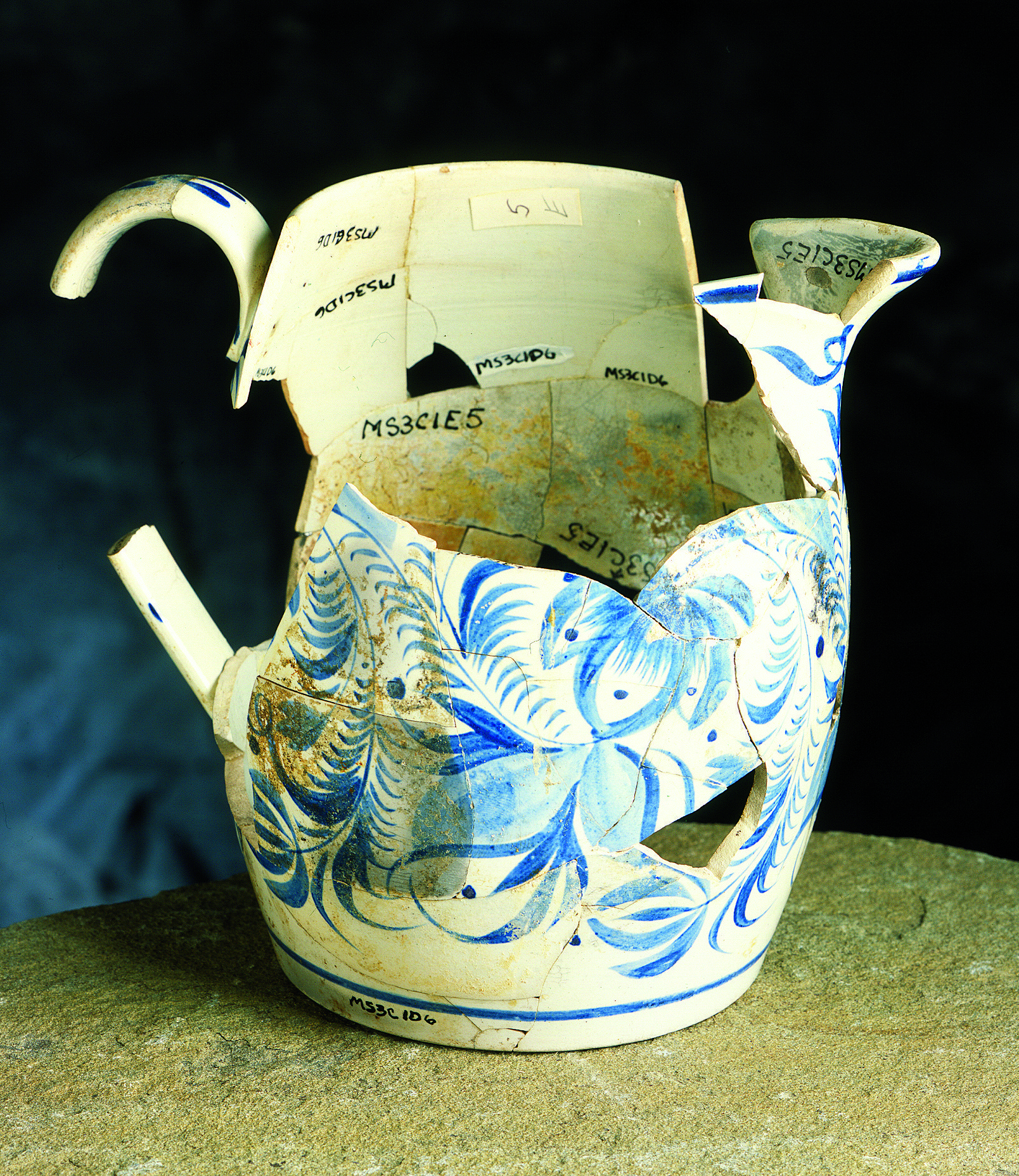
Pearlware was a common type of ceramic in the early nineteenth century. Even after transfer printing was developed, hand-painted designs continued, and were somewhat cheaper. This reassembled pitcher is one
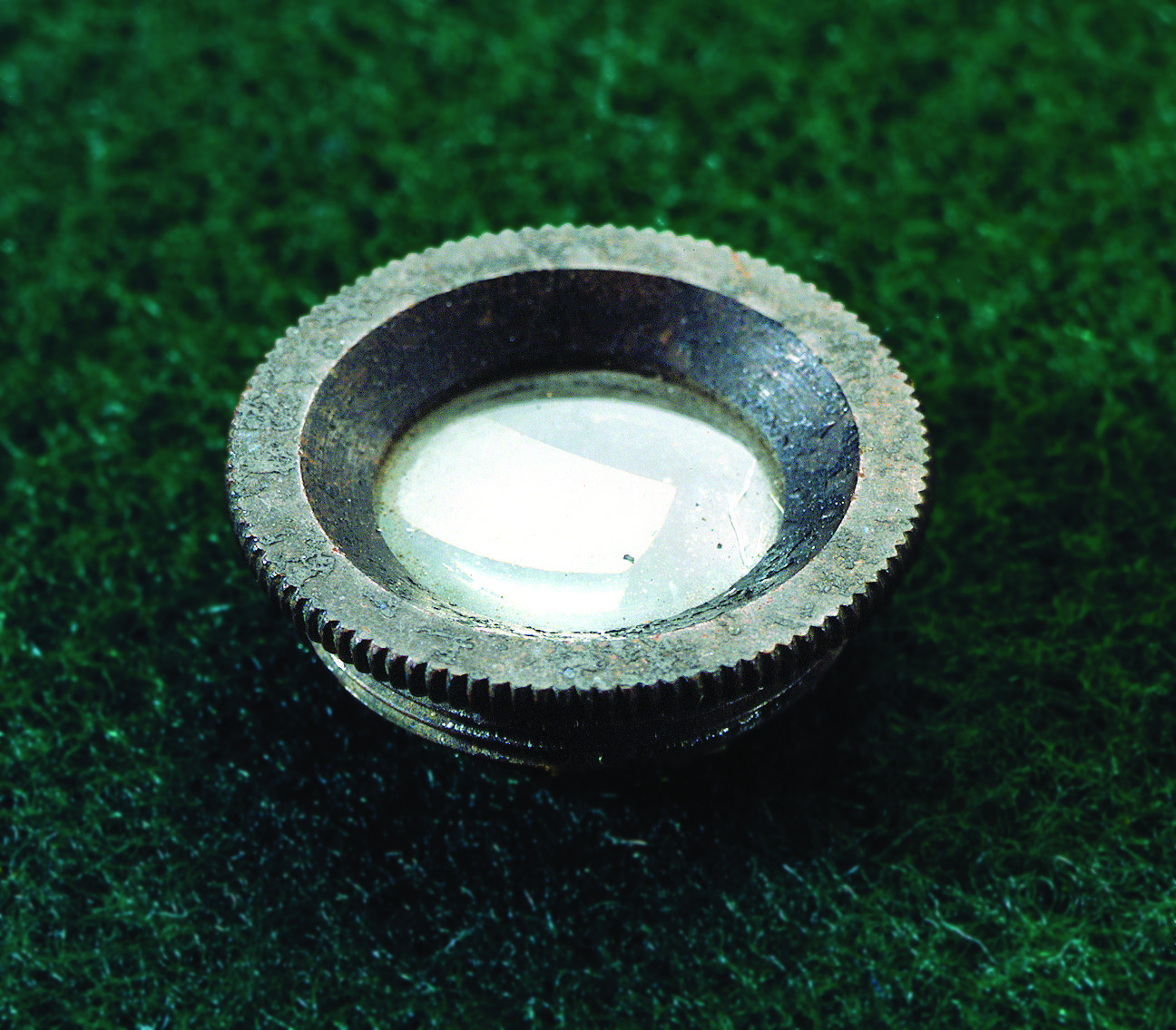
Part of the provision storehouse was used as the post hospital from about 1815 until it was razed and rebuilt in 1827. This objective lens from a microscope was used
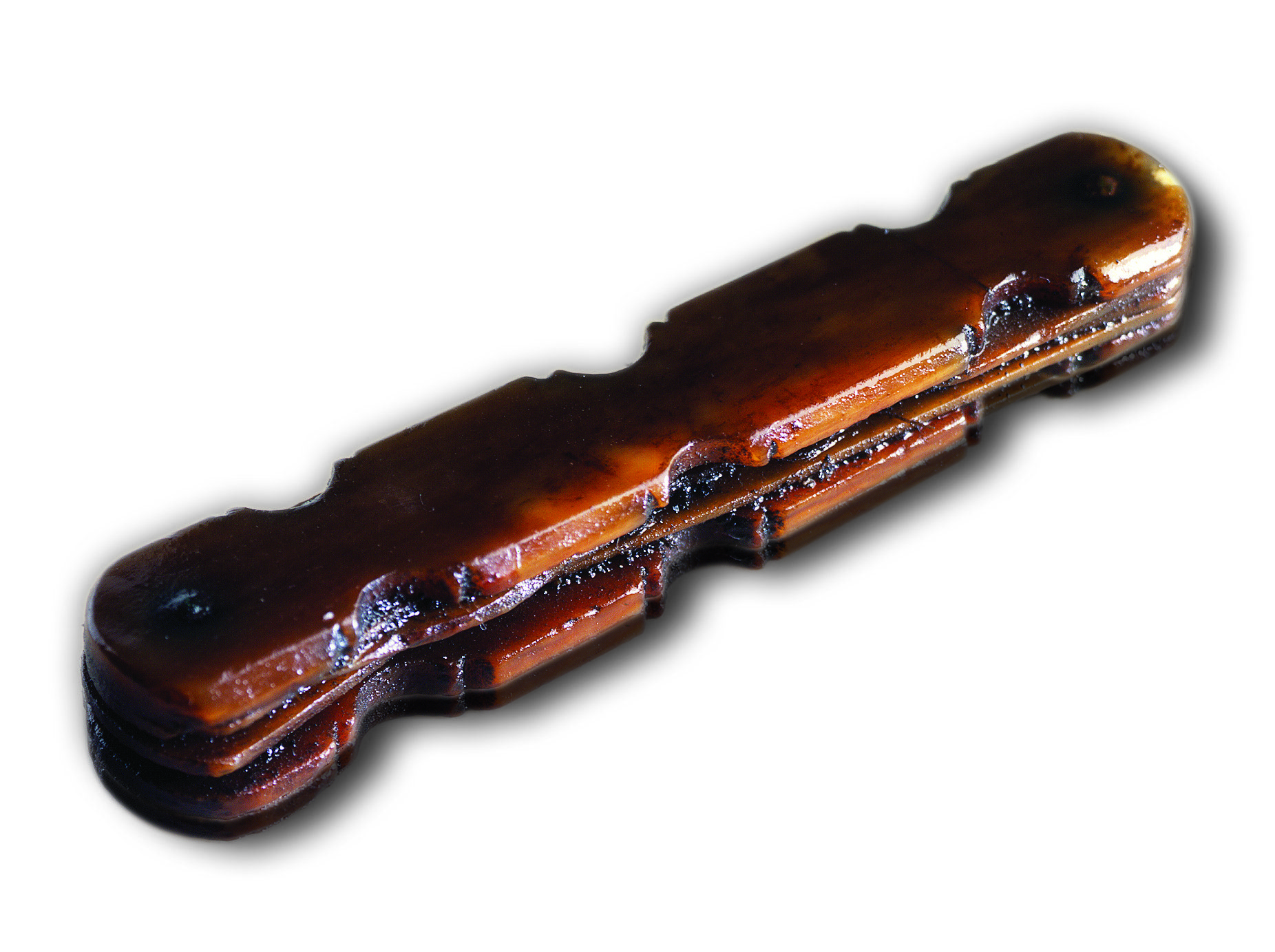
This little knife is carved entirely from bone, including the blades. Someone must have spent many hours crafting this as a showpiece or gift. It has no practical function.
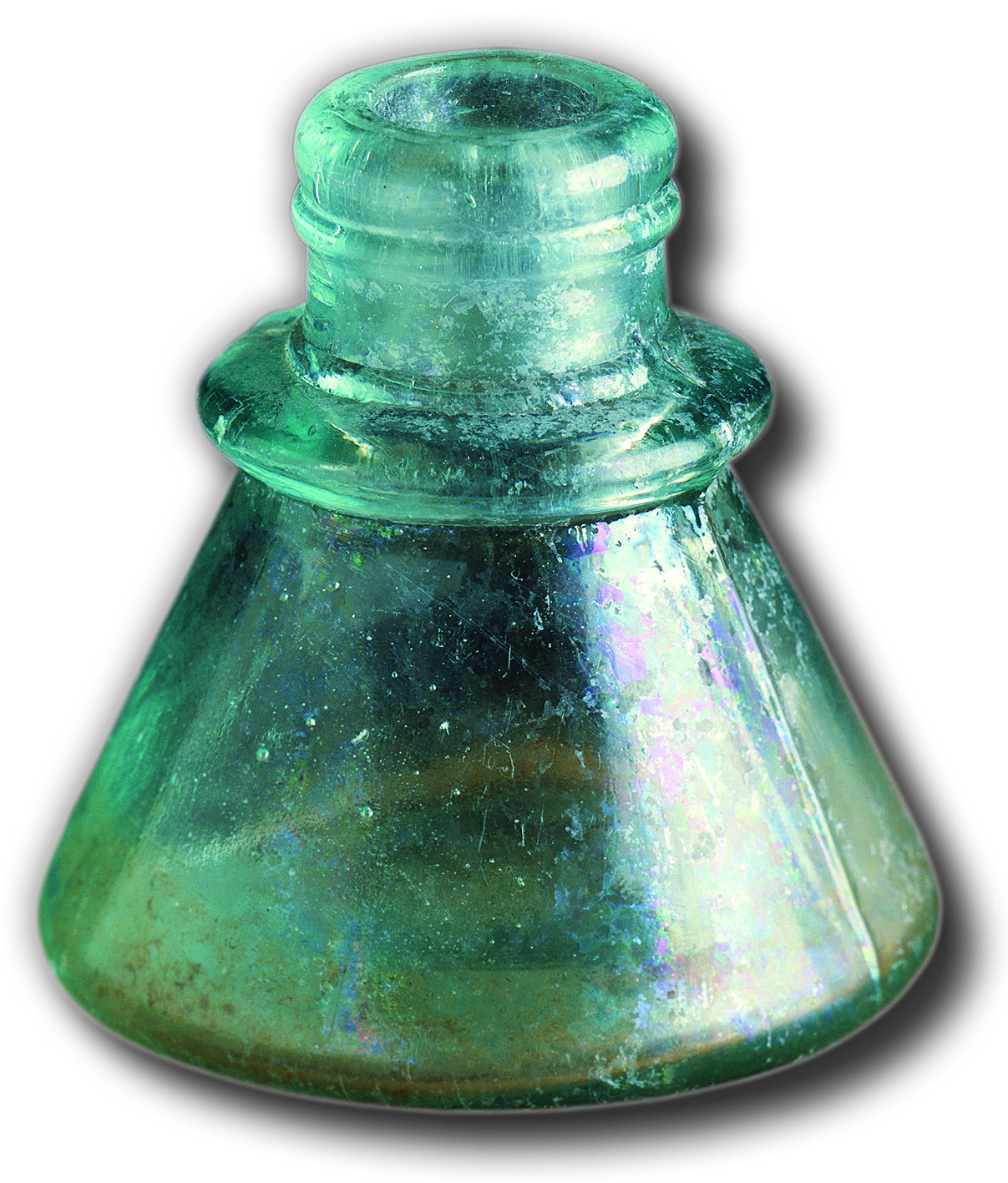
Ink bottles are common in trash pits outside Fort Mackinac. Cone shaped bottles like this are the most common and usually date to the nineteenth century. The bottom of this
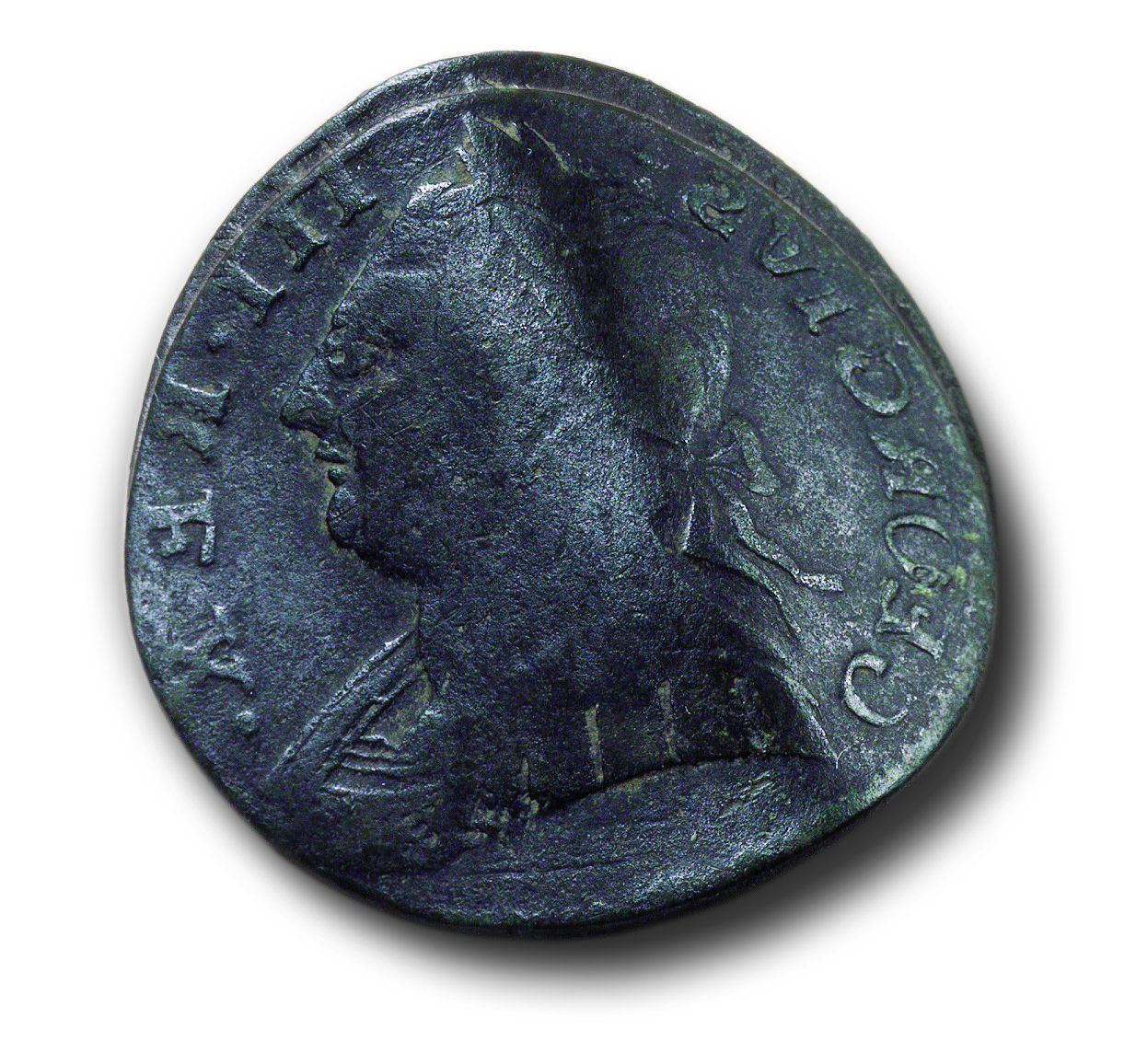
This 1776 George III halfpenny actually predates Fort Mackinac. It was found during the restoration of the fort wall. One of the soldiers who helped build the fort between 1779