


In 1776, the American War of Independence impacted life at Michilimackinac. While the site remained loyal to the Crown, the American Revolution forced the British military to reconsider its defenses, and the French and Native residents were forced to take sides or attempt to remain neutral.
It’s against this backdrop that Mackinac State Historic Parks will examine America at 250 this season. Colonial Michilimackinac will explore how the historic community was directly affected by the events of 1776. Over at Fort Mackinac, interpreters will share how the American Revolution directly lead to the fort’s founding.
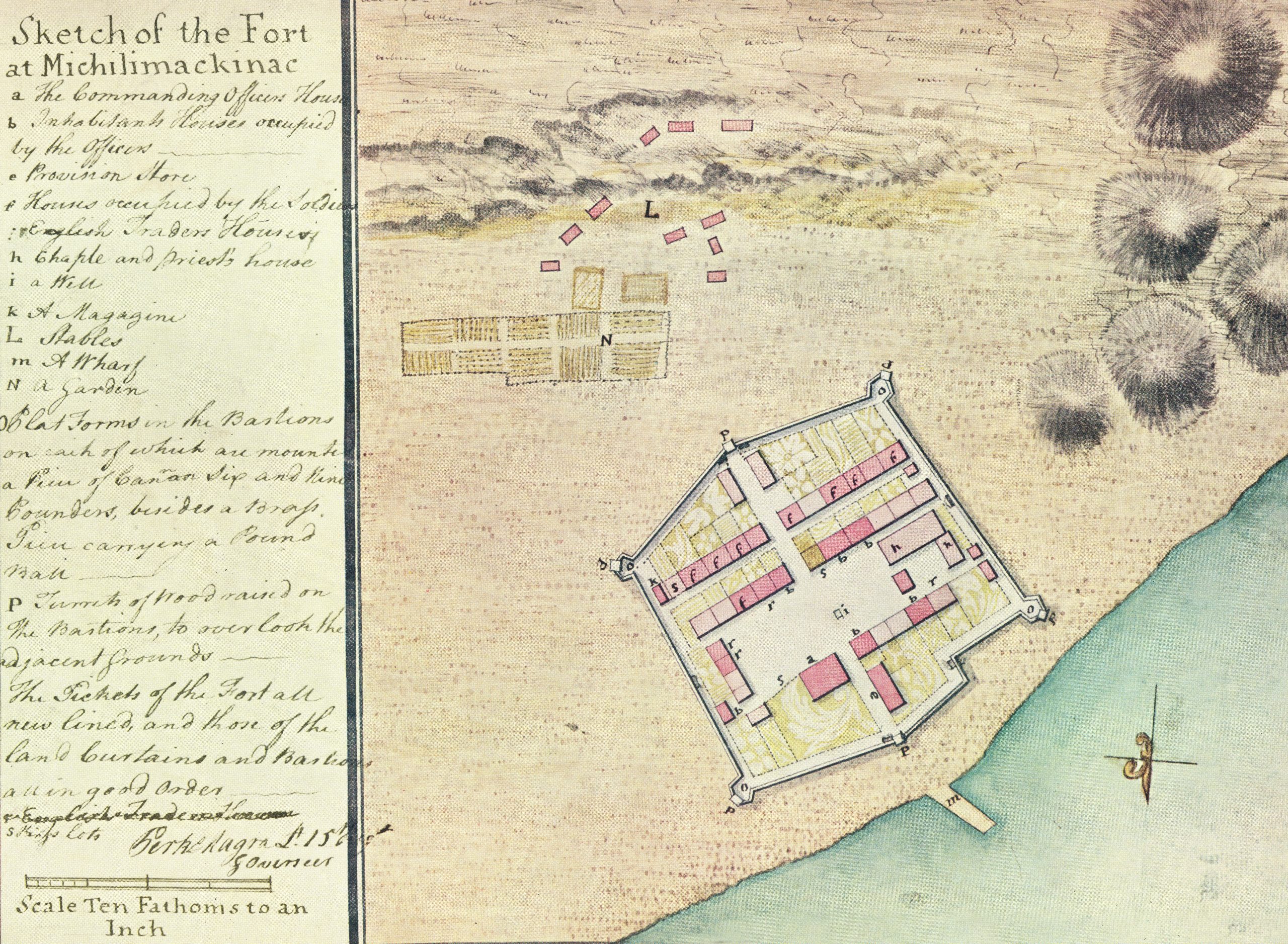
In 1715 French soldiers constructed Fort Michilimackinac. The fortified community became the center of the upper Great Lakes Fur Trade until it was moved to Mackinac Island in 1780, during the American Revolution. It originally came under British control in 1761.
History of Colonial Michilimackinac
Fort Mackinac was founded during the American Revolution. Believing Fort Michilimackinac at what is now Mackinaw City was too vulnerable to American attack, the British moved the fort to Mackinac Island in 1780. Americans took control of the fort in 1796.
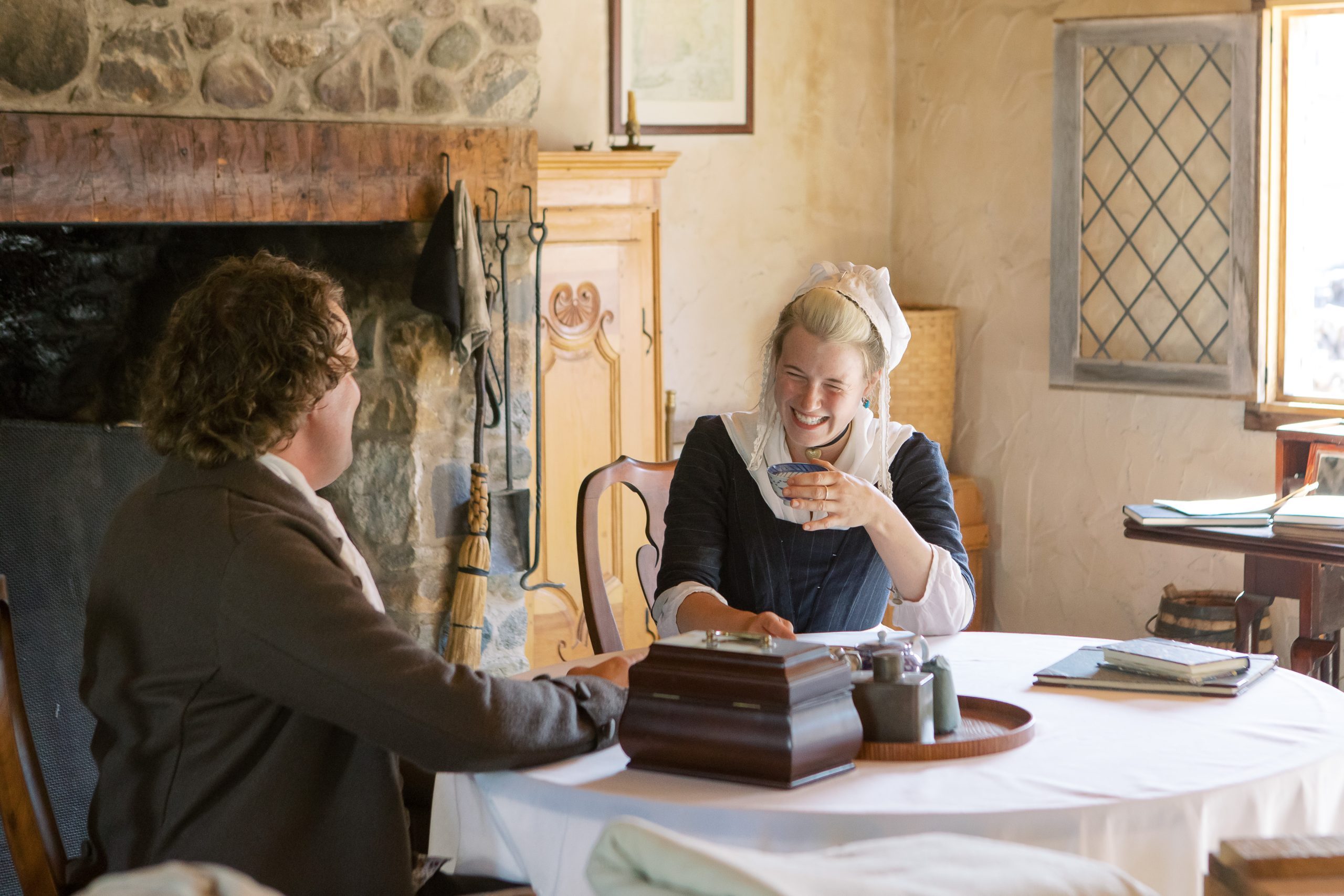 We have written numerous articles, blogs, and other entries about our historic sites and the role they played in the American Revolution, or in the shaping of the United States. Below is a sampling, but dig through our extensive blog selection to learn all about Mackinac Island and Mackinaw City.
First Failure: Michilimackinac and the 1775-76 Invasion of Canada, Colonial Cousins: Arent DePeyster, Alexander Hamilton, and the Schuylers of New York; A Short Land Pattern Musket of 1769; Trousers, Overalls or Gaitered Trousers? A New Look at Michilimackinac; Captain George Etherington: Michilimackinac’s Unfortunate Commander; Boats Boats Boats!; Black Sailors at Michilimackinac; Artillery at Fort Mackinac
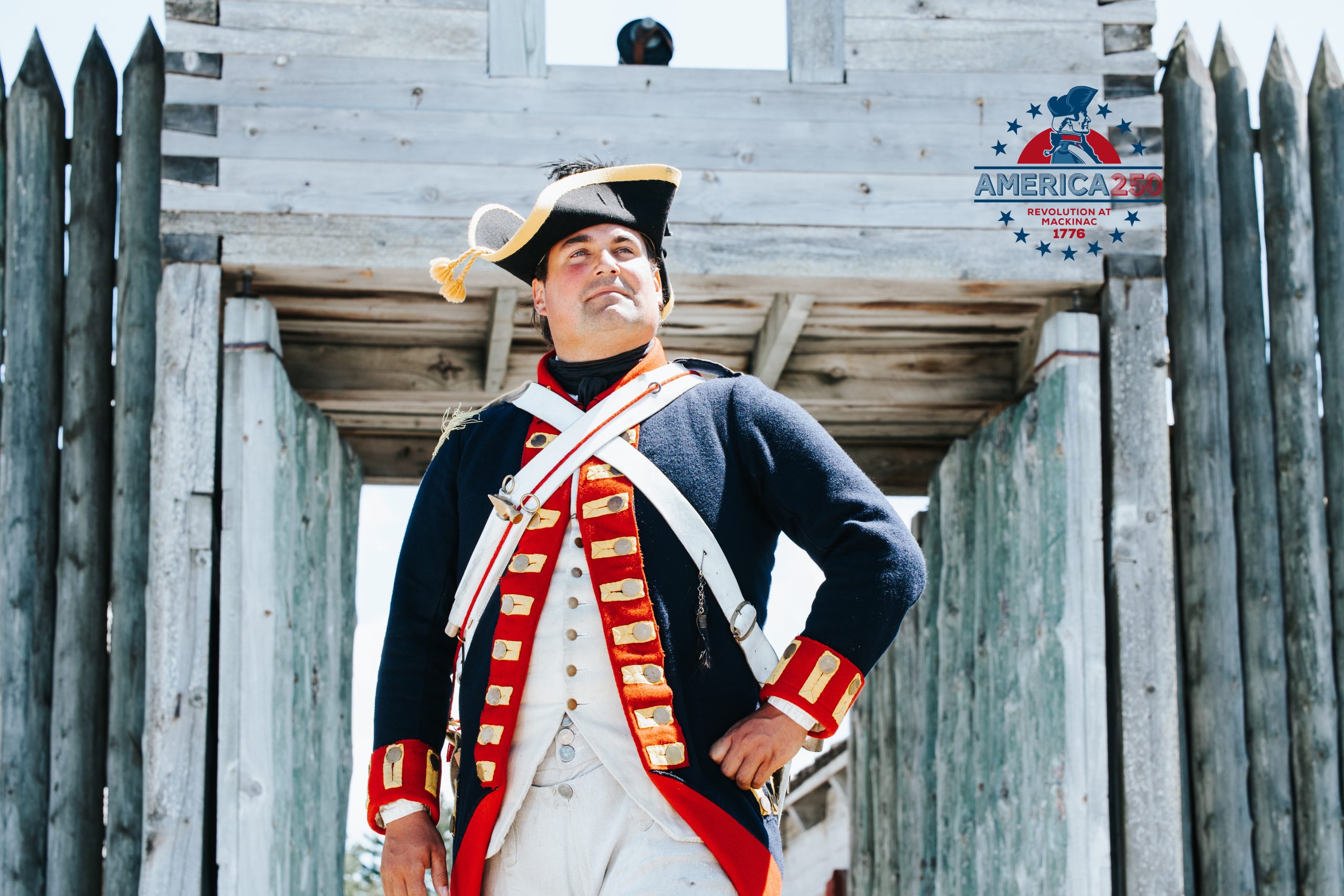 Both Colonial Michilimackinac and Fort Mackinac will host daily programs, led by historic interpreters, exploring 1776 and the American Revolution in the Upper Great Lakes.
Michilimackinac 1776: First Strike. See and hear how the growing conflict in 1776 affected the thriving fur trade community at Michilimackinac. Click here to see a full schedule of daily events and programs.
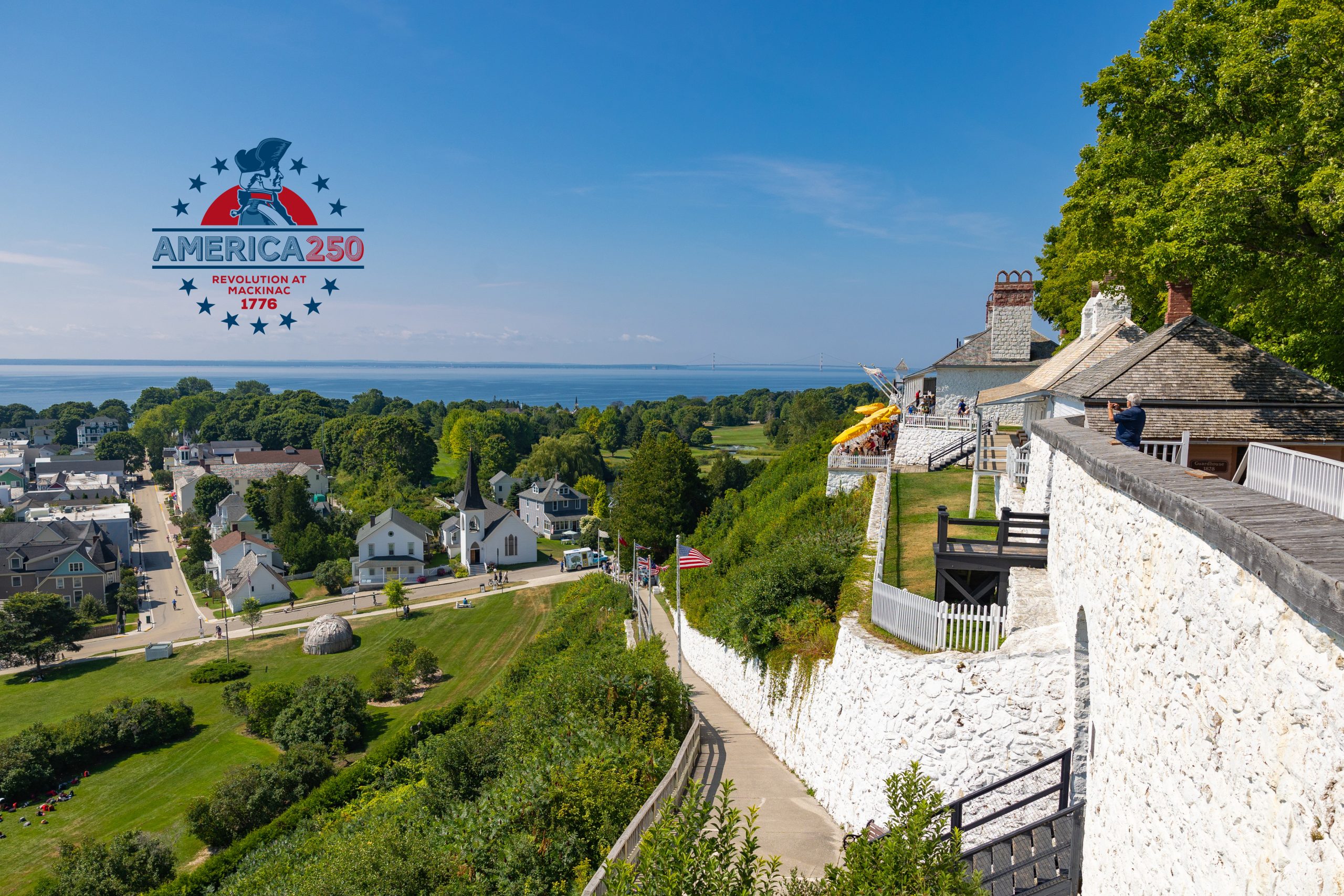
The Changing Face of Fort Mackinac. Learn how Fort Mackinac changed architecturally from its founding during the American Revolution up to its last year in 1895. Click here for a full schedule of daily events and programs.
Programs included with regular admission to either site. Click here to purchase tickets.
As the nation prepares for the 250th anniversary on July 4, Colonial Michilimackinac and Fort Mackinac will do the same.
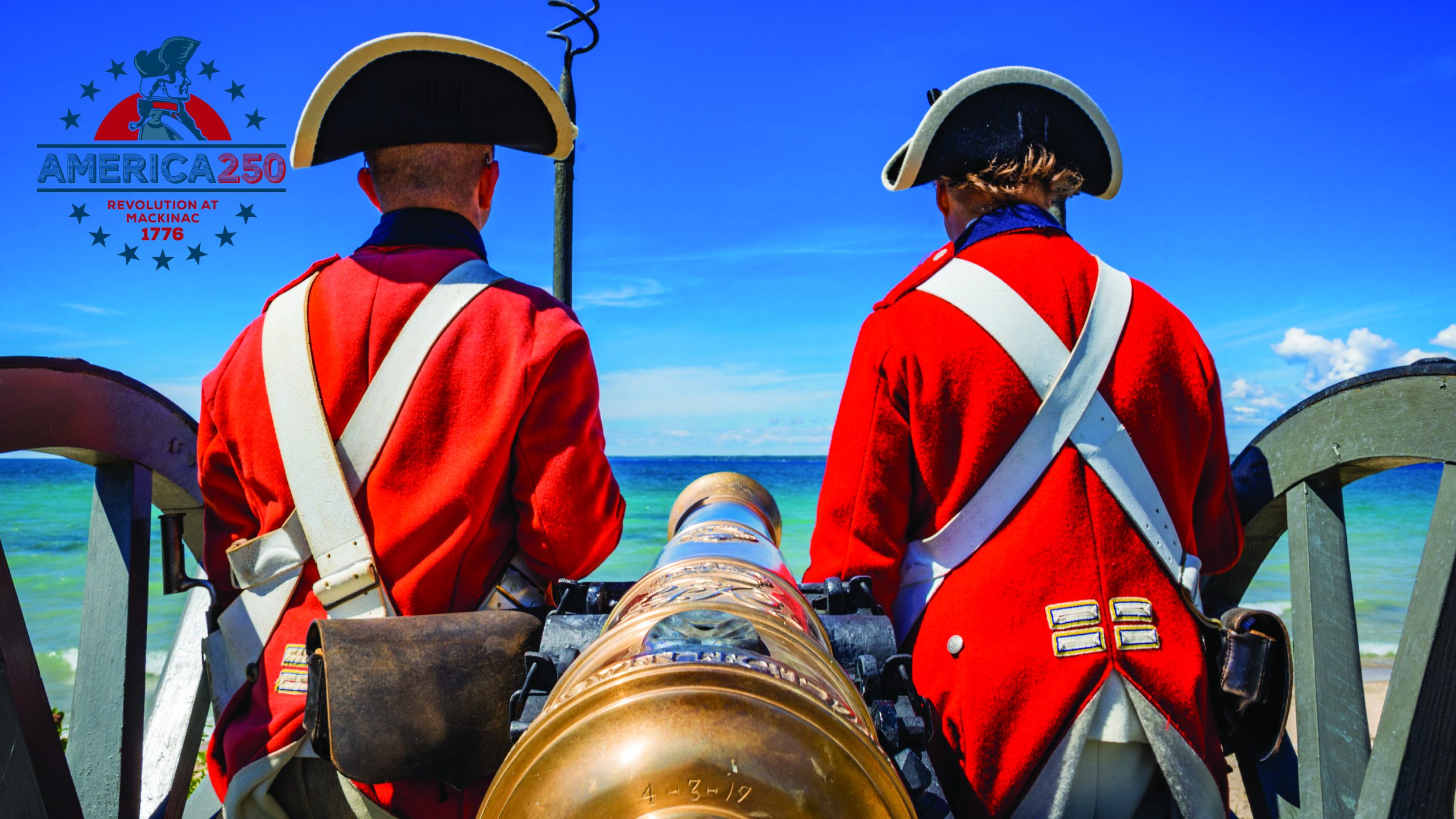 July 1, 7:00 p.m. The Revolution and Michilimackinac
In 1776 Colonial Michilimackinac was an outpost on the edge of the British empire in America. On this guided tour, Colonial Michilimackinac staff and historians will walk guests through the fort, exploring the fort and detailing the lives of the historic residents that called it home. Meet at the secondary entrance off Straits Avenue. Free program, donations welcome.
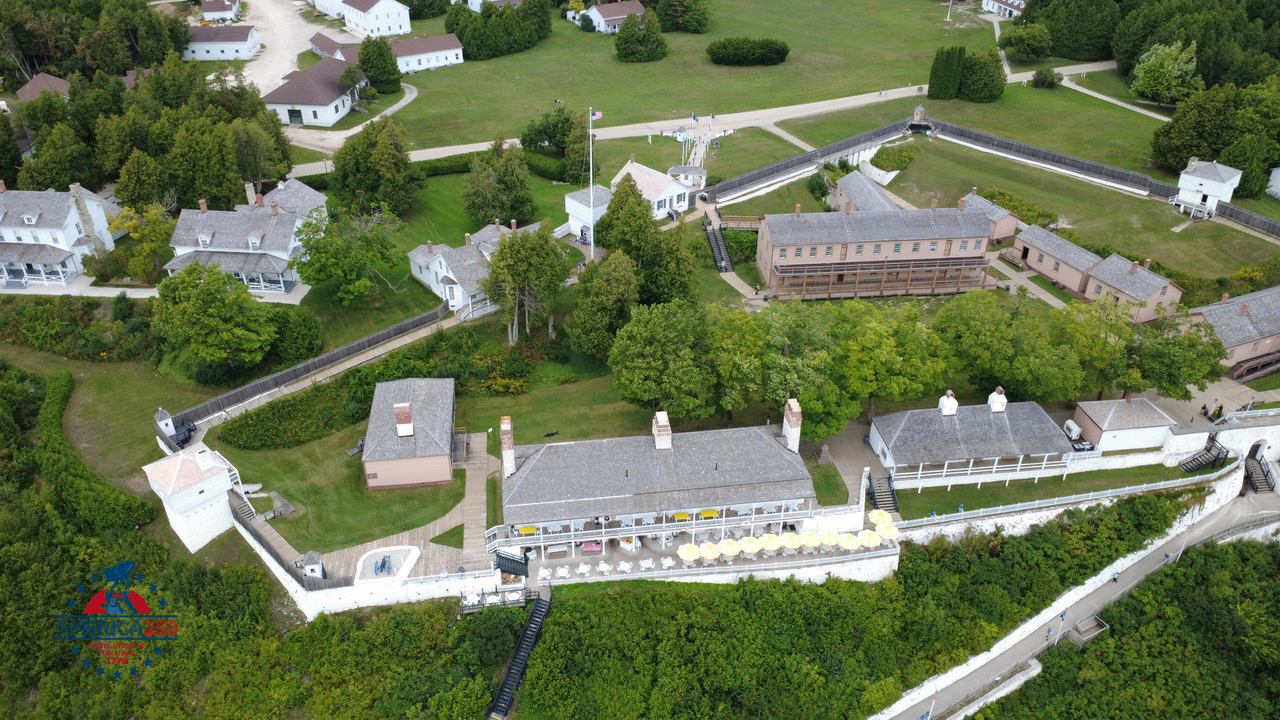 July 2, 7:00 p.m. Built Because of the Revolution: Fort Mackinac
Believing Fort Michilimackinac was too vulnerable to an attack, the British moved the fort to Mackinac Island in 1780. Join a historian for a special after-hours guided tour of Fort Mackinac exploring the fort and how it has changed since its founding during the American Revolution. Meet at the North Sally Port; free program, donations welcome.
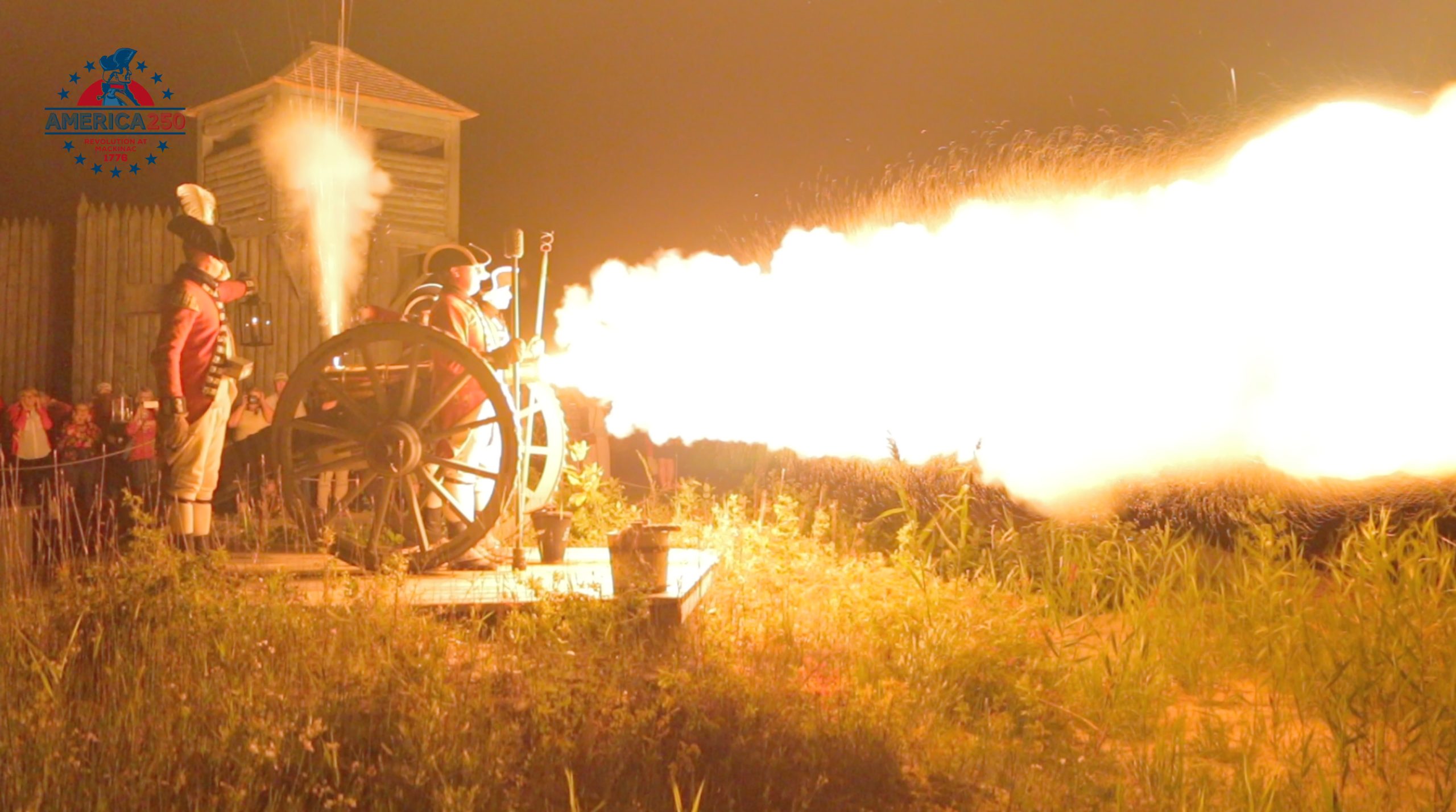 July 3, 9:00 p.m. Fire at Night
This will be one of the coolest things you see all summer. Experience the power of Michilimackinac’s weapons at night. Gates open at 9:00 p.m. Rifle firing will start at dusk; cannon firing will be after dark. This is a free event; donations welcome. Learn more. Can’t make it on July 3? Don’t worry – we’ll do this again September 6.
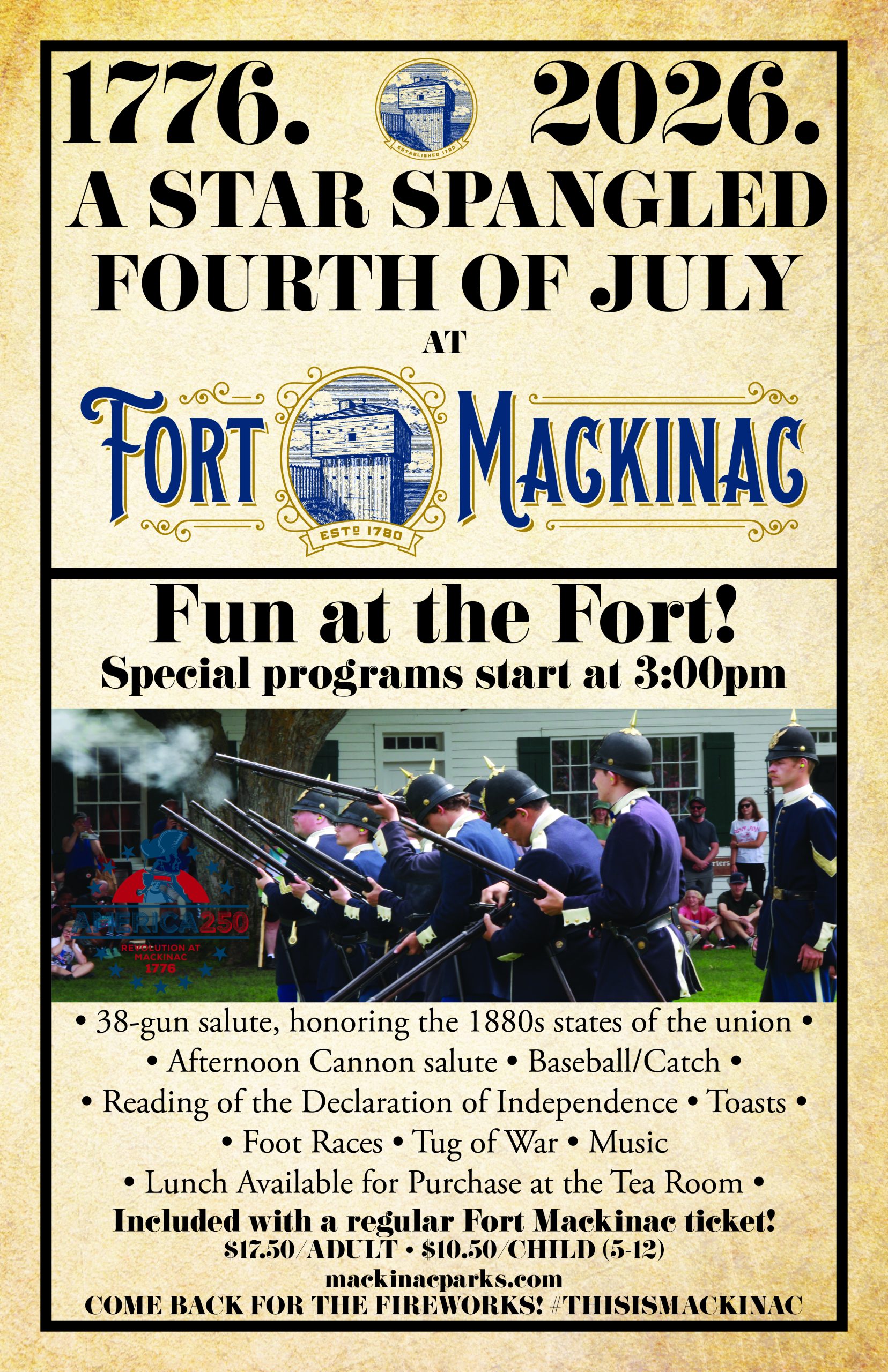 July 4, 3:00 p.m. A Star Spangled Fourth of July
Join us for an all American Fourth of July as iconic Fort Mackinac is decked out in its patriotic finery. Live music begins at 3:00 p.m. and games at 3:15 p.m. After music and games we’ll read our founding document, the Declaration of Independence, on its 250th anniversary. We’ll also fire a 38-gun salute, as well as a canon salute! Learn more about the event here. Get Fort Mackinac tickets here.
America250 events are not just limited to July 4 – join us for events throughout the 2026 season! See our events calendar for a full listing.
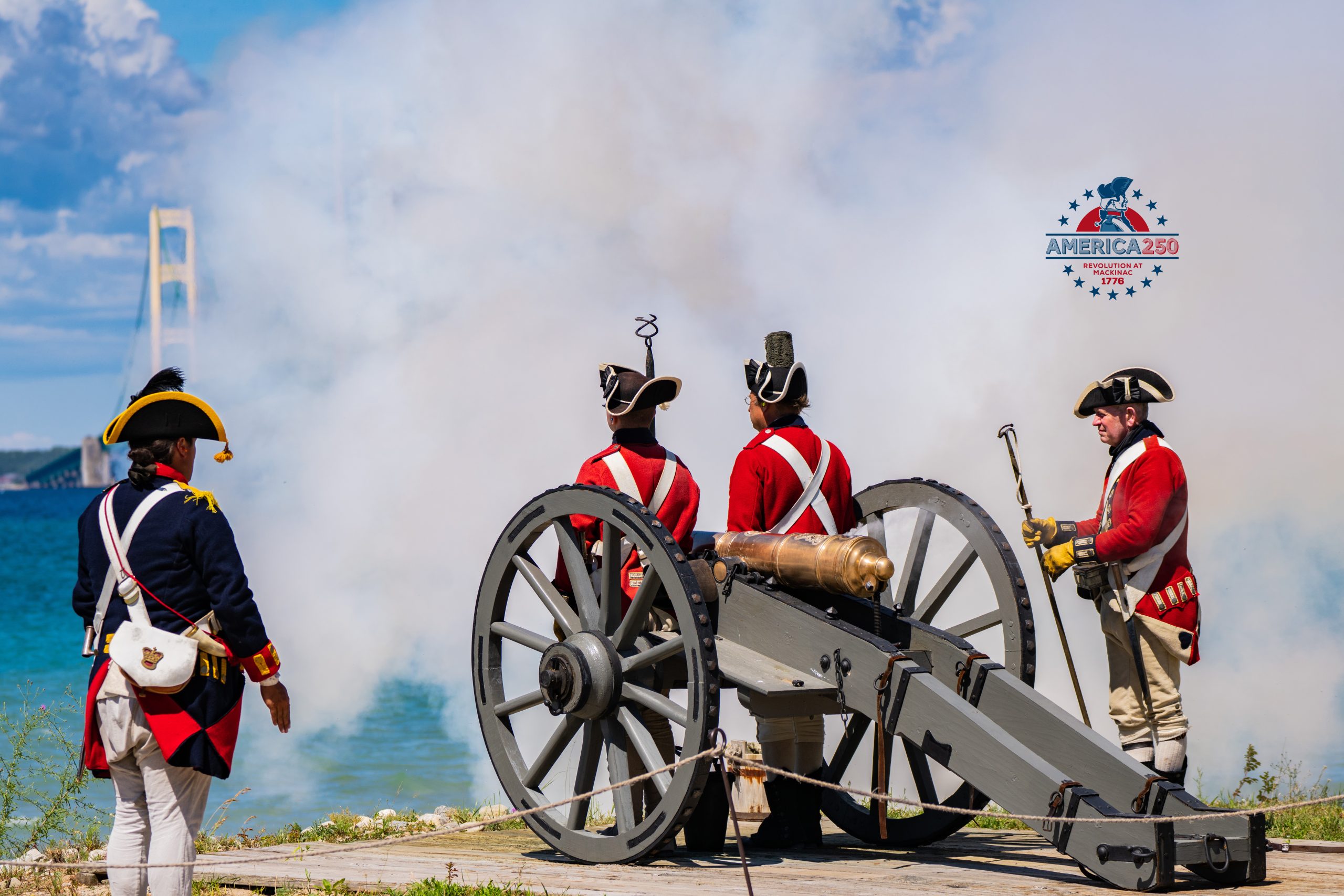 The King’s Birth-day Celebration
Remember, in 1776, Michilimackinac remained loyal to the Crown, so we will commemorate King George III’s birthday on June 4. Join us for this most British of holidays. Regular admission to Colonial Michilimackinac required.
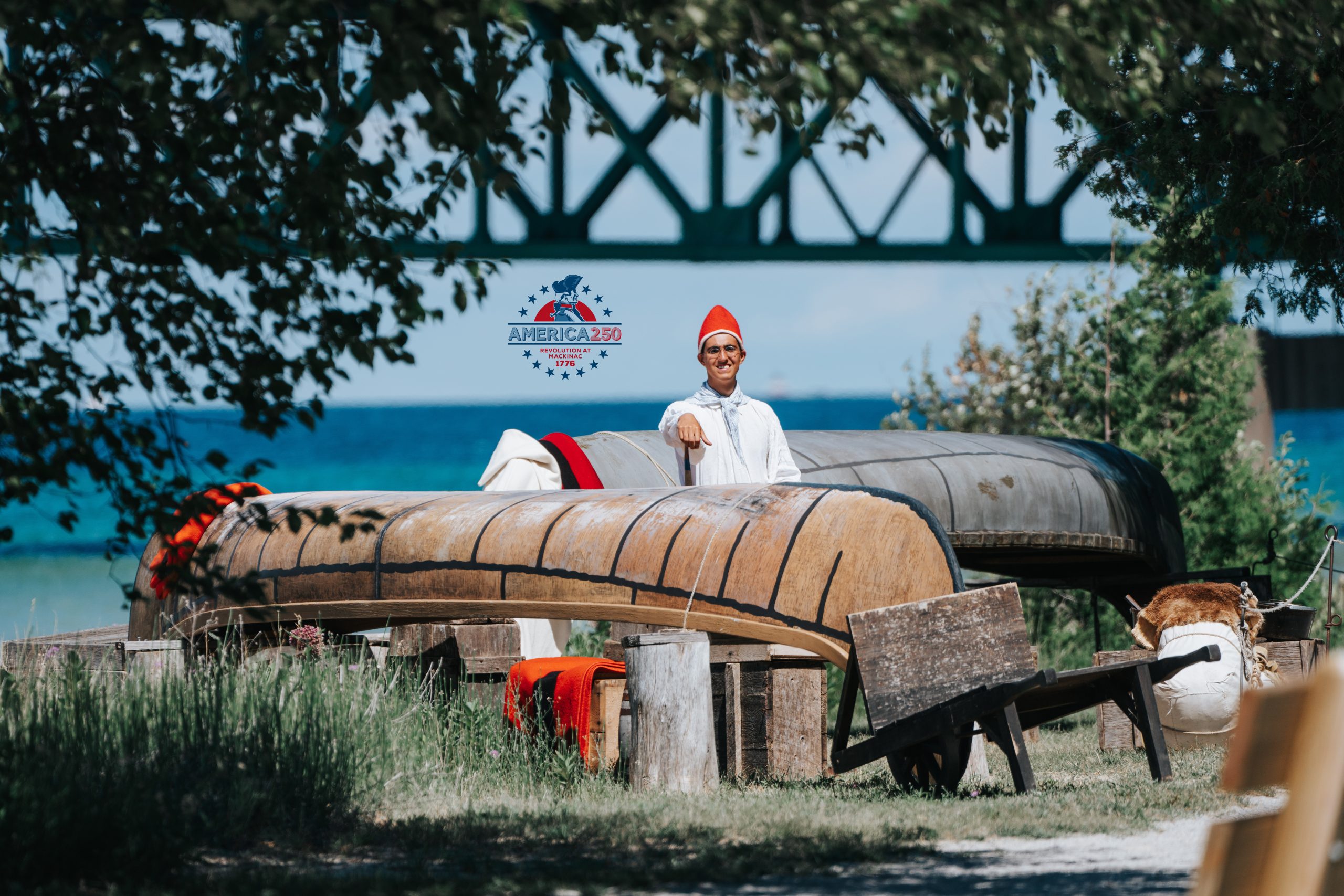 Maritime Michilimackinac
Colonial Michilimackinac was a major hub for the Great Lakes Fur Trade, and its location where Lakes Michigan and Huron meet was crucial to its success. This special event will focus on Michilimackinac’s maritime history. Join the interpretive staff as they discuss and demonstrate the many different ways Michilimackinac’s historic residents interacted with and worked on the water. July 11-12. Included with regular admission to Colonial Michilimackinac.
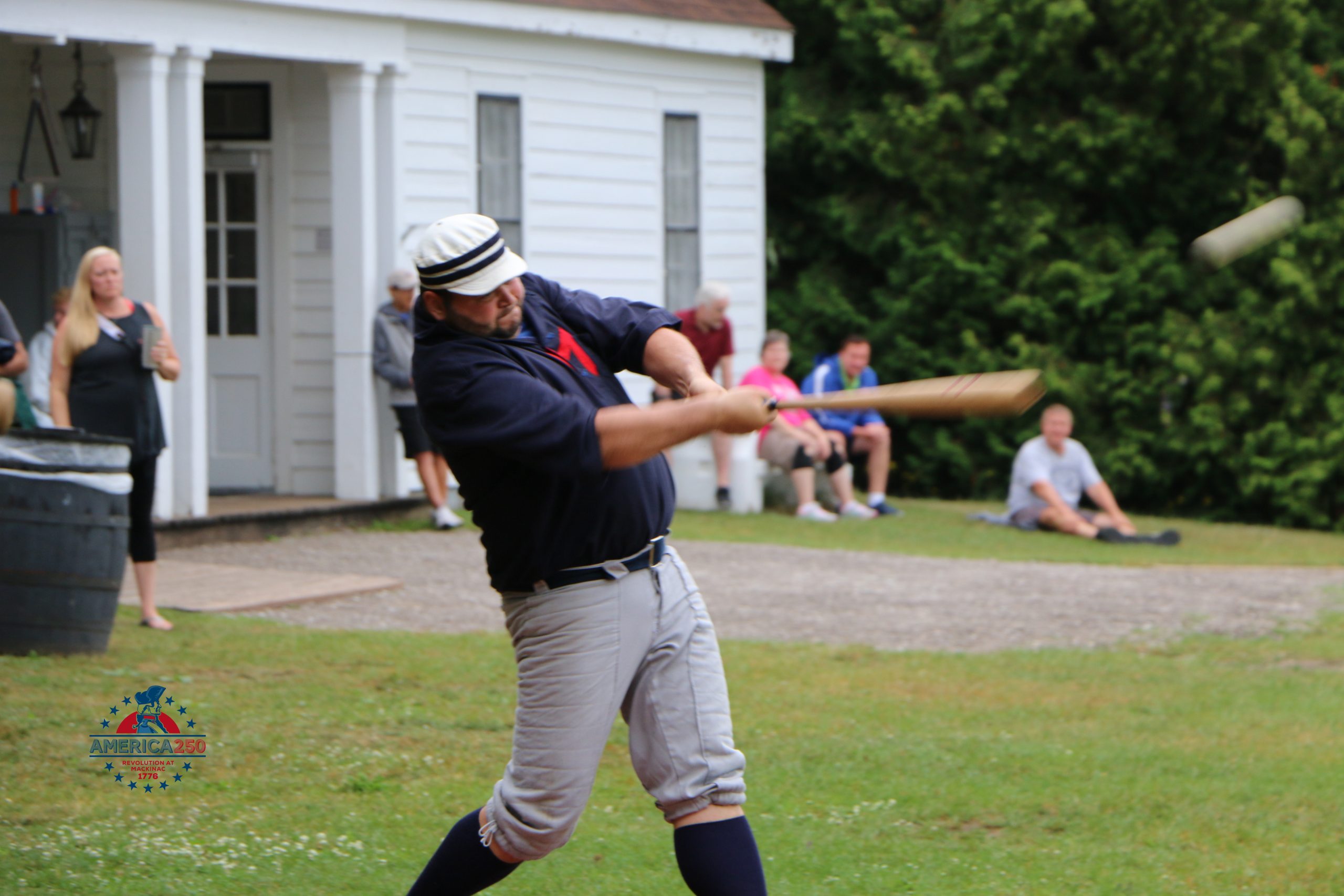 Vintage Base Ball
Is there anything more American than baseball? Join us for a game of Vintage Base Ball – played barehanded and by gentleman’s rules – on the old Fort Mackinac ball field on July 25. This is a free event – donations welcome.
 Askin’s People at Michilimackinac
This event will explore the lives of the free and enslaved people who worked for the merchant John Askin at Michilimackinac in the 1770s on August 1-2. Join the staff at Michilimackinac as they demonstrate the various work performed by Askin’s employees, who included sailors, bakers, gardeners, cooks, voyageurs, laundresses, and more. All special programs included with regular admission to Colonial Michilimackinac.
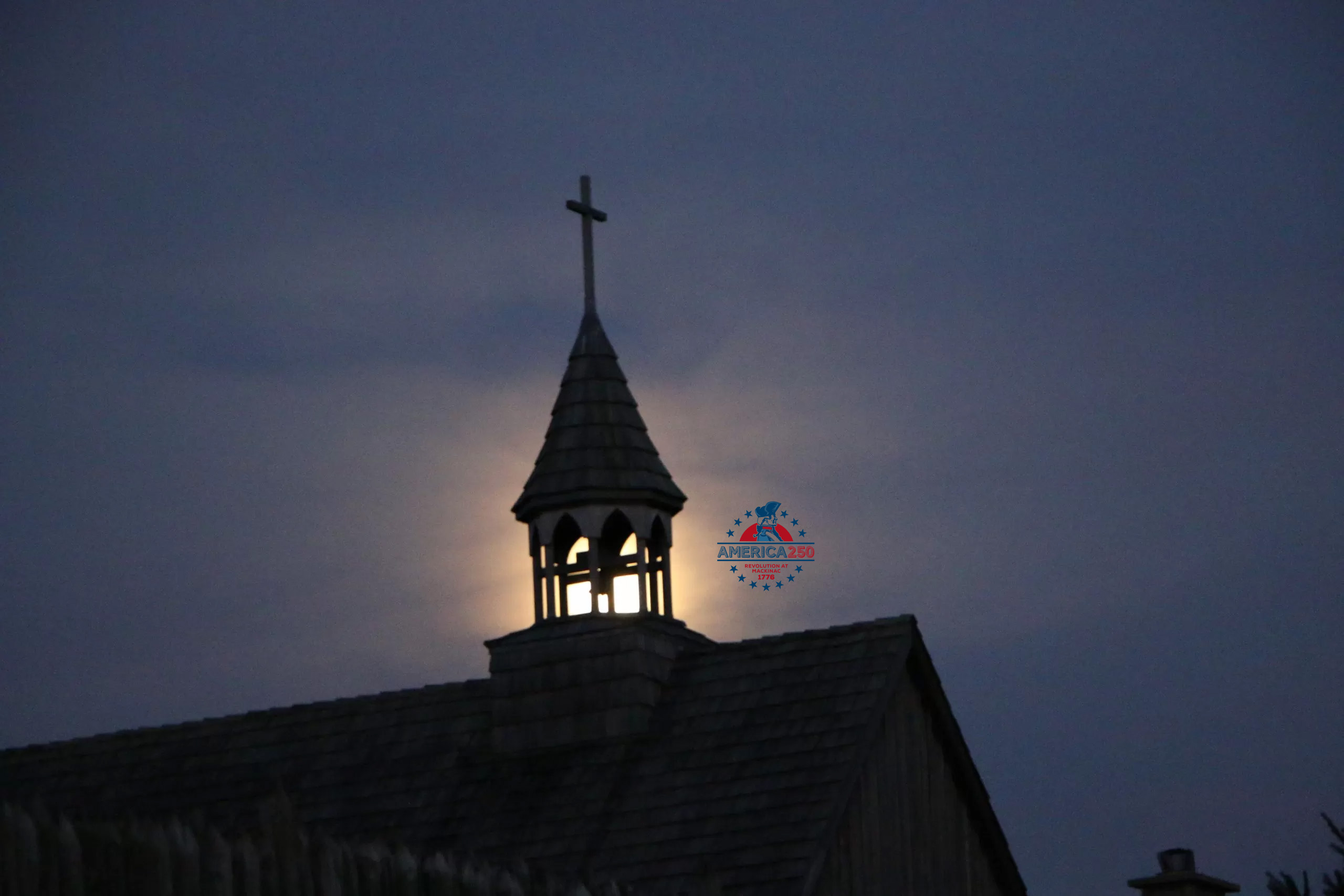
On August 22 we’ll allow you a special opportunity to visit Colonial Michilimackinac in the evening and learn about how residents at the time of the American Revolution lived in the evening. This is a free event – donations welcome.
Want to truly take your America250 experience at Mackinac State Historic Parks to the next level? Fire the opening cannon at Colonial Michilimackinac or Fort Mackinac, or fire ALL FOUR black powder weapons at Colonial Michilimackinac after the site closes for the evening.
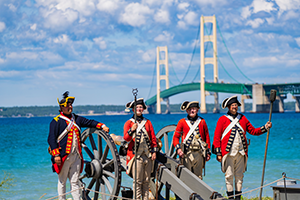
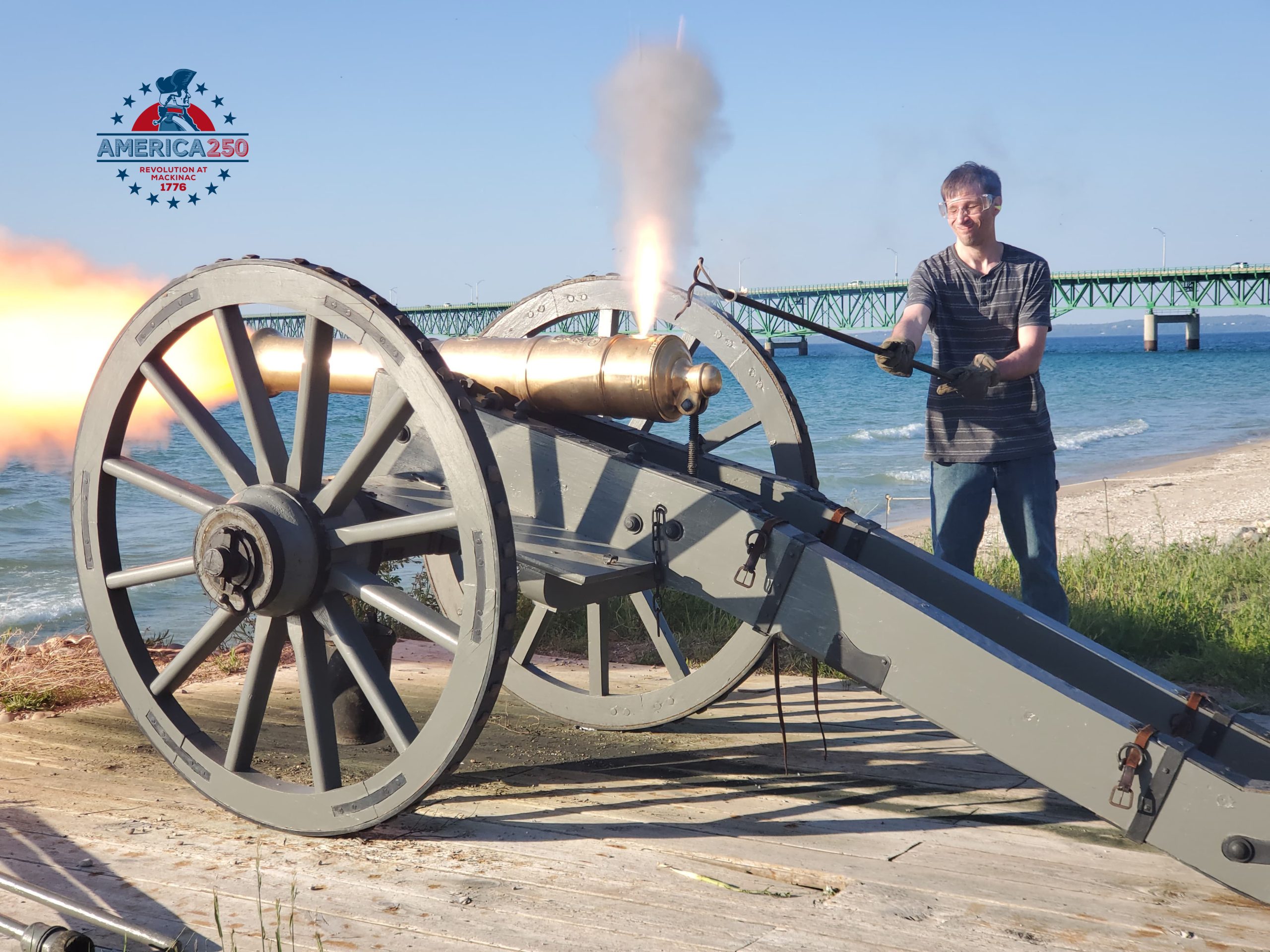 Even with the Mackinac Bridge towers in the distance, standing at the brass cannon aimed over Lake Michigan with the wooden palisade of Fort Michilimackinac behind you transports you back in time to the 1770s and the American Revolution. A historic interpreter takes you through the process of preparing the cannon for firing, and, when the fort is ready to open, the command of “FIRE!” is given and you fire a ceremonial cannon blast opening Colonial Michilimackinac for the day. Learn more.
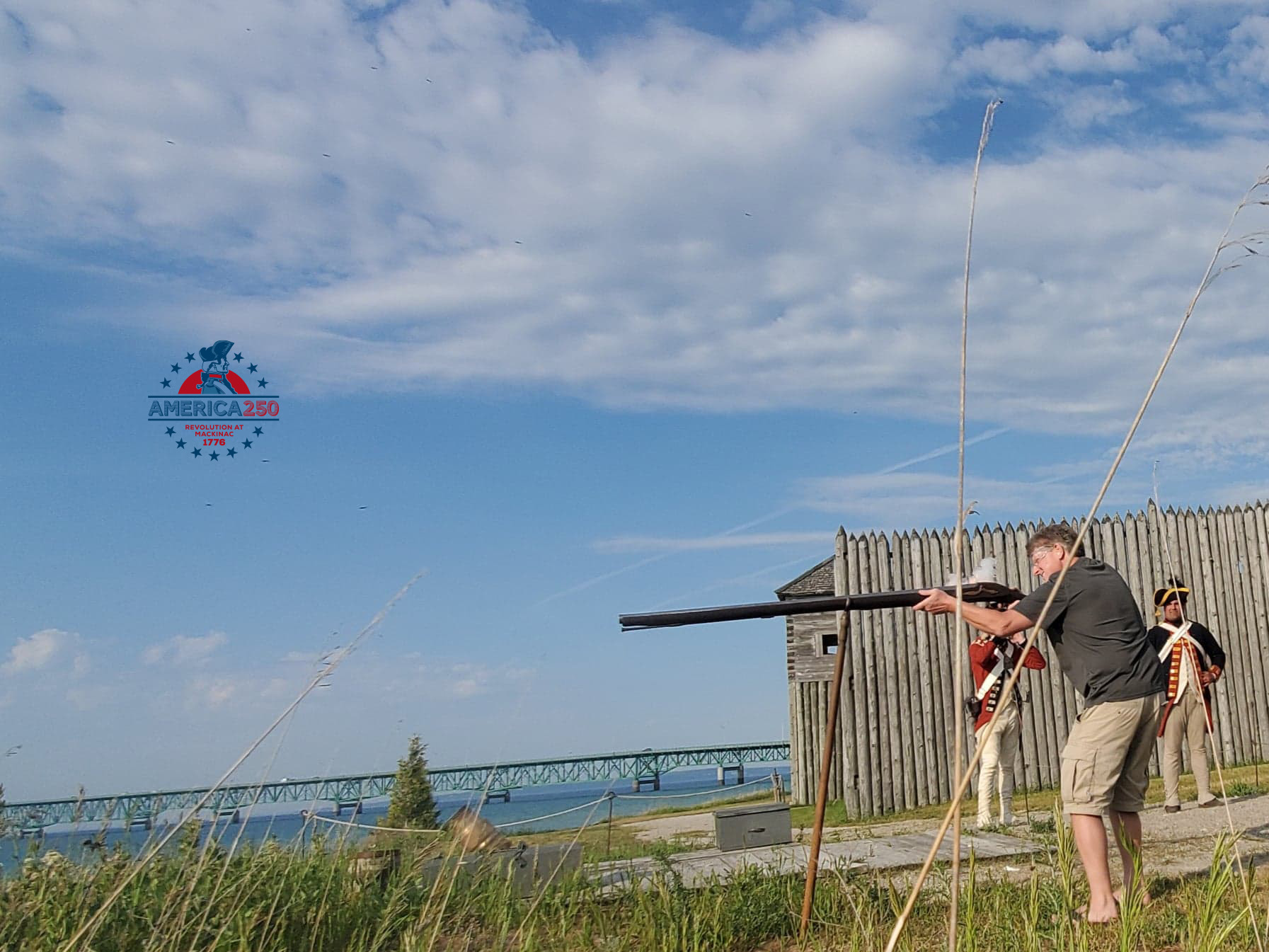 Guns Across the Straits
What better way to wind down your day in the Straits of Mackinac than by firing off Michilimackinac’s weapons? Imagine it – you step into Colonial Michilimackinac and, as you make your way to the palisade walls, you find that it’s emptying out and you have the place to yourself. From there, you fire all four of the black powder weapons used at Michilimackinac – the Short Land Musket, Wall Gun (a BIG musket), Coehorn Mortar, and, as the finale, the cannon. Find out more.
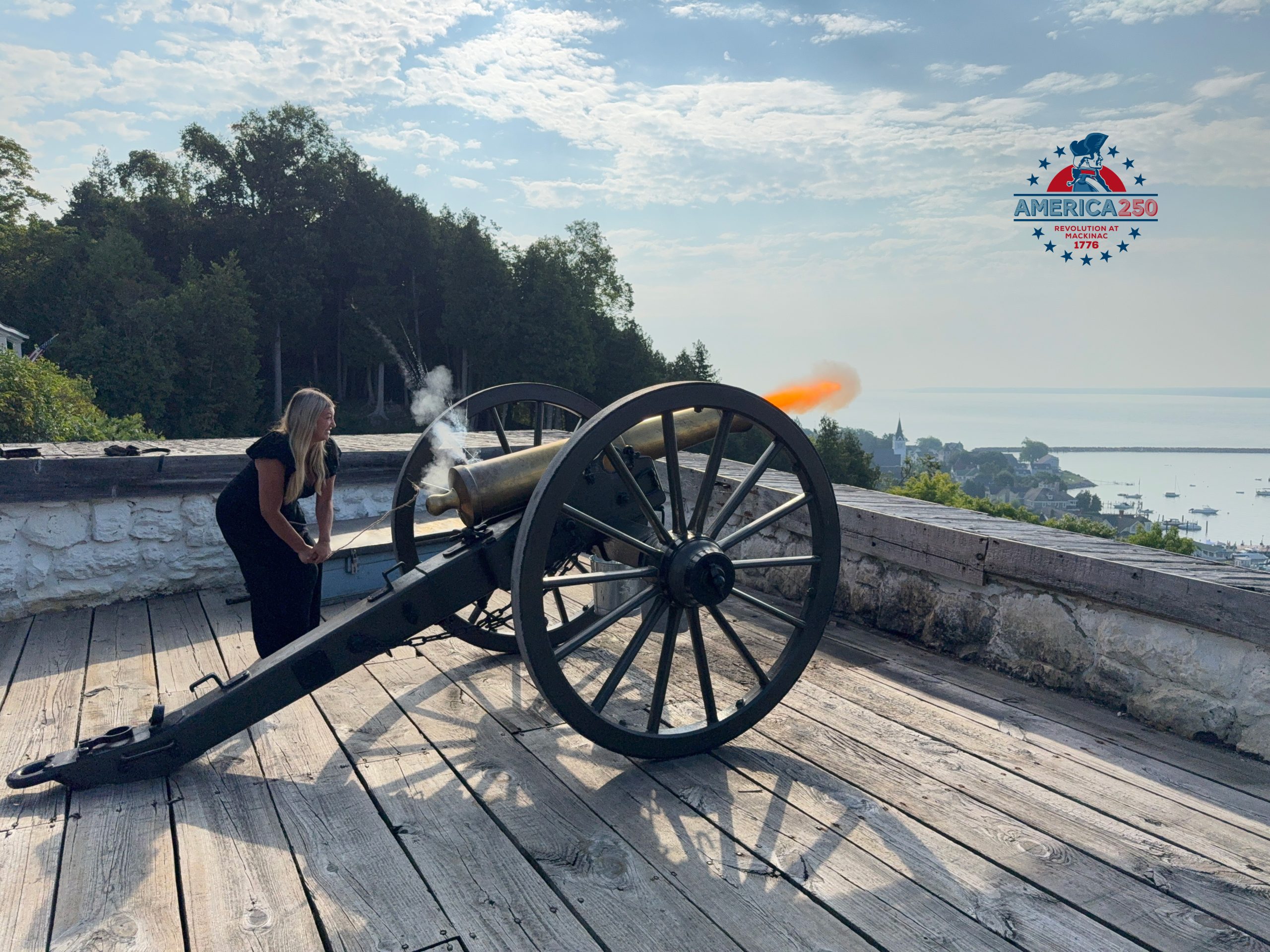
Imagine yourself standing next to the iconic Fort Mackinac cannon. Mackinac Island’s downtown unfolds below you, just starting to come to life. Off in the distance you see a ferry coming across the lake and the majestic Mackinac Bridge on the horizon. You hear the bugle call out reveille, and the Fort Mackinac soldier gives you the signal. Finally, YOU fire the first cannon volley of the day at Fort Mackinac! Fire Fort Mackinac’s Cannon.
Have a passion for history? Interested in the deeper stories tied to the Revolutionary past of Colonial Michilimackinac and Fort Mackinac? Join a Curator for a guided tour of the sites throughout the 2026 summer season.
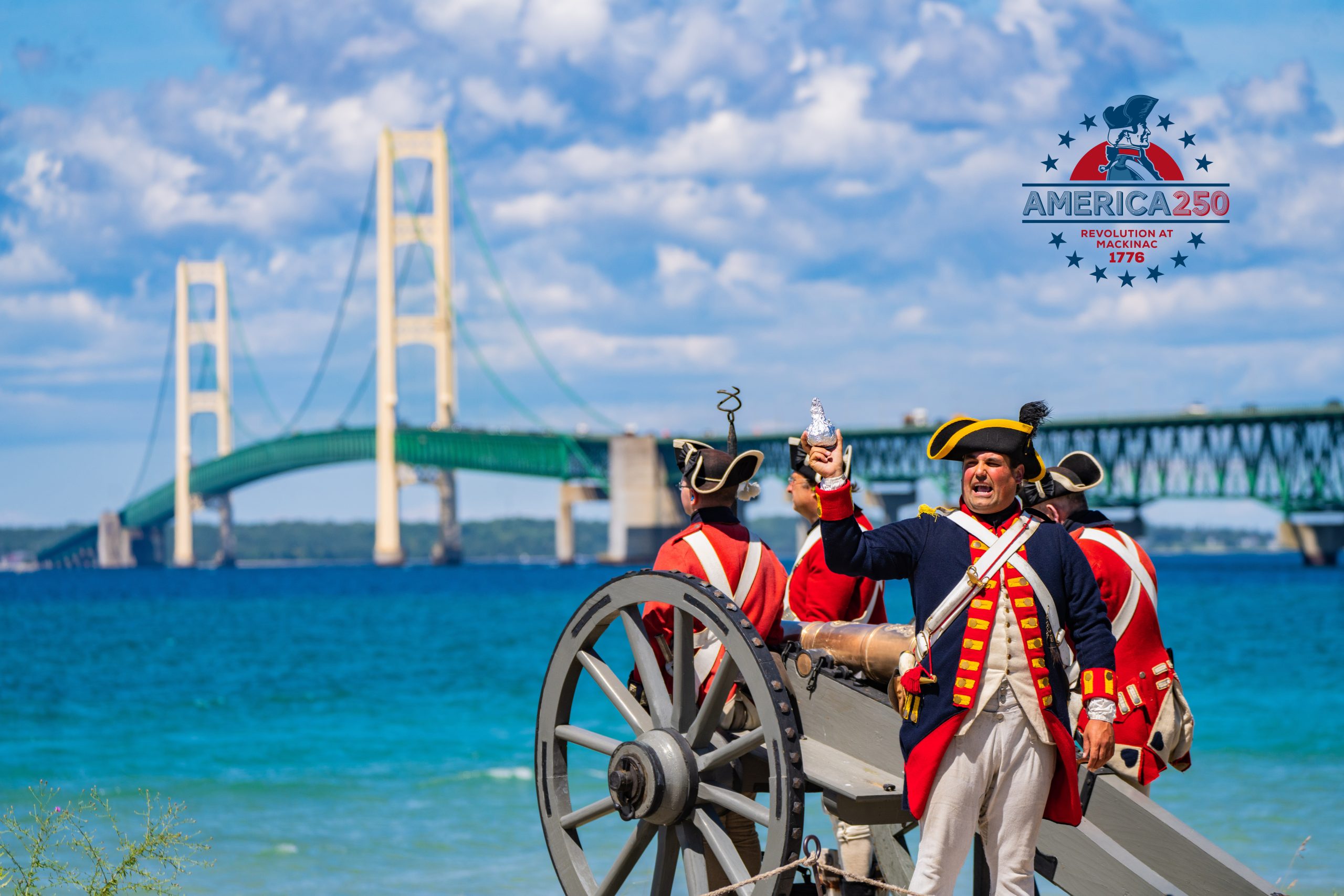 The Revolution at Mackinac
Available Wednesdays starting June 10. Looking for an in-depth way to celebrate the 250th anniversary of American independence right here in Michigan? Join a curator for a 90-minute guided tour of Colonial Michilimackinac, a hub for British military and diplomatic activities during the war. As you explore the reconstructed site, hear how the British and their Anishnaabek allies reacted to and participated in events along the Atlantic coast as well as here on the Great Lakes frontier. Take a deeper look at the lives of the people who called Michilimackinac home during the tumultuous years of the American Revolution, and how these revolutionary events shaped northern Michigan in ways we can still appreciate today. Learn more here.
 The Military History of Fort Mackinac
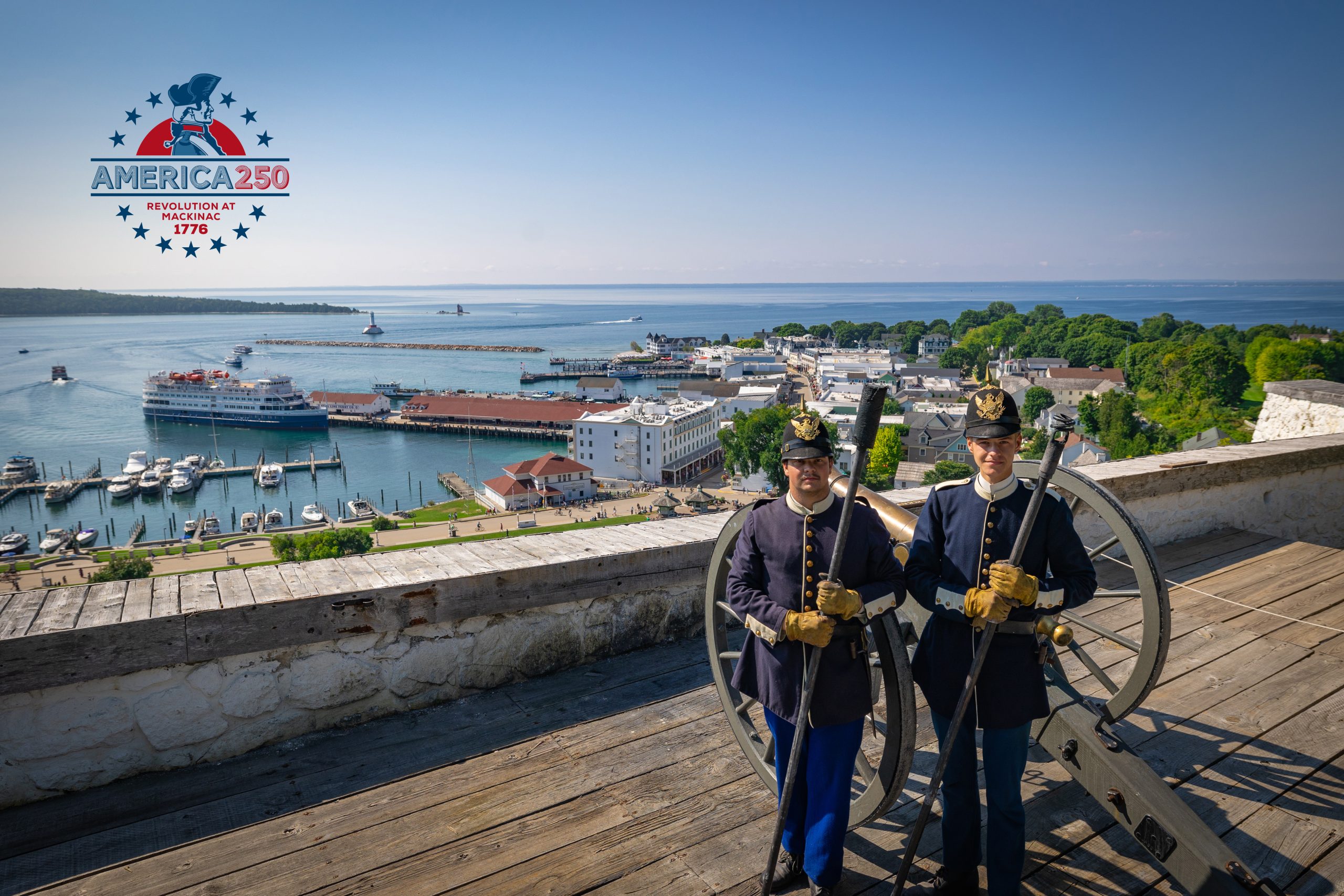
Available Fridays starting June 12. Created during the American Revolution, Fort Mackinac stood sentinel over the Straits of Mackinac for 116 years. Join a curator for a 90-minute guided tour of Fort Mackinac to learn how the fort’s military purpose evolved over time. You’ll examine everything from original 18th century fortifications, built by British soldiers during the Revolution, to amenities added for American troops during the height of 19th century tourism. Along the way, learn more about Fort Mackinac’s central role in the War of 1812 and the creation of the country’s second national park. More information here.
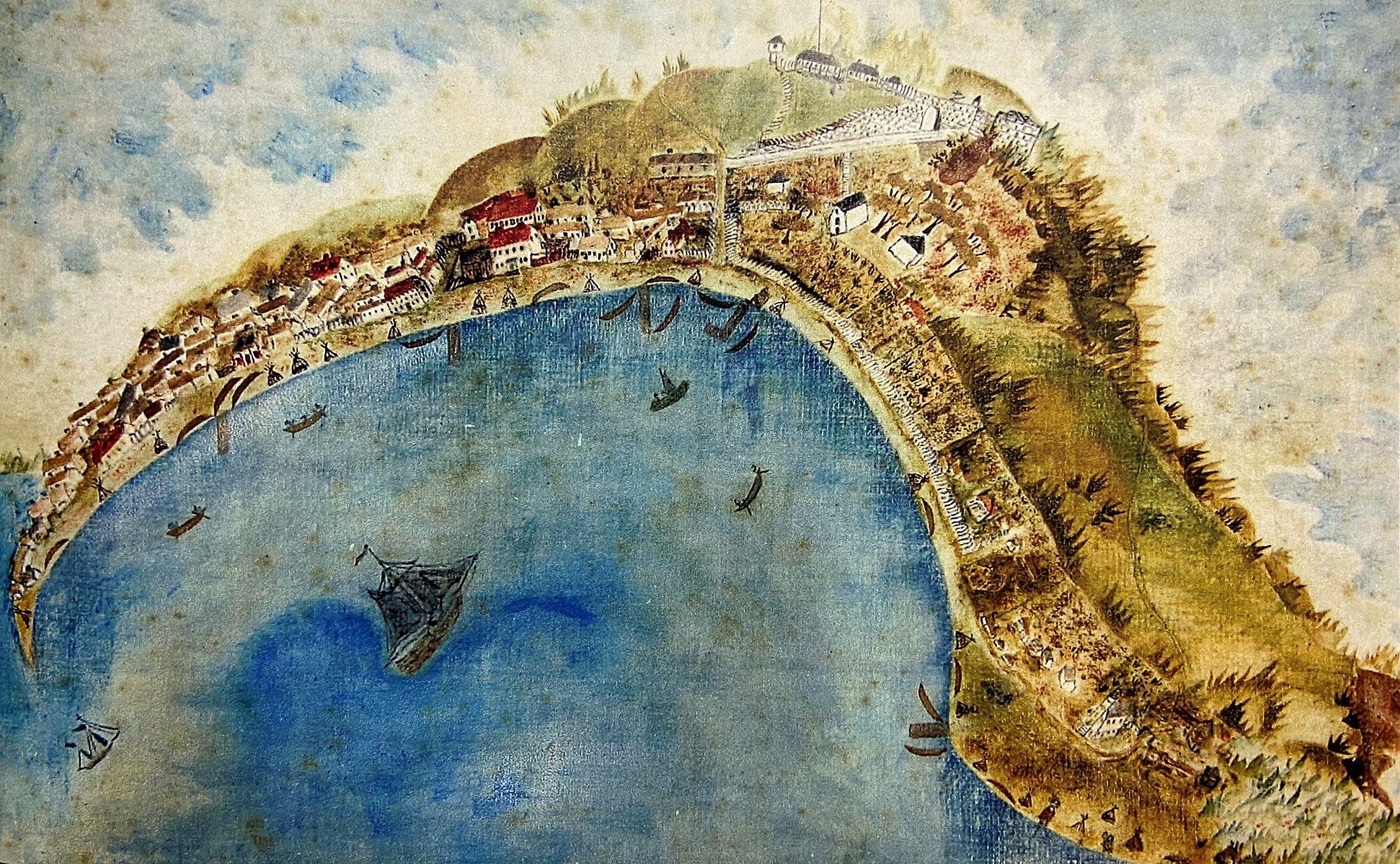 Inside The Richard & Jane Manoogian Mackinac Art Museum, located in Marquette Park in front of Fort Mackinac, a juried art exhibition, Echoes of the Island: A Journey Through Time, will open May 8-October 4 in the second floor changing gallery. Mackinac State Historic Parks invited artists to explore the layers of Mackinac’s storied past. From the sacred lands of the Anishinaabe people to the Revolutionary War-era Fort Mackinac, from Victorian summer retreats to horse-drawn carriages, Mackinac Island is in many ways a living museum. We encouraged artists working in all media to share with us their artistic visions of what Echoes of the Island: A Journey Through Time means to them.
 Mackinac State Historic Parks has published more than 100 titles in its 131-year history. Several cover the years of the American Revolution.
 At the Crossroads: Michilimackinac During the American Revolution
By David A. Armour and Keith Widder. The Revolution’s impact on Michilimackinac has remained largely untold. American historians writing about the Revolution in the Old Northwest have been fascinated by the success of George Rogers Clark and have usually focused on his efforts to displace the British in the Illinois Country. Maps depicting the “Revolution in the West” frequently find Michilimackinac too far to the north to include. This book corrects the deficiency by portraying life at Michilimackinac during the Revolutionary War years.
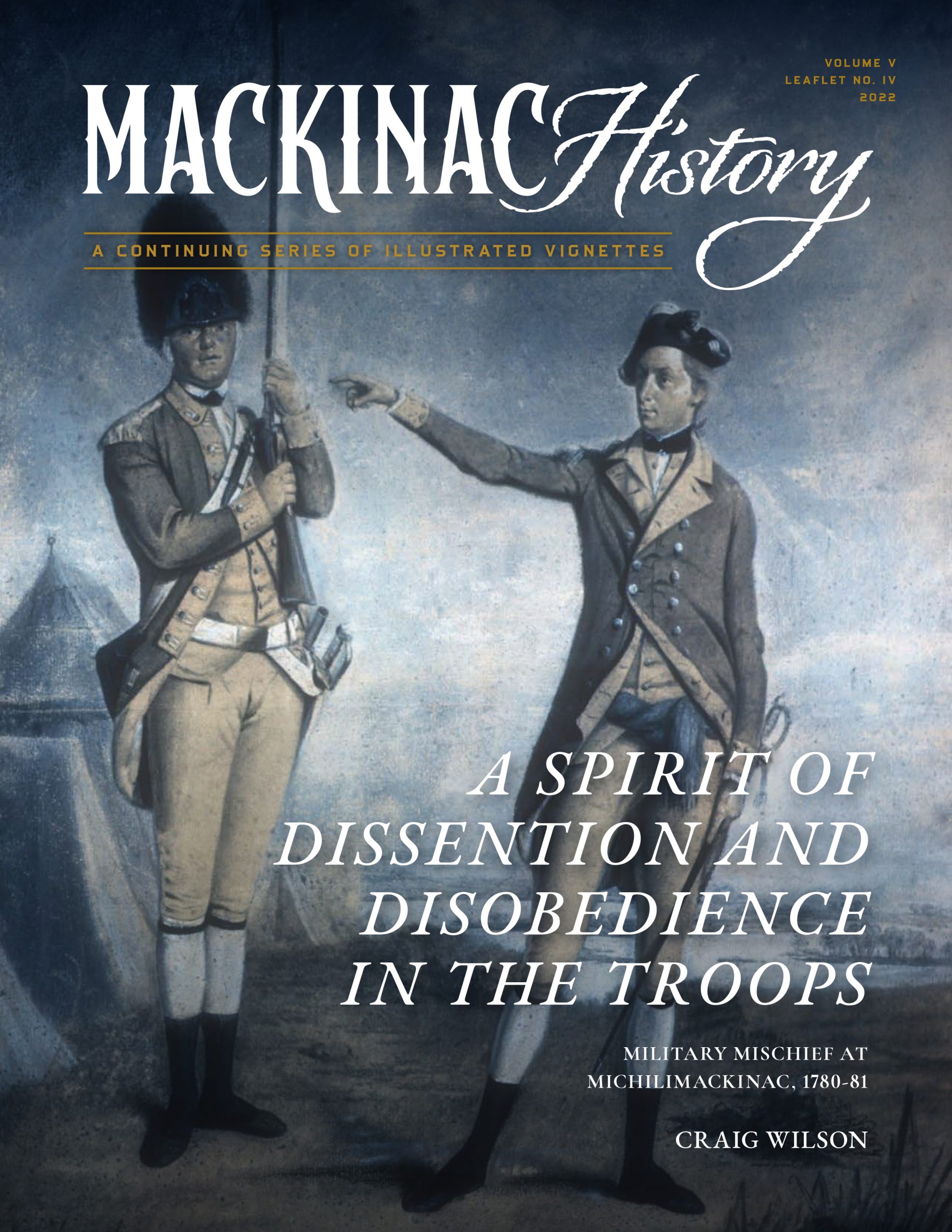 A Spirit of Desertion and Disobedience in the Troops: Military Mischief at Mackinac, 1780-81
By Craig Wilson. Perched on the Straits of Mackinac, the wooden walls of Michilimackinac encompassed a thriving merchant community and a small garrison. In the summer of 1780, this isolated British outpost was also the scene of paranoia, personal feuds, military mischief, and, from a certain point of view, mutiny. The inciting incident, the soldiers’ refusal to follow what they believed to be an unjust order, set off a chain reaction that destabilized Michilimackinac’s garrison for over a year.
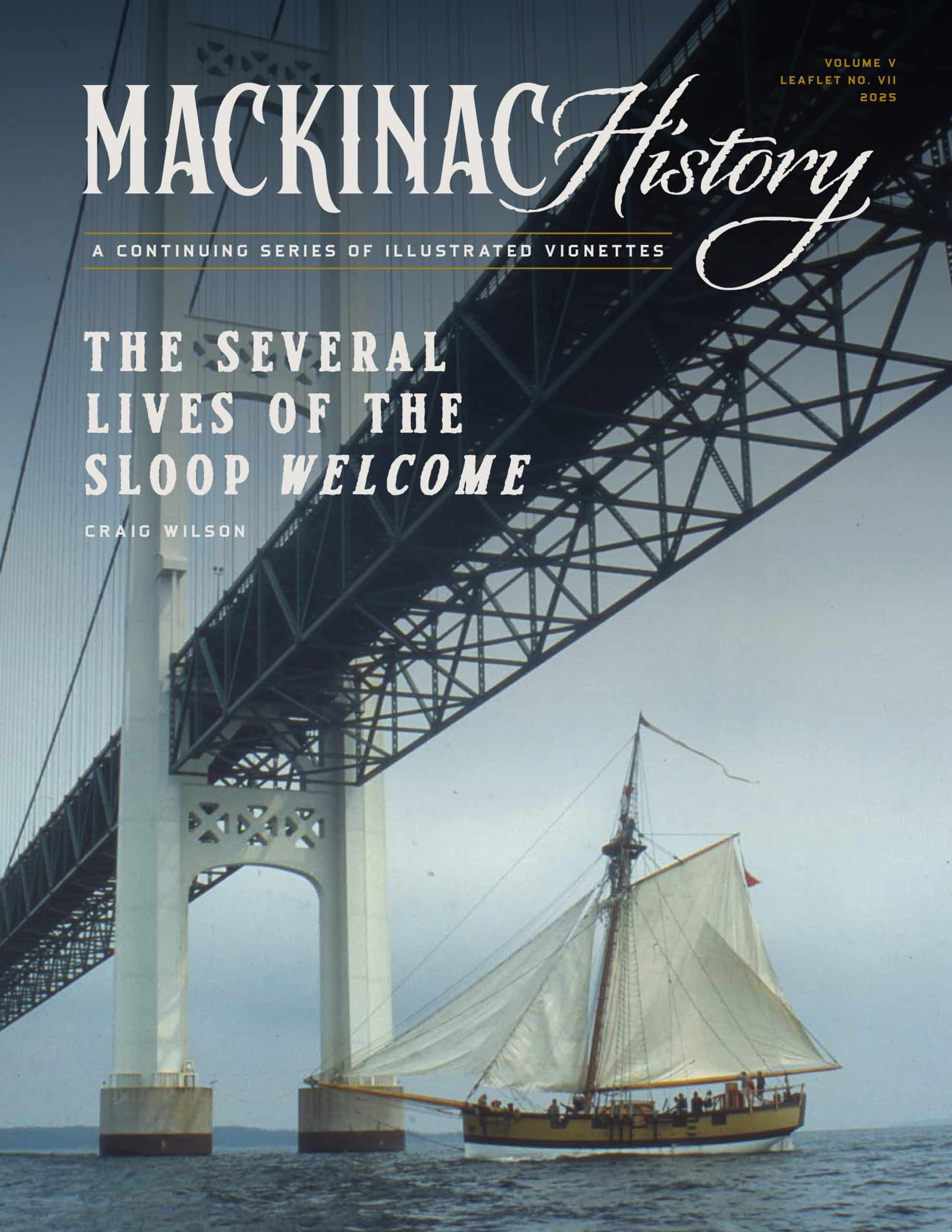 The Several Lives of the Sloop Welcome
By Craig Wilson. Built to connect Michilimackinac to the outside world, the sloop Welcome played a role in conflicts large and small in the late 1770s. Her movements and routines are well-recorded, but other parts of the vessel’s story, including her construction and her fate, remain a mystery. Nevertheless, Welcome’s legacy carries on today, and this unassuming little sloop somewhat improbably remains a fixture of the Straits of Mackinac.
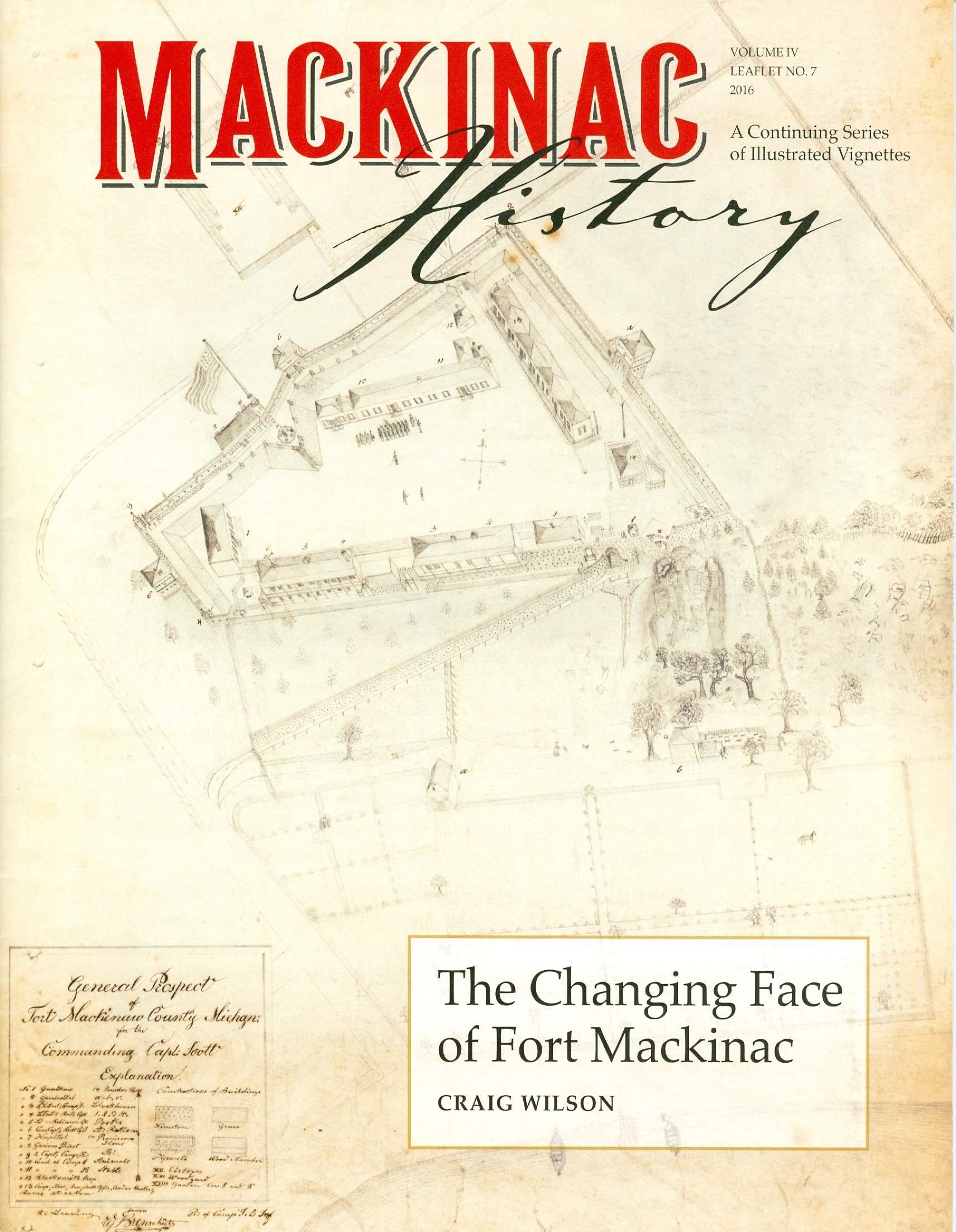 The Changing Face of Fort Mackinac
By Craig Wilson. Perched on a cliff over Mackinac Island’s harbor, Fort Mackinac is today preserved as an historic site. Visitors may be forgiven for assuming the fort was similarly well-maintained during its 115 years of military service. In reality, Fort Mackinac was plagued by poor design, chronic dilapidation, and governmental indifference from the moment British soldiers broke ground in 1779. Although major improvements were occasionally made, most soldiers found themselves stationed in an obsolete, crumbling fort. The story of Fort Mackinac reflects a perpetual battle between natural decay, repair, military necessity, public service, social reforms, and government spending.
Special America250 merchandise will be found at the Colonial Michilimackinac Visitor’s Center, the Hearthside Museum Store inside Colonial Michilimackinac, The Official State Park Store inside the Mackinac Island State Park Visitor’s Center, and at the Fort Mackinac Museum Store.
In addition, visitors to Mackinac State Historic Parks sites can expect special signs and flags celebrating America250 on Mackinac Island and in Mackinaw City.