
The Works Progress Administration (WPA) was a New Deal work program established in 1935 by President Franklin D. Roosevelt. It provided skill-based jobs to unemployed Americans affected by the Great Depression. Through the WPA over 650,000 miles of roads, 75,000 bridges, and 8,000 parks were built.
Infrastructure wasn’t their only focus, museums also greatly benefited from the WPA. Many artists were hired to create dioramas, murals, and exhibitions for institutions across the nation under the Federal Art Project branch. The Mackinac Island State Park Commission benefited in the form of handcrafted signs, posters, and other crafts created through the administration. Many of these objects exist today on display throughout the park and within the Heritage Center collections.
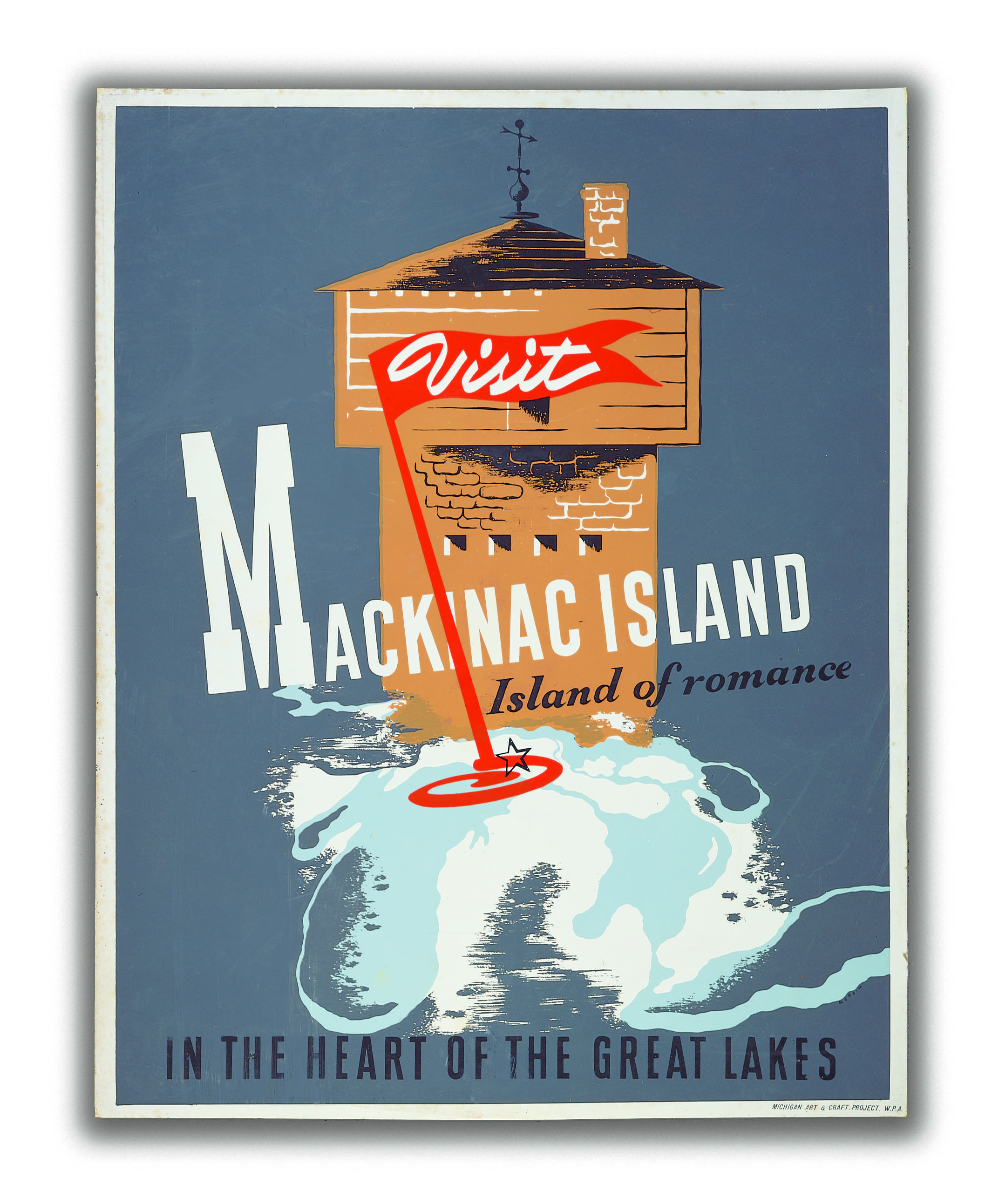 Notable products from the WPA were posters, much like the one here featuring Fort Mackinac. Thousands of screen-printed and hand-painted designs came from the hands of WPA artists, acting as public service announcements, event advertisements, and promotional pieces. The Mackinac Island poster expertly grabs the attention of its audience, through its simple design and statements. These characteristics were hallmarks of the WPA poster division. Today the poster is located in The Richard and Jane Manoogian Mackinac Art Museum.
The skills of sculpture artists were also greatly utilized, through the crafting of intricate handmade signs. Pictured here is one that was 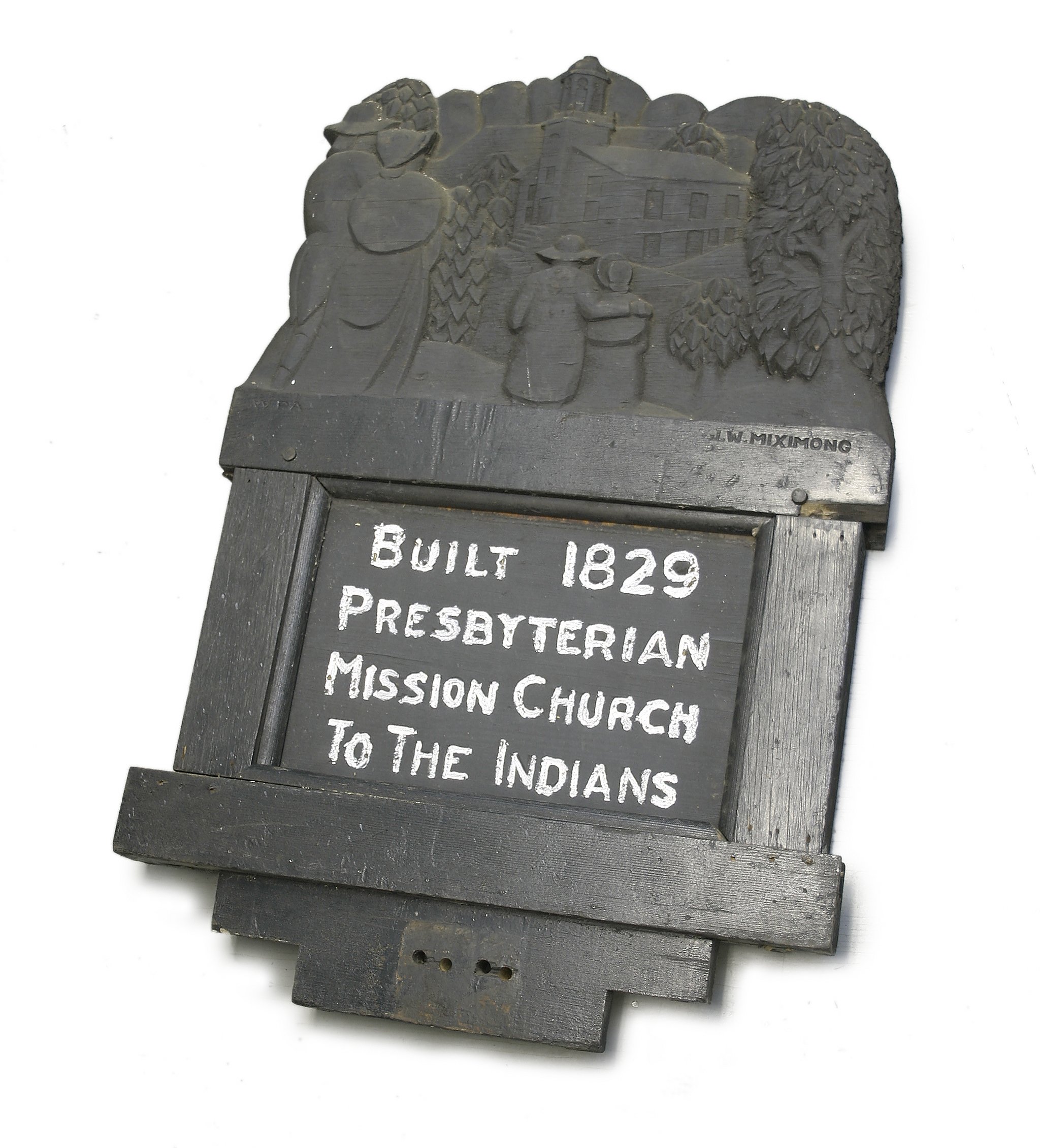 created for Mission Church. These signs were historical markers that provided information about the sites pictured on them. It is possible to still see a few signs in use around the island today. The Mission Church sign is now located inside Mackinac: An Island Famous in These Regions at Fort Mackinac.
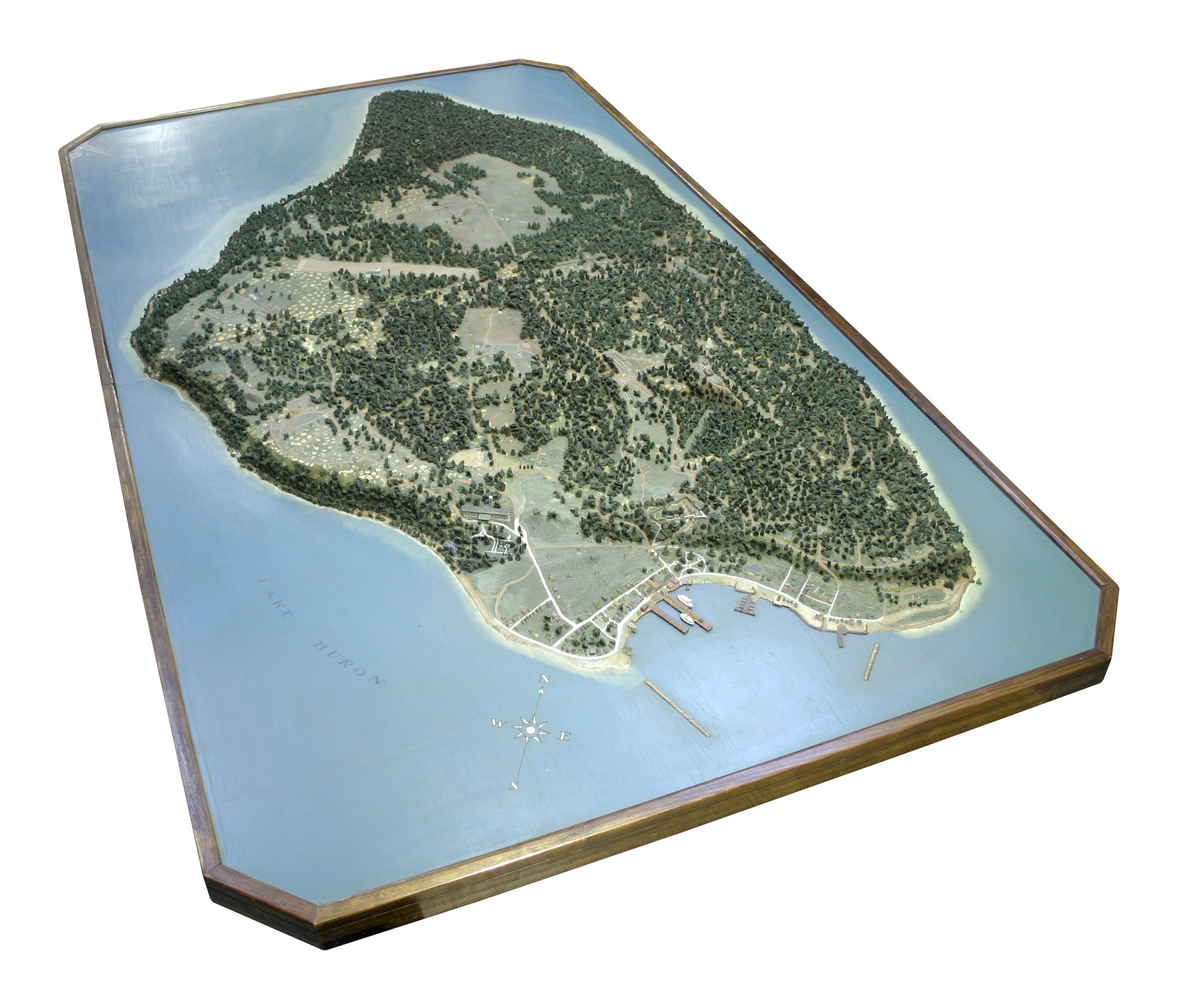
Perhaps one of the most unique contributions from WPA artists is a large relief map of Mackinac Island. Measuring ninety-one inches by fifty-three inches, and made from wood, plaster, and foam, the map is impressive to look at to this day. Its features include small trees, buildings, roads, and the airport, which at the time was a simple grass runway. The map was most likely intended to be on display in a visitor center or a place for advertisements. Due to the size of the relief map, it is currently not on display and is stored with the parks’ historical collection on Mackinac Island.
 The Works Progress Administration ran until 1943, when a surplus of jobs supporting the war effort flooded the market. Its artwork, posters, and projects are preserved in museums and institutions across the nation as an important part of American history.