





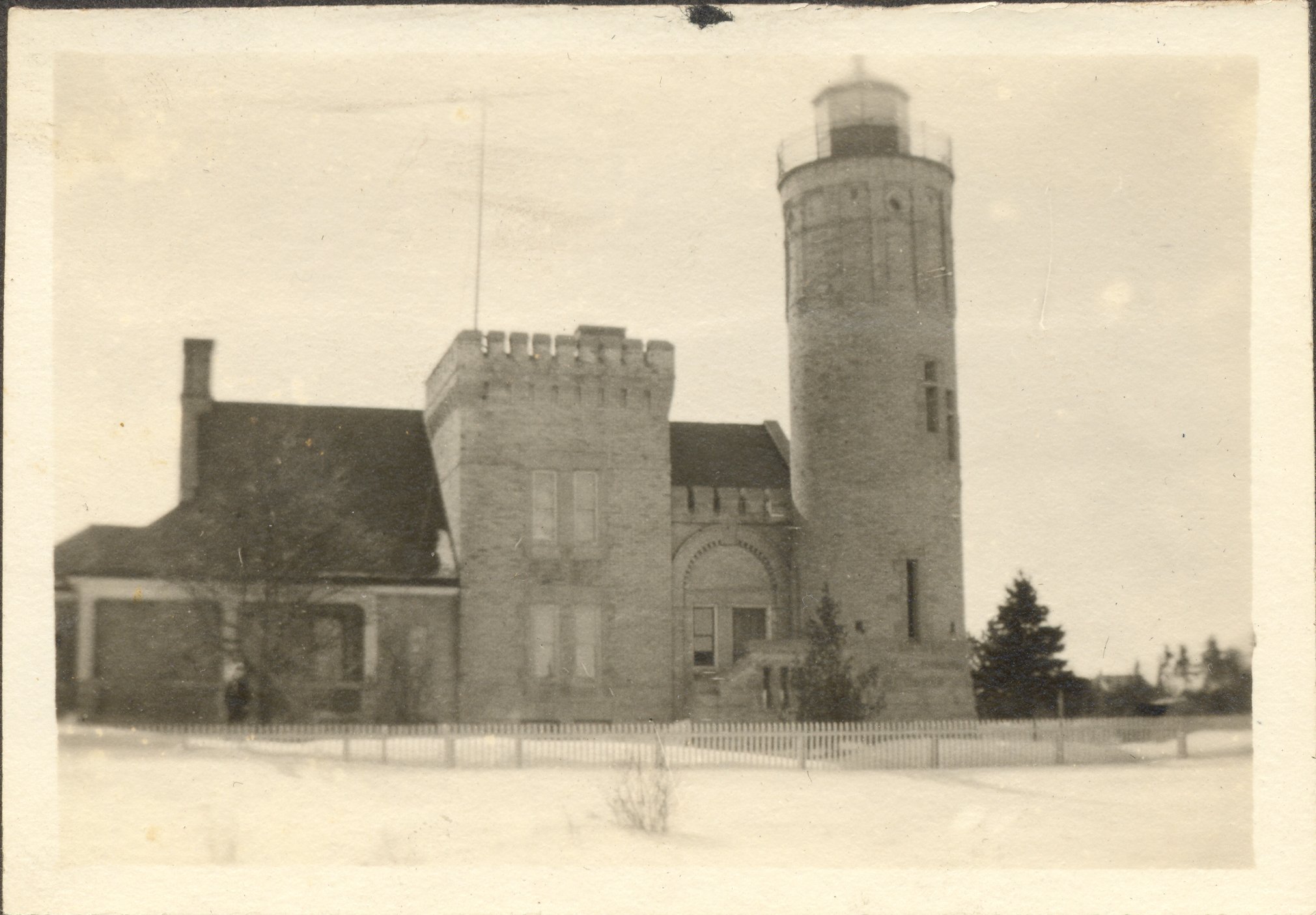
 At most light stations on the Great Lakes, winter was a quiet time for the lightkeepers. With commercial freighters and passenger vessels frozen in their harbors for the winter, there was little traffic on the lakes to warrant keeping light stations operational. Some remote lights were even abandoned every winter, with crews returning only when the ice began to break up in the spring. At Old Mackinac Point, however, keepers stayed at the station and even continued to work once snow started falling.
Life certainly slowed down at Old Mackinac Point once ice choked the Straits of Mackinac, but work never completely stopped. In the early 20th century, keepers stopped exhibiting the light once ice conditions made vessel passages dangerous or impossible, usually sometime in January or early February. On January 29, 1915, for instance, Keeper George Marshall “closed station today for the winter.” The keepers stopped making entries in their logbooks until they re-opened the station in early spring, usually sometime in March or early April. With their work reduced in the winter months, keepers found time to catch up on basic maintenance projects inside the station buildings. Keeper Marshall even had time on January 14, 1903 to go “out on the ice today fishing.” He “got one trout” during his ice fishing expedition.
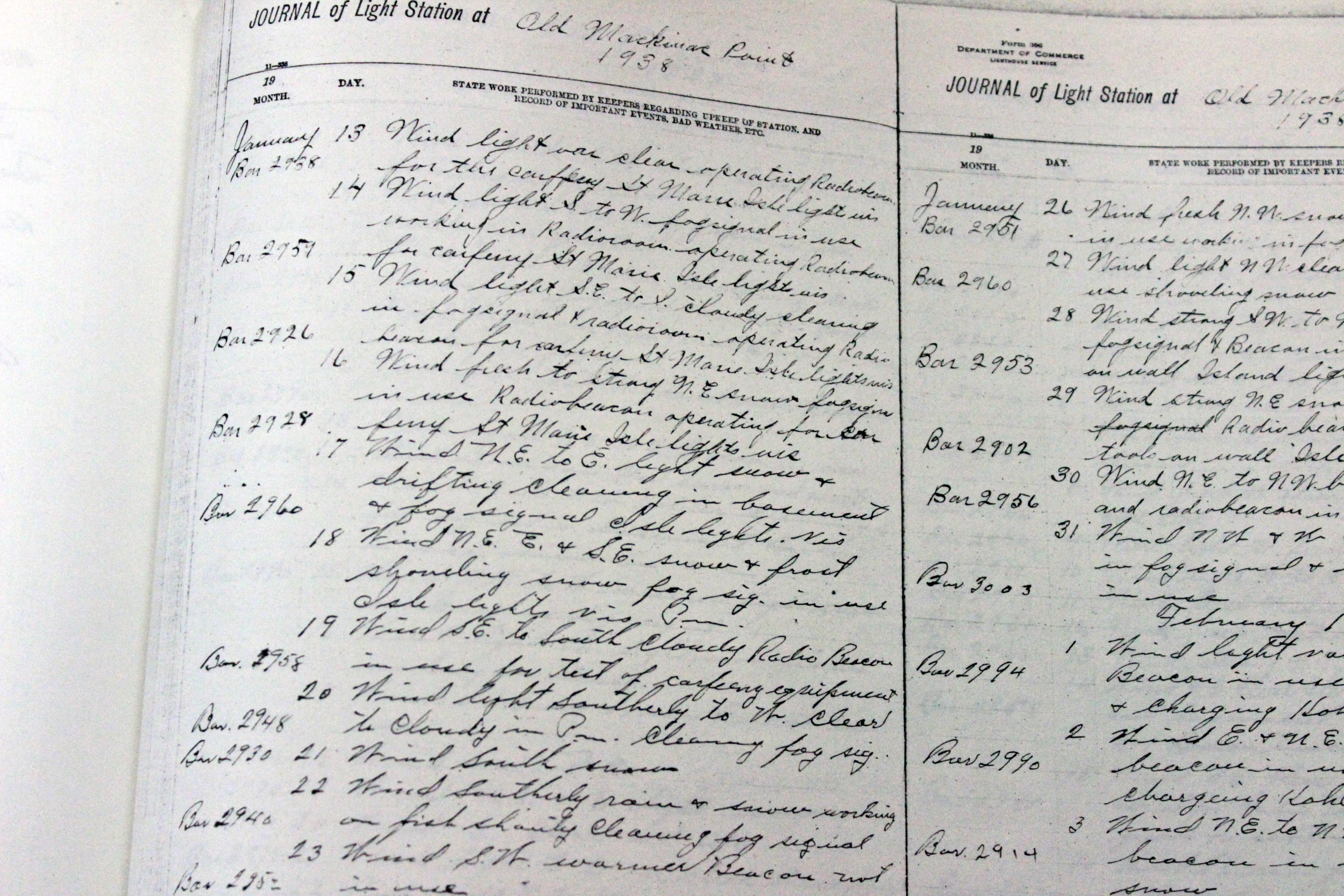
The seasonal nature of work at Old Mackinac Point ended in 1937, when workers installed a radio beacon at the station. This system automatically transmitted a Morse code signal which sailors used to triangulate their position on the water. Since the icebreaking railroad ferries Chief Wawatam and Sainte Marie crossed the straits year-round, the radio beacon at Old Mackinac Point (and others in St. Ignace and on Mackinac Island, which were also maintained by the keepers from Old Mackinac Point) was critical to safe navigation. Logbooks from the late 1930s and early 1940s reveal that keepers and their assistant spent a great deal of time in the radio room, located in the fog signal building, standing watch and maintaining the radio beacon equipment. In January 1938, for example, the station crew spent several days “operating radio beacon for car ferry St. Marie,” allowing the ferry crew to calibrate their own radio equipment to the beacon.
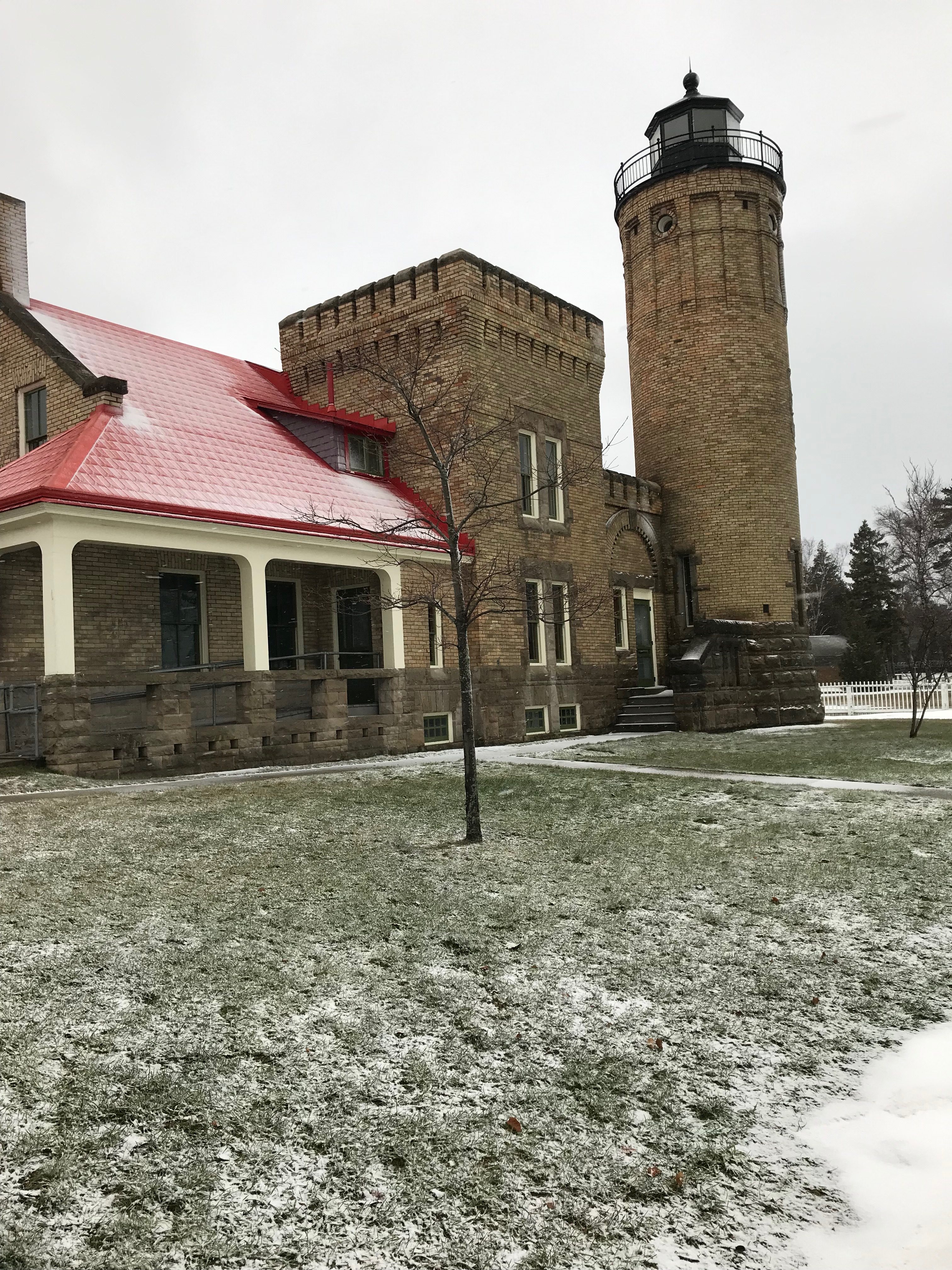 Today, winter is once again a quiet time at Old Mackinac Point. Although the site is closed to the public for the winter, beautiful views of the lighthouse, the Straits of Mackinac, and the Mackinac Bridge can be seen from the surrounding Michilimackinac State Park. In much the same way as it did a century ago, the lighthouse will return to operation in the spring. Old Mackinac Point opens for the 2019 season on May 3. We hope you’ll join us this summer at Old Mackinac Point- please visit our website to plan your visit.