



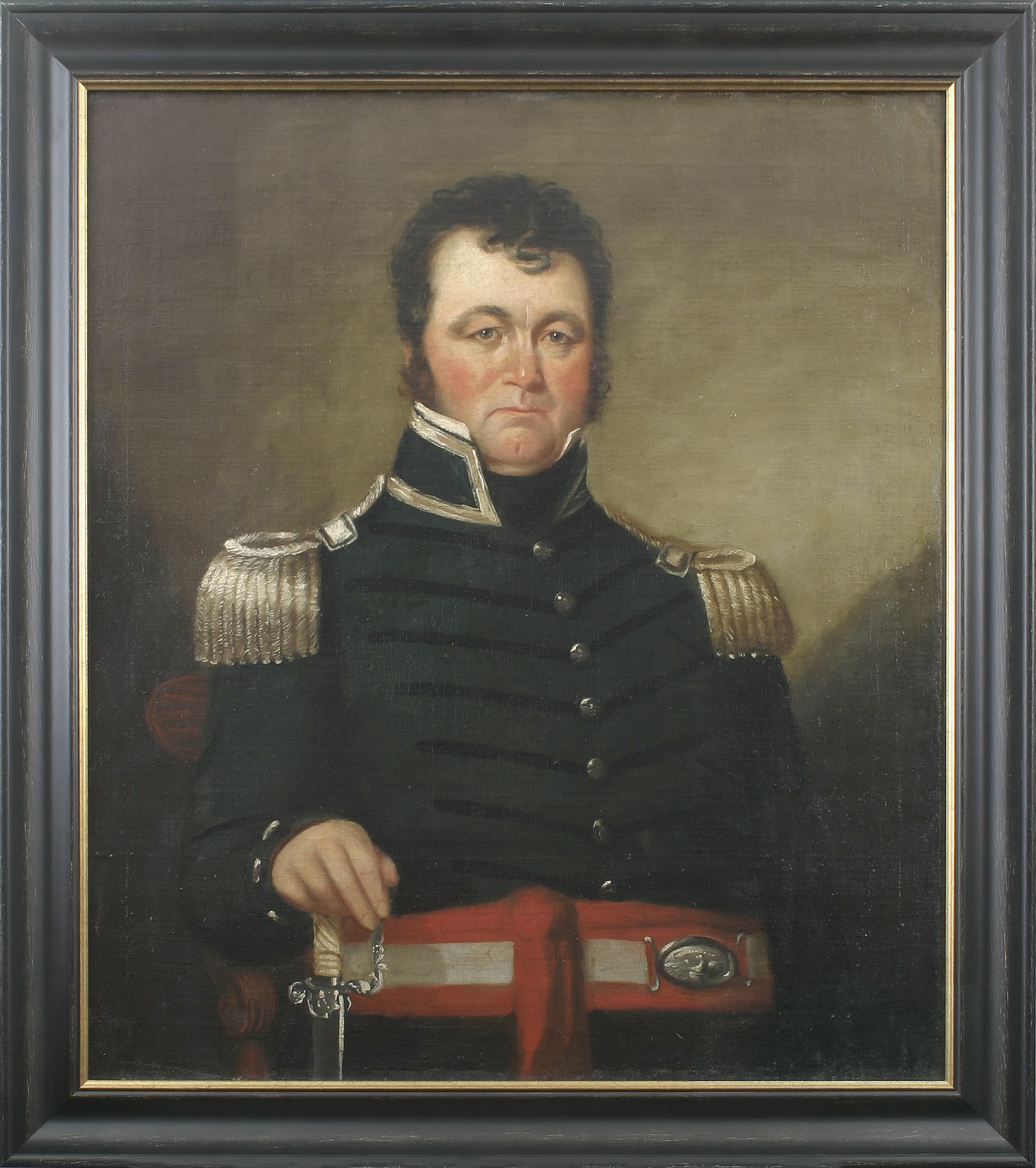
William Whistler joined the United States Army in 1801 when he was only eighteen years old, kicking off a career of over 60 years in the military. Whistler was primarily stationed in the Great Lakes Region, often at locations such as Chicago, Detroit, and Niagara. In 1816, 1823, and 1833, however, Whistler was stationed at Fort Mackinac. For his two final years on Mackinac Island, he served as commandant, meaning he oversaw the operations of the fort and the soldiers stationed there. When Whistler retired in 1861, he had achieved the rank of colonel, a testament to his decades of service to the U.S. Army.
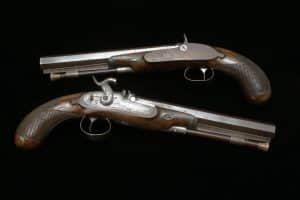 This pair of pistols was purchased by Colonel William Whistler from Samuel Henry Staudenmayer, a gunsmith based in London’s West End. Staundemayer had apprenticed under the famous gunsmith John Manton and was known for his craftsmanship. With finely made and intricately engraved weaponry, Staundenmayer catered to a primarily high-class and aristocratic clientele, including the Duke of York and the Prince of Wales. Here, you can see the detail that would have attracted clients.
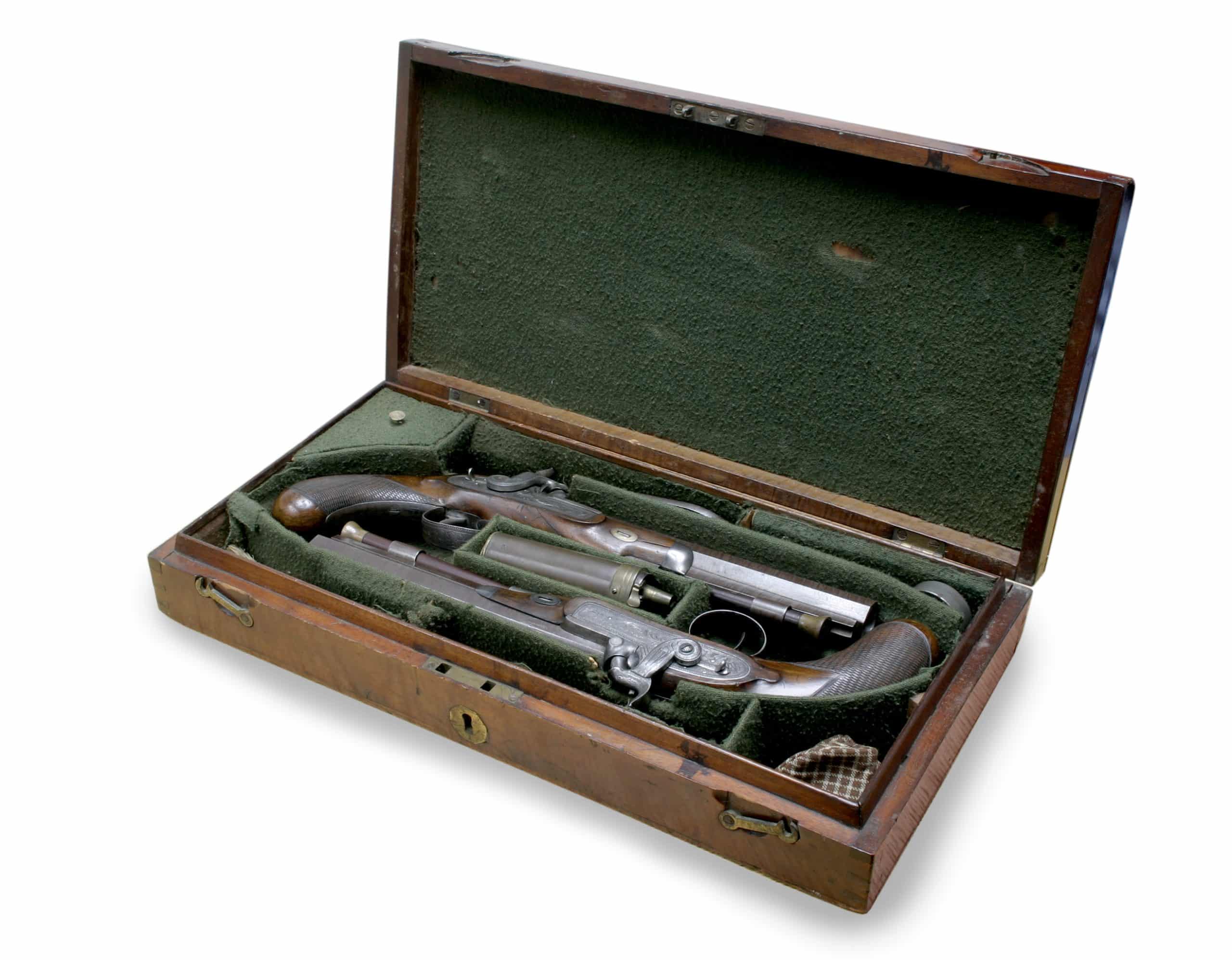 The pistols were stored in an elegant wooden case with brass hinges and rich, green fabric, helping to highlight their lavishness. Inside the case, several other items were found which were used for maintenance on the pistols. This included cloth swabs for cleaning and a bottle of oil to protect and preserve the pistols, as well as a small cleaning brush made of mahogany and ivory. In addition, the case held a brass powder flask, a canister for pistol caps, and a steel mold for bullets. All together, these additional items show the immense amount of work and care necessary to maintain these fashionable pistols – highlighting their role as status symbols and luxury items.
Made sometime between 1802 and 1824, it is likely that these pistols arrived on Mackinac Island with Colonel Whistler when he served at Fort Mackinac in 1833. As commandant, Colonel Whistler and his family would have lived in one of the officers’ quarters within the fort walls.
Mackinac State Historic Parks also has a portrait (on exhibit inside The Richard & Jane Manoogian Mackinac Art Museum) and silver pectoral related to Colonel William Whistler and his Staudenmayer pistols. These artifacts offer a glimpse into the life of a high-ranking officer serving on the Great Lakes in the early 1800s. If you are interested in conducting further research, contact Curator of Collections Brian Jaeschke at JaeschkeB@Michigan.gov to make an appointment.ay