



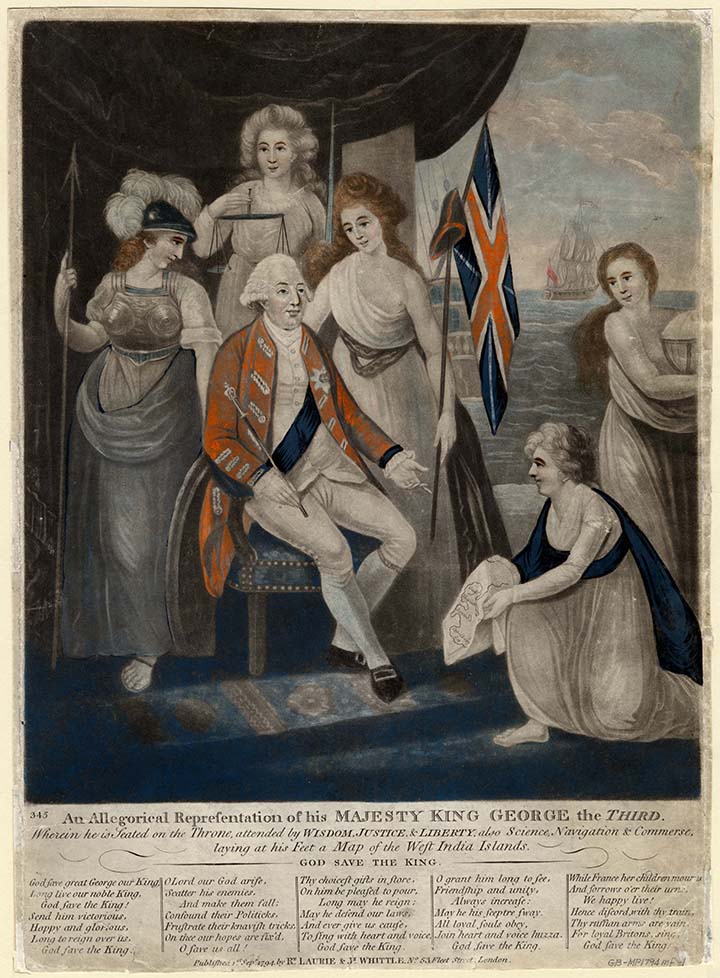
An annual highlight of the late 18th century, King George III’s birthday on June 4 gave British residents of Michilimackinac, and throughout the British Empire, an opportunity to celebrate in style. Each year, troops around the world fired special salutes to mark the King’s birth, while civilians and soldiers alike gathered for parties and raised toasts to His Majesty’s health.
Royal birthday celebrations took many forms, but they almost always featured artillery or musket salutes paired with other ceremonial displays. In New York City in 1766, Captain John Montressor recorded that all British officers joined a procession accompanied by salutes from warships in the harbor. Residents roasted oxen and distributed beer and grog to the civilian population. That evening, candles illuminated every window in the city, and officers attended a formal dinner where toasts—each followed by additional artillery salutes and enthusiastic “huzzas”—filled the night. Ironically, the festivities may have reached such heights because New Yorkers were also celebrating the repeal of the Stamp Act that year. At Fort Niagara in 1772, officers ordered the soldiers of the 60th Regiment to appear “very Clean well dresst and [their hair] Powdered” as they fired three musket volleys alongside an artillery salute.
 Even the outbreak of the American Revolution failed to halt these annual observances. During the summer of 1775, as rebel forces surrounded the British in Boston, Lt. John Barker of the 4th Regiment described an artillery salute fired from the front lines, followed by another from the Royal Artillery on the common and a third from the muskets of the assembled piquet guards. Shortly afterward, American rebels attempted to answer with a “salute” of their own. At Quebec in 1776, Governor Guy Carleton oversaw an artillery salute from the city’s citadel, and Baron Friedrich Riedesel—commander of German troops serving with the British in Canada—attended a ball later that evening. The following year, Captain Georg Pausch of the Hesse-Hanau Artillery took part in another royal salute from the Quebec citadel, followed by three massed volleys from the British infantry of the 29th Regiment. That night, Pausch’s artillerymen competed against a Royal Artillery crew in a timed firing contest, winning by firing twelve shots in one minute. Meanwhile, Quebec’s civilians illuminated the town and staged their own feu de joie, firing muskets and pistols from sunset until well past midnight.
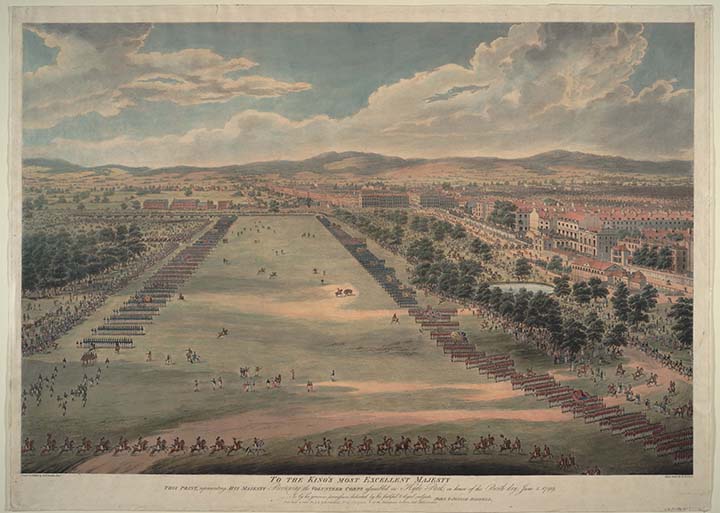
By 1778, many of the British and German troops who had celebrated in Quebec found themselves prisoners of war after surrendering to American forces at Saratoga in October 1777. Despite these hardships, Baron Riedesel’s wife, Frederika, who accompanied him into captivity, hosted a dinner and ball for the British and German officers held in Massachusetts. In her diary, she wrote that “never, I believe, has ‘God save the King’ been sung with more enthusiasm or with more genuine good will.”
Celebrations also reached the remote post of Michilimackinac, where artillery salutes often marked the day. Unfortunately, accidents marred the festivities on two occasions. In 1771, Captain George Turnbull reported that “The King’s birth day a Matross [artilleryman] lost Two of his fingers by not Spunging the Guns Properly.” Four years later, the celebration turned deadly when, according to Captain Arent DePeyster, “one of my matrosses lost his arm on the King’s birth day I fear thro’ mismanagement, his name is Lindsey.” Lindsey died from his injuries on June 16, 1775.
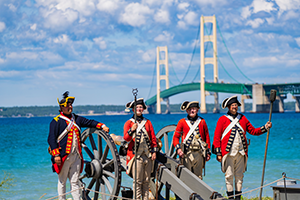
This year, Michilimackinac will once again celebrate the King’s birthday—hopefully in a much safer manner than in 1771 and 1775. Join the interpretive staff at Colonial Michilimackinac on June 4 for artillery salutes, patriotic songs, toasts, and other festivities. Visit www.mackinacparks.com for tickets and more information, and God save the King!