




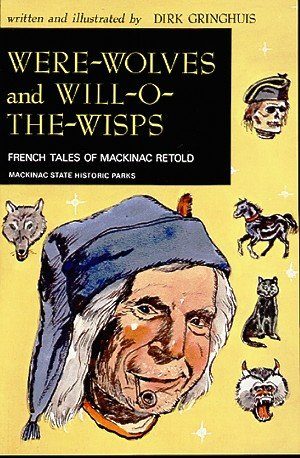
 The following is excerpted from Were-Wolves and Will-O-The-Wisps: French Tales of Mackinac Retold, written and illustrated by Dirk Gringhuis. The stories in this book are the basis for Fort Fright, an annual event that takes place in October. Fort Fright 2025 takes place October 3-4 – click here for tickets.
Soldier Ghosts
 Once a long time ago, on Ile Saint Jean (Prince Edward Island), far to the east of Mackinac before the English came, there were many French soldiers camped there. During the French and Indian War many died and a large cemetery was laid out at a place called Port-la Joye, now Charlottetown. After a time the graves were forgotten. The English built a city and one big house was erected right on top of the graves.
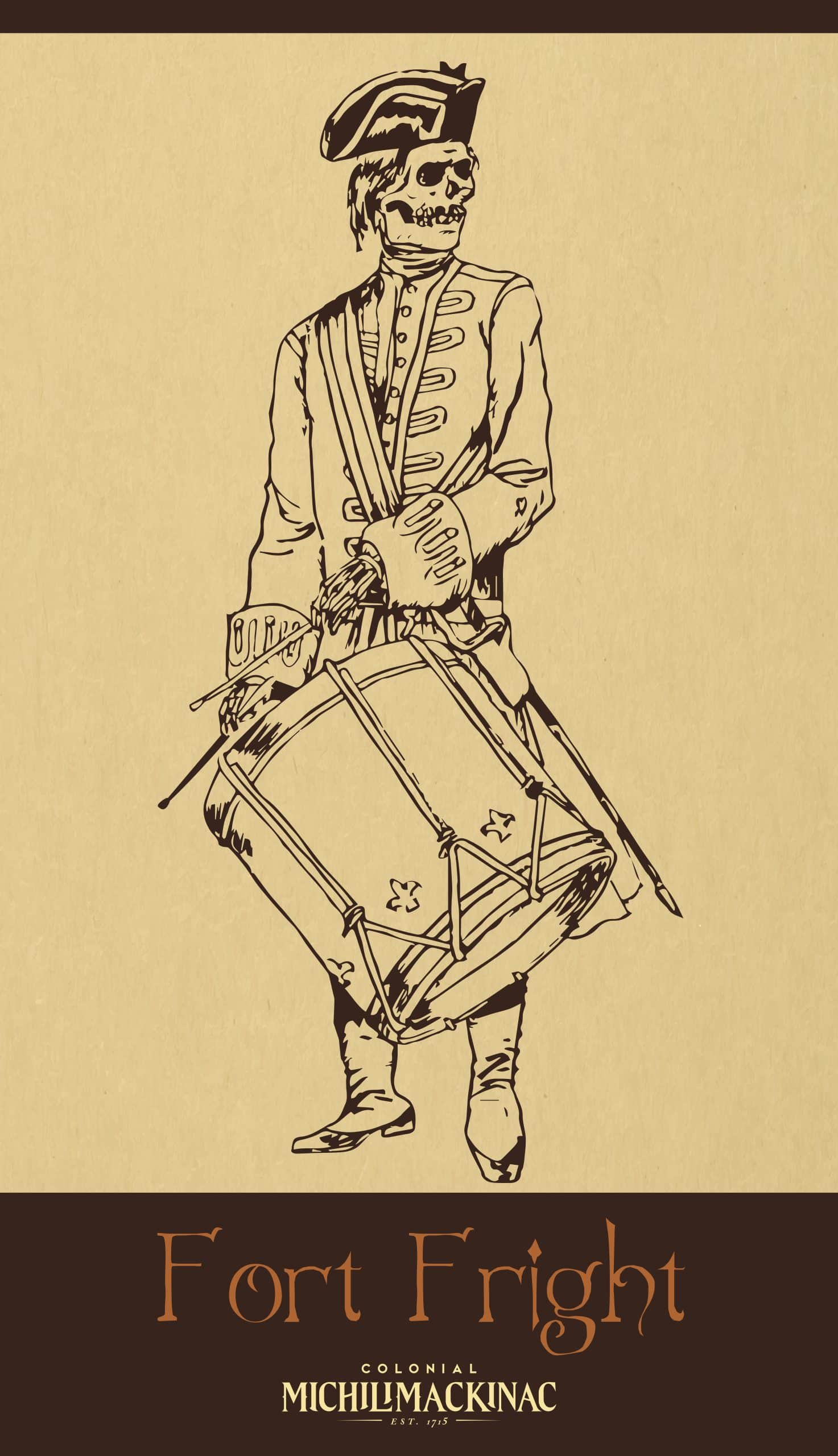
When the people moved into the big house, they knew nothing about the cemetery. The house was large, with many rooms and a fine cellar for storing food. But the first night at the stroke of twelve, they heard the sound of a drum from far away. This was followed by the sound of marching men on parade. When the marching stopped there was the bumping of muskets on the ground. Then drums again, and again the marching feet moving off as if after roll call.
 The next night the same thing happened. The people couldn’t stand the ghostly sounds and moved out. But the next tenant was a hard-headed Scot who didn’t believe in ghosts. Still he awakened to the sound of the drums and the marching feet. He didn’t mind the sound, his father and his father’s father had both been soldiers, but he didn’t like the idea of ghosts either.
The next day he made his way to the French part of town and began asking questions. It was then he learned of the cemetery beneath the house.
“Go to the curé” they told him. “He will know what to do.”
So the Scot went to the priest and told him of the ghostly noises. The curé shook his head. “Let me come with you tonight to hear the noises.” So both set off for a bite of supper, then waited in front of the fireplace for midnight. Again at the twelve the ghost company marched to roll call and then off with the drum.
“I will be back,” said the curé. “Tomorrow night I will say mass, Monsieur, for those poor fellows who died and were buried without a prayer for their souls. You can help.”
The night night he was back. The priest and the Scot went to the cellar to wait. Above them the clock struck twelve and when the drums sounded, they were ready. Asa they heard the thump of musket butts as thought he company were standing at attention, the priest said the mass and the good Scot read the responses. When the mass was done, the feet marched quickly to the drum and ceased.
From that day forward the Scot lived in peace. The fallen soldiers could like quiet at last.