




The fields, woods and waters of the north are quiet this time of year. Black bears are settling down for winter, while thirteen-lined ground squirrels have been underground for several months. Summer birds have flown to warmer climes where food is plentiful and ice is rarely seen. From further north, some winter migrants have made their way to Michigan from boreal and Arctic breeding grounds. As you drive country roads, watch for snow buntings and Lapland longspurs who spend the winter here. Also keep an eye out for winter finches eating berries or a ghost-like snowy owl perched on a telephone pole.
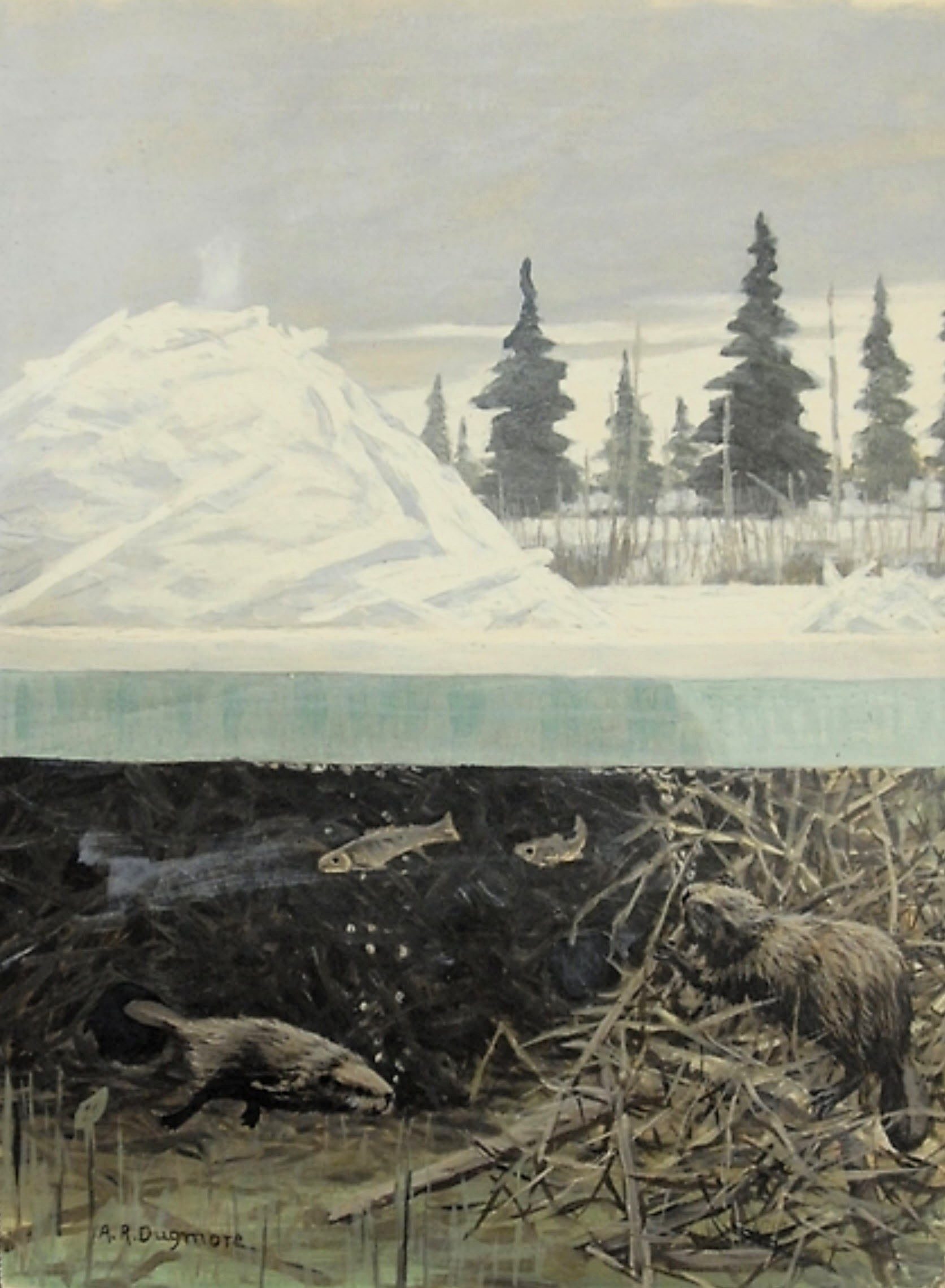
Some of our most familiar birds and mammals don’t move far at all, utilizing amazing adaptations for winter survival. Beavers, for example, plan ahead better than many people. These busy rodents store branches underwater which are accessible even when ice covers their ponds. Why branches? As A.R. Dugmore explained in The Romance of the Beaver (1914), “Beavers’ natural food consists of a purely vegetable diet, the chief item being the bark of trees, not the outside shell, but the cambium layer which contains the very life of the tree.”
Swimming under ice isn’t for everyone. To keep warm and dry, a beaver’s fur becomes noticeably thicker in winter months. Composed of two layers, a plush undercoat of interlocking strands is protected by an outer layer of long, oily guard hairs. Waterproof oil is produced in glands near the base of the tail, combed through a beaver’s coat using a uniquely split nail on each back foot.
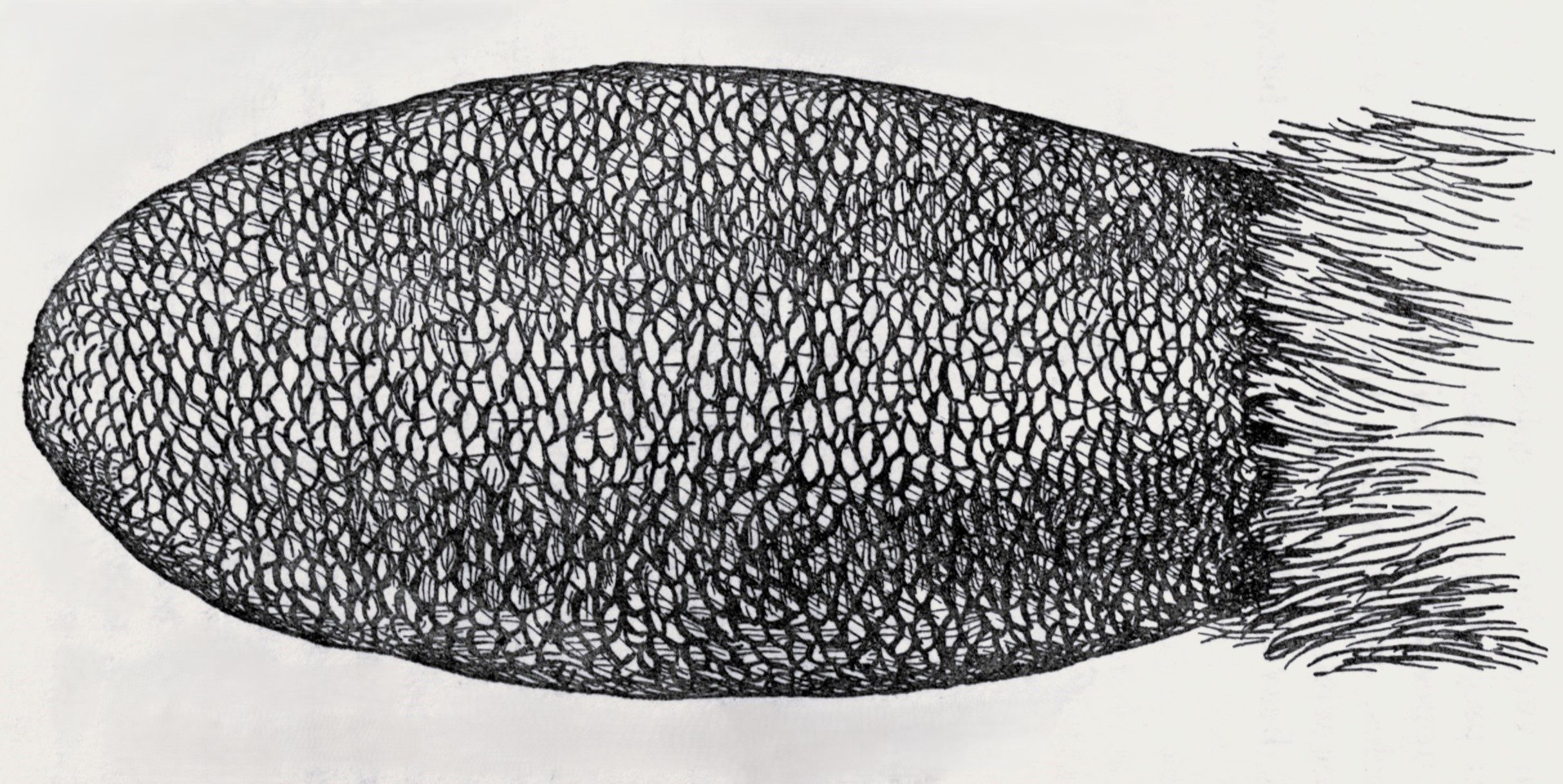 Like other North Woods wildlife, a beaver also adds a thick layer of insulating fat to aid in winter survival. Much of this energy is stored in its large flat tail, and is used when other food is scarce. By winter’s end, a beaver’s tail may have shrunk to half the weight it was a few months earlier!
Winter Education Outreach Programs Available
If you’re an educator (or know one), you’re invited to explore beavers and other Michigan animals in the classroom this winter. Education outreach programs are offered by Mackinac State Historic Parks from January through April. “Amazing Animal Adaptations: Winter in Michigan’s North Woods” is an interactive presentation that explores what plants and animals need to survive, the climate of our region, and why the seasons change. Using animal mounts, photos, and stories we’ll investigate the adaptations of animals such as owls, grouse, otters, fox, and beaver.
 Another presentation, “Historic Mackinac on Tour,” highlights the history of the Straits of Mackinac. Programs are available within a 150-mile radius of Mackinaw City, including an area covering Alpena, Houghton Lake, Mt. Pleasant, Traverse City, Sault Ste. Marie, and Marquette. Virtual versions are also available for classrooms throughout Michigan.
To learn more about these programs and to schedule a session for your classroom, visit www.mackinacparks.com/education/in-person-education-outreach-3/. Registration begins January 2nd.