


 According to some sources, the average American family washes 300 loads of laundry ever year. People are inherently dirty, and sweat, dirt, food, and many other things come into contact with our clothing every day. We clean our clothes to stay healthy and keep them looking good. Modern laundry machines and detergents can efficiently and effectively remove all that smelly nastiness from our clothes. But how did people clean their clothes before detergents and washing machines?
Imagining laundry in the past will no doubt bring up images of scrub boards, large kettles of water and lots and lots of soap, all handled by housewives as part of their daily routine. However, laundry technology and methods used before the modern era were often highly specialized, and usually completed by professional laundresses.
Researching the 18th century washing process reveals that each laundress likely had her favorite techniques for removing stains and cleaning clothes. Some of these may have been learned in person, while others may have come from books, newspapers or pamphlets that were published at the time. Some of these methods may seem foreign and odd to us today, but when we look closer into the chemistry behind some of them, they begin to seem, in truth, rather brilliant.
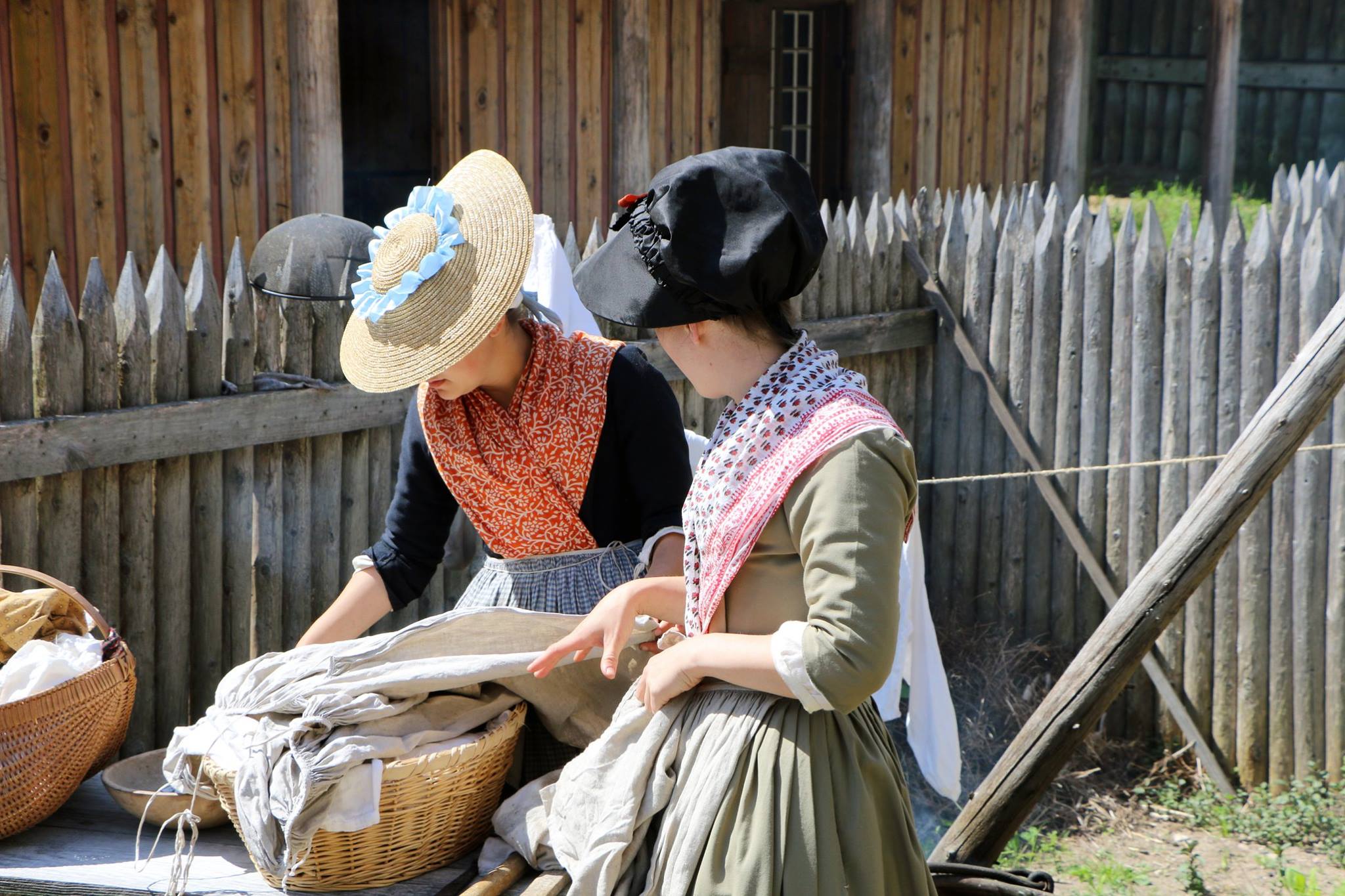 One of the first steps in washing linens, for example, is sometimes referred to as “bucking” or “steeping.” Bucking in the 1700s described a process wherein dirty linen shirts, etc., would be placed in a wooden tub and covered with a cloth. The cloth was then topped with hardwood ashes and boiling water poured over the ash, so that the resulting solution could drip down into the tub. The water streaming through the ash created a very alkaline solution, called lye, that bonds to grease and oil quite readily. The alkaline water was drained, reheated and the process would be repeated, sometimes for days, depending on how dirty the linen might have been. Using this lye solution required a lot of fuel to keep the water hot, so sometimes a cold bucking was used in places were firewood or coal were in short supply. The bucking process, either hot or cold, was useful in protecting the delicate, wet fibers of linen from abrasion. It could loosen and clear the cloth from dirt and grease without scrubbing the laundry, and no scrub boards were needed.
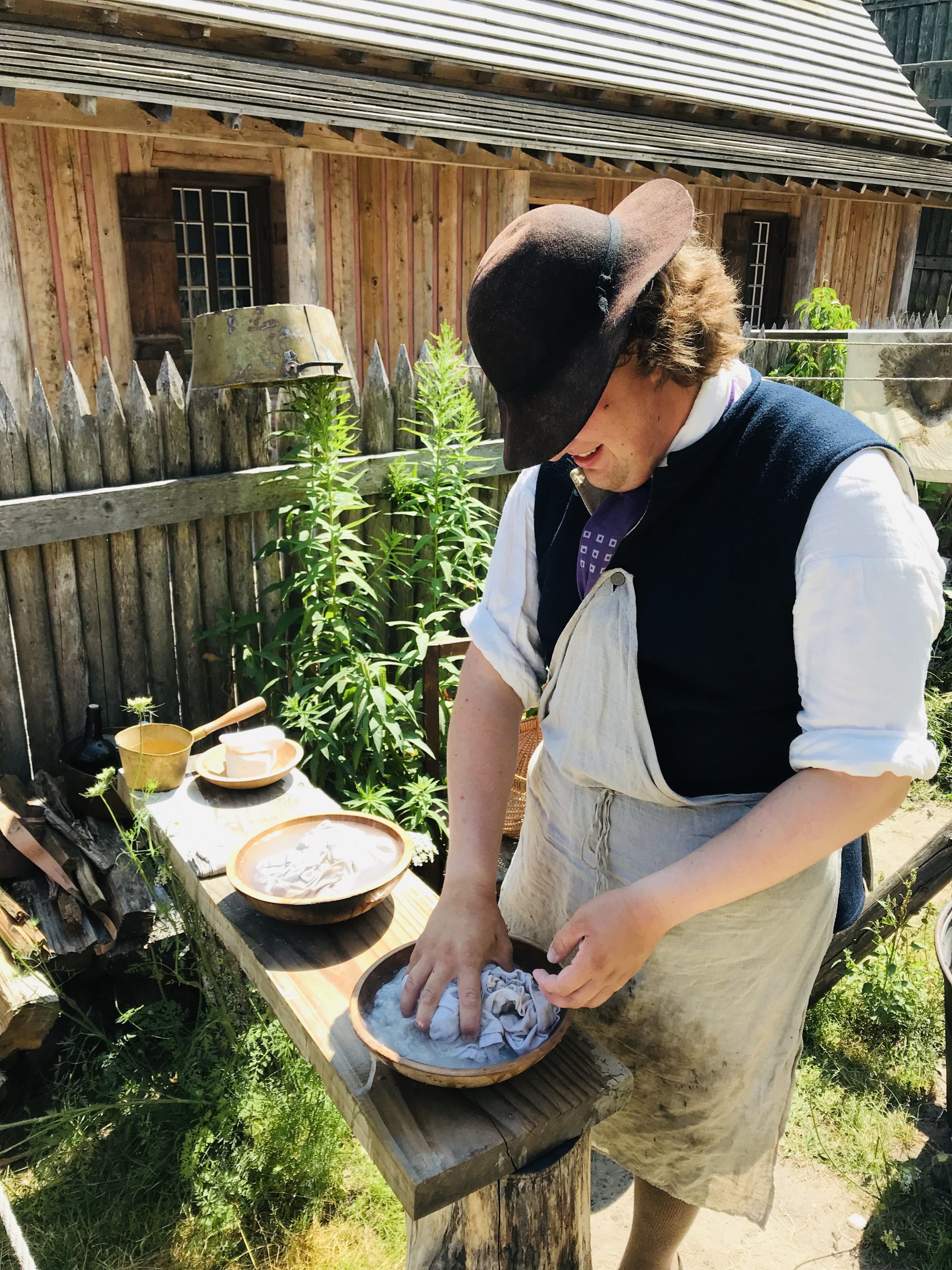
Quite often, linens were soaped after they were bucked. Each item was pulled from the bucking tub and spots were gently rubbed between the hands to further loosen the dirt and grease. As soap is worked and kneaded into the linen it acted like a middleman by bringing oil and water together so that the dirt and grease left after bucking can be rinsed away.
Soap works due to its unique molecular makeup. Each soap molecule has both hydrophilic (attracted to water) and hydrophobic (repelled by water) parts. When soap is added to dirty water, the individual soap molecules arrange themselves so that the hydrophobic parts surround the grease, oil, or dirt molecules, while the hydrophilic parts point outwards towards the surrounding water molecules. As soap molecules gather together around the dirt or oil, they form molecular balls called micelles. The dirt or oil is trapped inside the micelles, separate from the water, and so can easily be rinsed away thanks to the hydrophilic shell surrounding it.
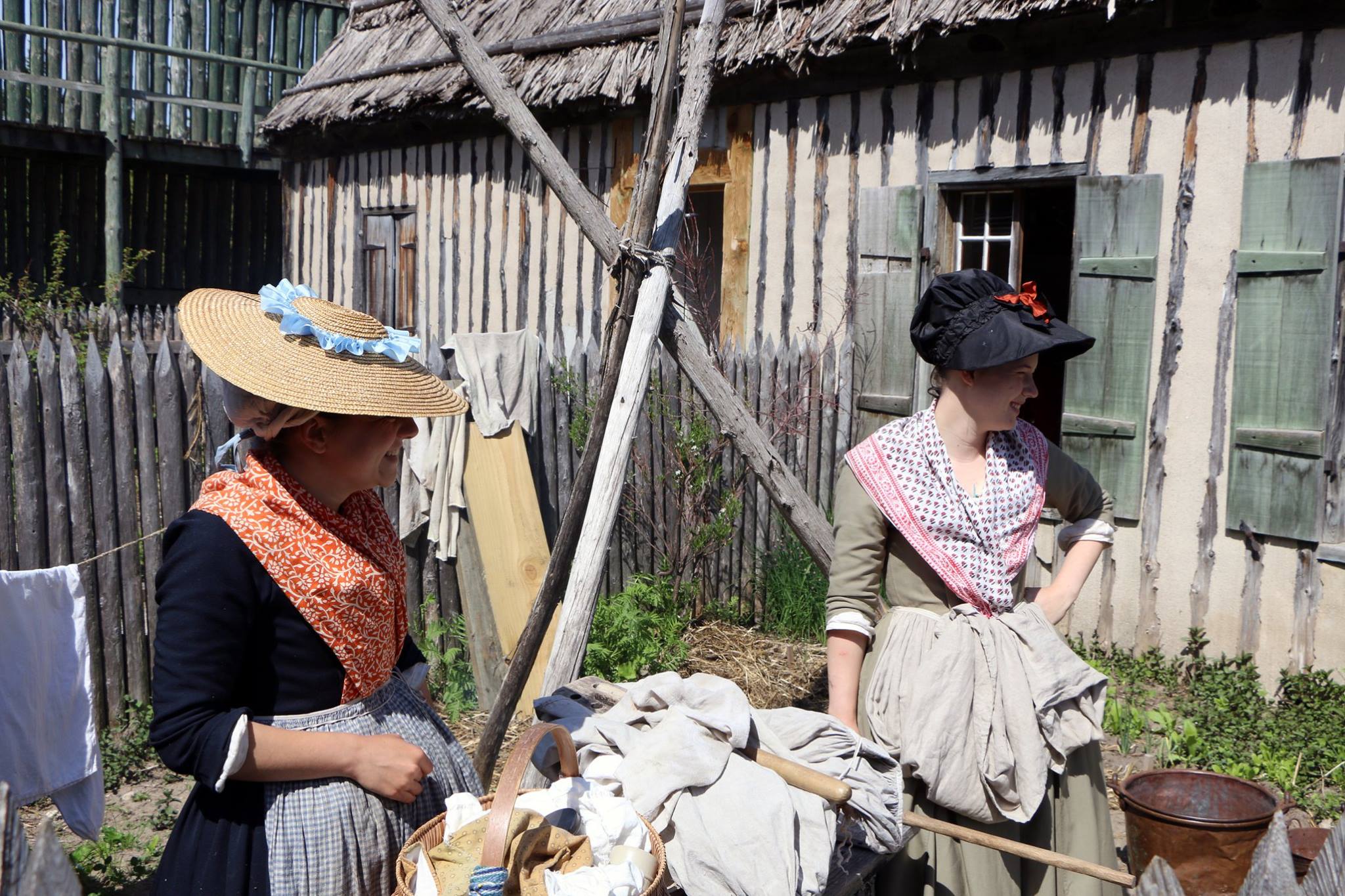 Historically, soaping was followed by some sort of mechanical removal process. Laundry could be beaten with a short handled “beatle,” smacked against a board or hit against anything else that might be handy. Our modern washing machines still emulate the work of beating and smacking the laundry to essentially knock out the soap covered dirt and grease. This process can get items pretty clean by literally knocking the dirt out of them.
The steps mentioned above could be supplemented with really interesting stain removal techniques. One of these, vinegar, can mix with water, oil, alcohol and almost any other kind of liquid. When dissolved in water, the vinegar breaks down into two components, hydrogen and acetate. The hydrogen will try to bond to any molecule that it encounters and weakens the molecule’s structure. This quality makes the hydrogen great at cleaning stains made from substances, like coffee, tea, grass, blood and rust. The second component, acetate, reacts with molecules in grime and changes their makeup so that water can dissolve them. Vinegar also gets rid of odors by killing off the bacteria and fungi that cause them. Its acidic nature destroys the cell structure of bacteria that cause smells trapped in fabric.
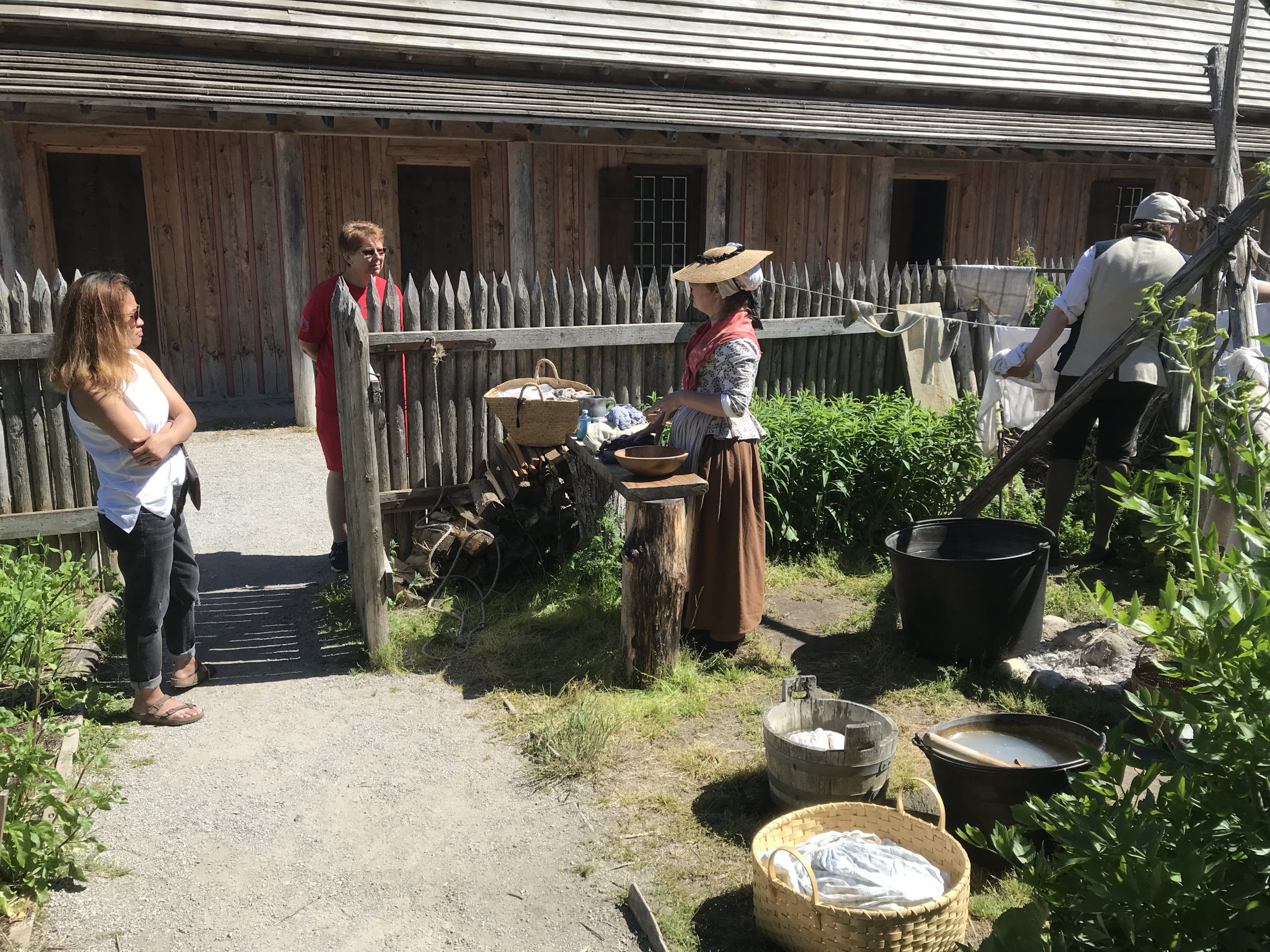 Another widely-used laundry treatment was ammonia. Many people today still use ammonia as a laundry additive. It softens clothing, whitens and is especially useful in taking out grass, blood, and perspiration. Historic laundresses would purchase or produce their own ammonia, which was made from stale urine. Besides being used for laundry, industries used the stale urine in the production of alum, as a mordant for dying cloth, for leather dressing and in many other trades. When ammonia is used for cleaning, it reacts with oils and fats to wash them away. It also neutralizes acids and is good for removing stains in fabrics like coffee, tea and berry juice.
Our historic laundresses had many other ways to keep their customers clean and healthy. In addition to specific stain treatment for specific fibers, they also added steps to the process that could include starching, blueing whites, ironing, bleaching and of course drying. For more details about how laundry worked in the 18th century, and to see the process in action, visit us at Colonial Michilimackinac. Please also consider joining Mackinac Associates, which makes many of our onsite programs and exhibits possible.