




“A bird’s song is the most beautiful music in the world.”
S.E. White (1891)
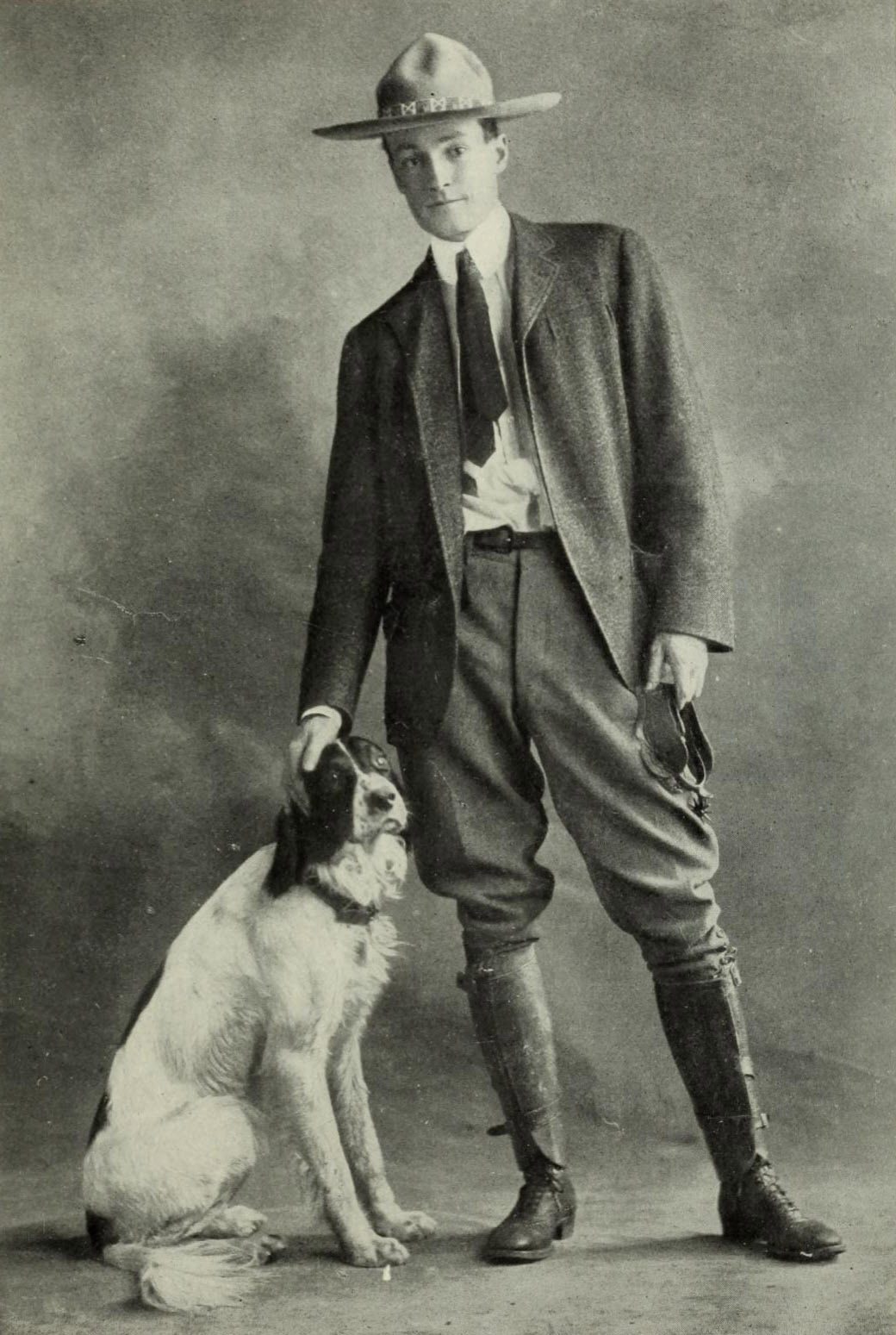
Stewart Edward White (1873-1946) was the second of five children born to Mary and Thomas Stewart White, a successful lumberman of Grand Rapids, Michigan. Guided by his father, Stewart grew up in the woods, particularly in lumber towns of northern Michigan. After graduating from Grand Rapid’s Central High School, this curious and creative young man became intensely interested in ornithology. Between 1890–1893, he wrote more than 30 articles on birds which became his first published writings.
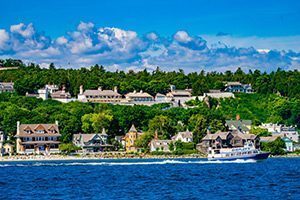
Thomas White built a cottage on Mackinac Island’s West Bluff between 1890-1891, which served as a summer retreat for his family. Known as “Over the Glen,” this rambling Queen Anne structure served as the perfect base for many adventures. For Stewart, this largely took the form of three seasons of dedicated ornithology field work. An article summarizing his findings, “Birds Observed on Mackinac Island, Michigan …” was published in the July 1893 edition of The Auk, the official journal of the American Ornithologists’ Union.
Summer Birds of Mackinac Island
Stewart’s detailed observations offer a fascinating look at the island’s avian wildlife and landscape near the end of 19th century. His records coincide with the period of Mackinac National Park (1875-1895) and early attempts at nature conservation in Michigan. While some birds and their habitats are easily recognizable today, some conditions have changed dramatically over the past 130 years. Below are some of Stewart’s firsthand observations, followed by a modern perspective.
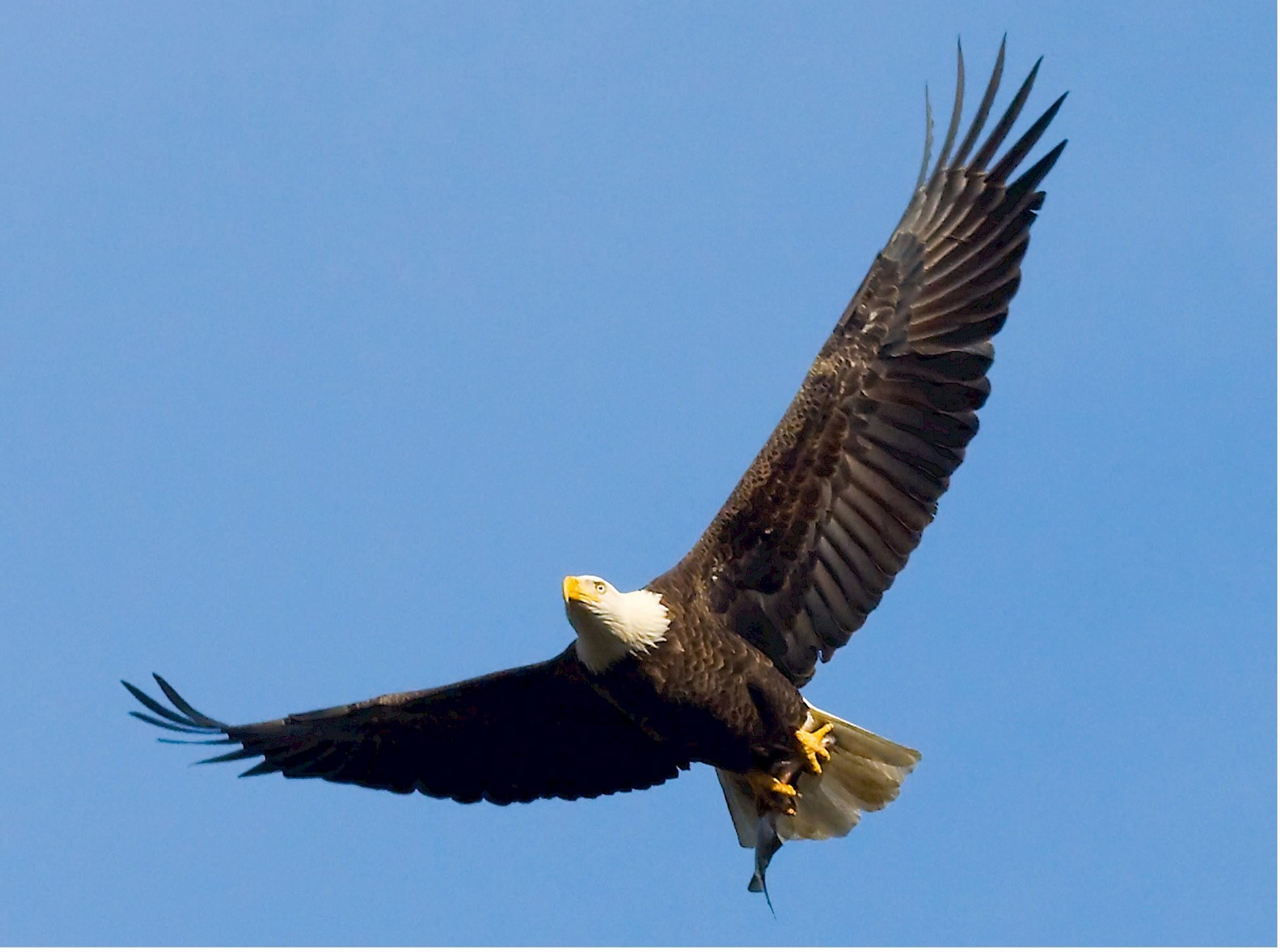 Bald Eagle: “In 1889 three of these birds, two adults and one young, were seen at various times during the summer. In 1890 only one of the old ones and the young one were observed. The female was shot by a local taxidermist. In 1891 two mature and two young were on the island. These birds are common at Les Cheneaux.”
With populations in severe decline, eagles received special legal protection in 1940. In the 1950s, widespread use of DDT reduced the population even further. Only 52 breeding pairs lived in Michigan in 1961. Today, roughly 900 breeding pairs exist in the state and sightings are common over the Straits of Mackinac.
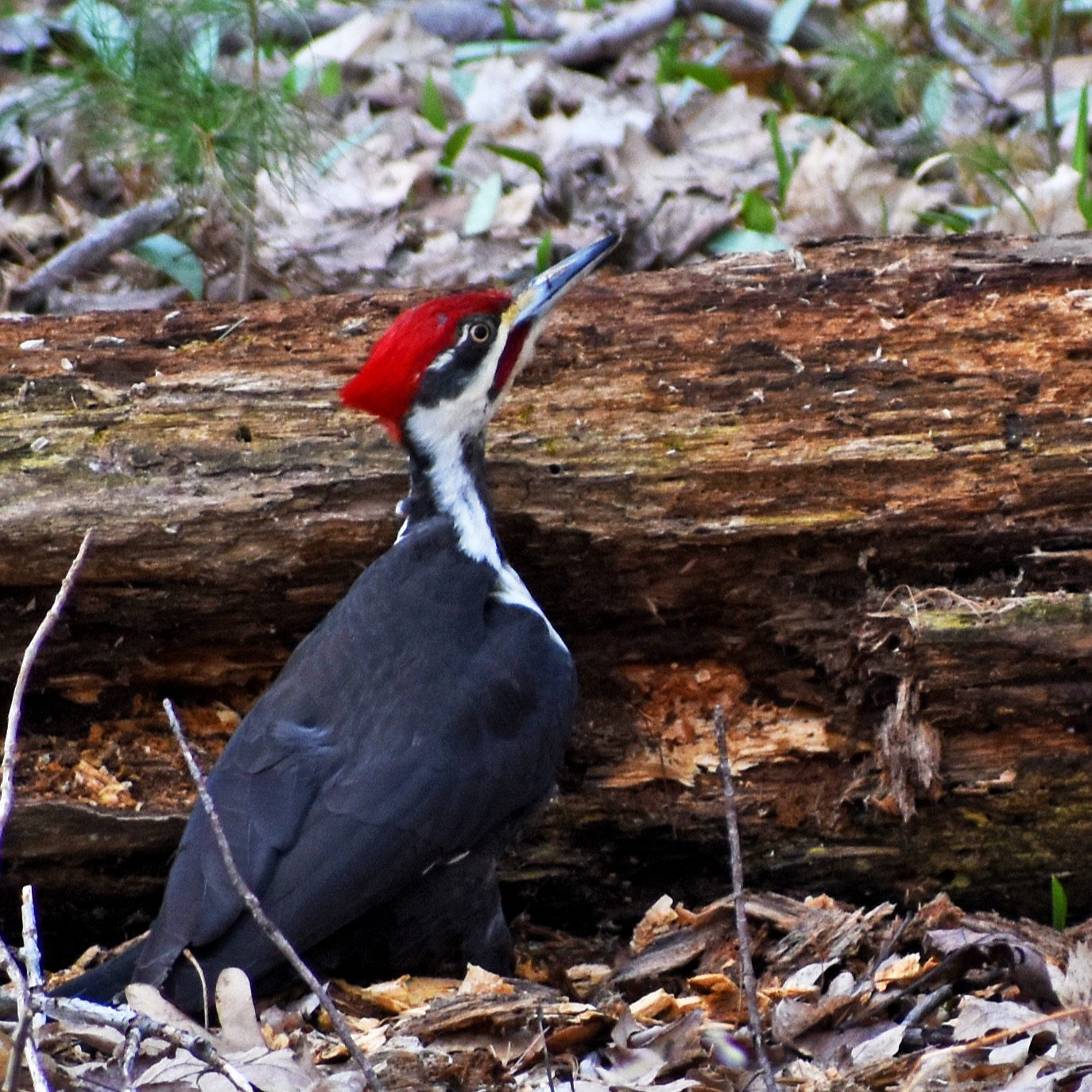 Pileated Woodpecker: “These birds are very rare and are becoming scarcer every year. They are now confined to the heavily timbered portions of the country, usually along the river swamps. They have a loud cackling cry like that of a scared hen, and their hammerings can be heard a long distance. On Mackinac Island a specimen was brought to my brother by an Indian boy, who assured us that the bird was not uncommon as a late migrant. The country people call them ‘Woodcocks’ and under that name they are often sold to unsuspecting victims in search of a dainty.”
This crow-sized bird is the is the largest woodpecker of the North Woods. No longer shot for food, its numbers have grown in recent years. Today, it can be considered a common (though somewhat shy) resident. Listen for its reverberating call, “cuk-cuk-cuk-cuk” echoing through the trees.
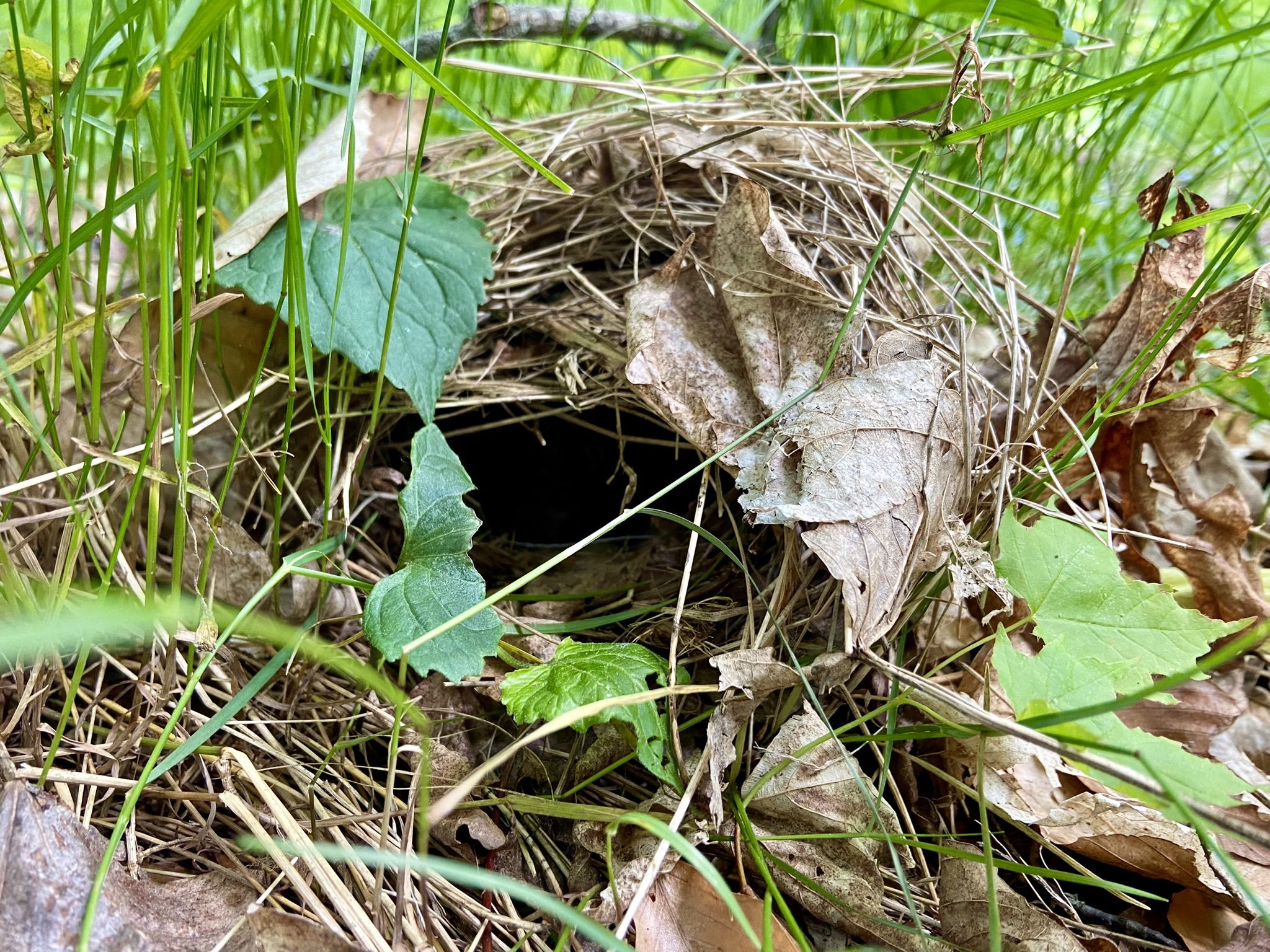
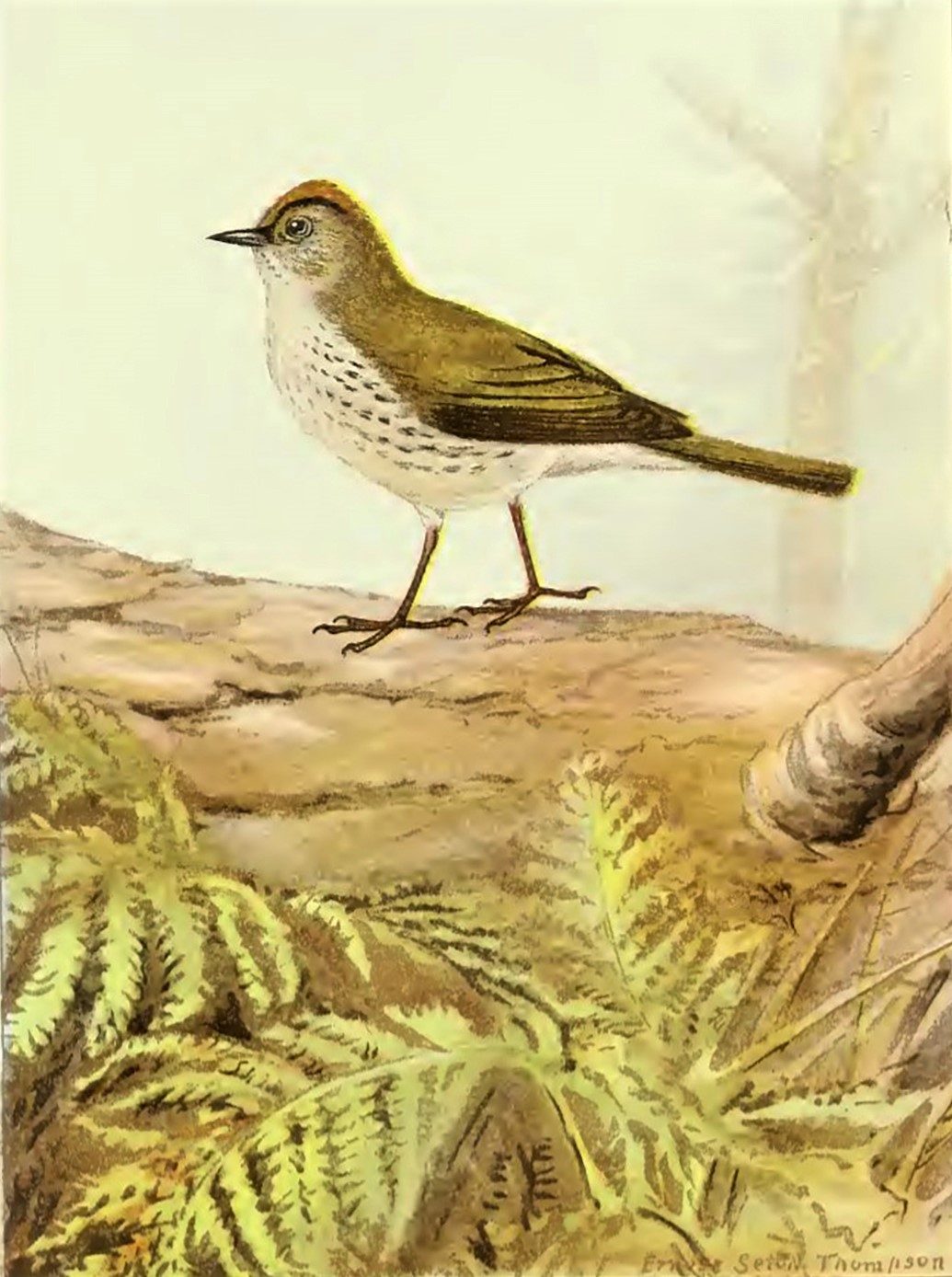 Ovenbird: “Common in the maple woods. On several occasions it has been my good fortune to hear the beautiful vesper song of this species.”
Thankfully, this small warbler remains a common resident of Mackinac’s woodlands. Spending much of its time on the ground, this species builds a dome-shaped nest resembling a wood-fired bread oven. An ovenbird nest was discovered this June on Mackinac Island, near Fort Holmes. Their loud echoing call, “teacher-teacher-teacher,” is a common sound across the island.
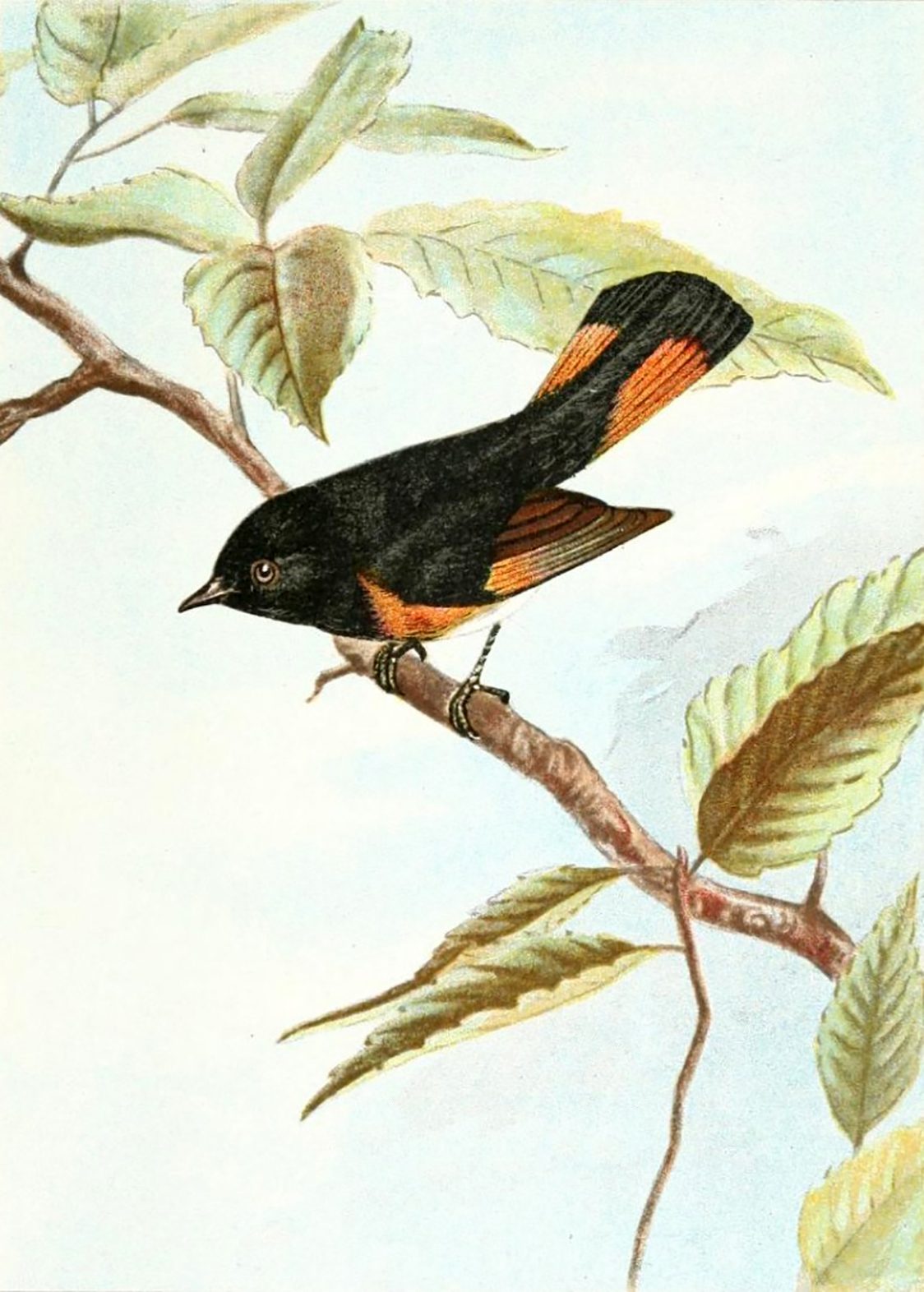 American Redstart: “The most characteristic bird of the island. It occurs in such amazing abundance that it seems as if every tree contained one of these birds.”
Of all 27 warbler species which have been recorded on Mackinac Island, this is the one you’re most likely to see. Redstarts are still very common throughout the straits region, and are often quite bold. Adult males sport black plumage with orange spots (not red) and a white belly. Females and first-year males feature subtle gray-green tones with yellow spots.
Enjoying Mackinac Wildlife
These few observations are just a small sampling of the amazing diversity of wildlife which calls the North Woods home. More than 230 species of birds have been recorded on Mackinac Island and in the surrounding straits region. Dozens of other animals also abound, including mammals, fish, amphibians, and reptiles too bountiful to name here. Wherever you roam, special encounters await as you explore Mackinac’s “wild side” and the natural wonders of summertime in northern Michigan.