
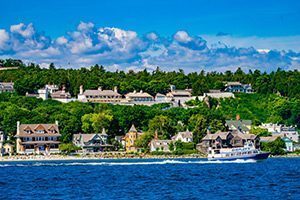




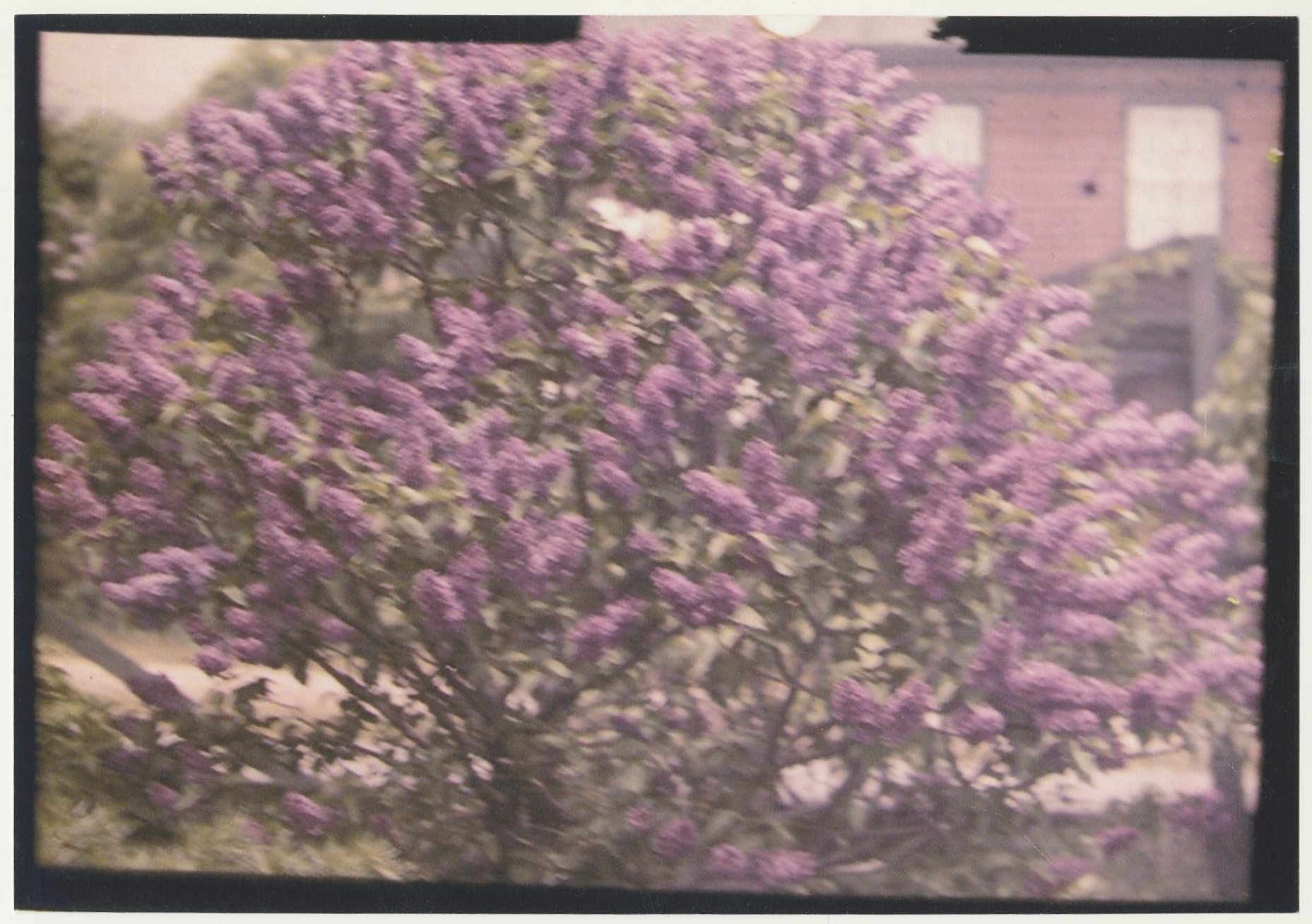
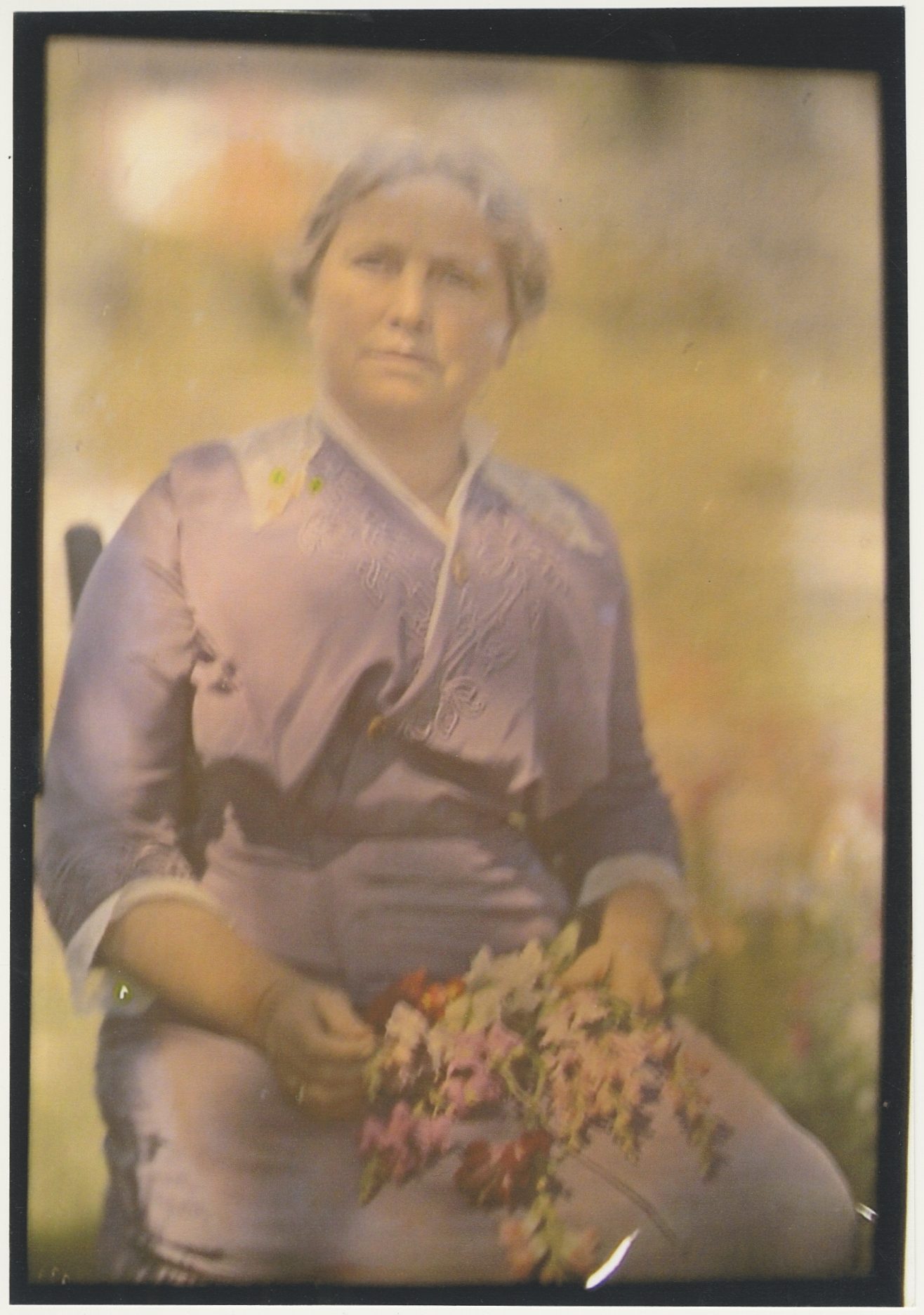
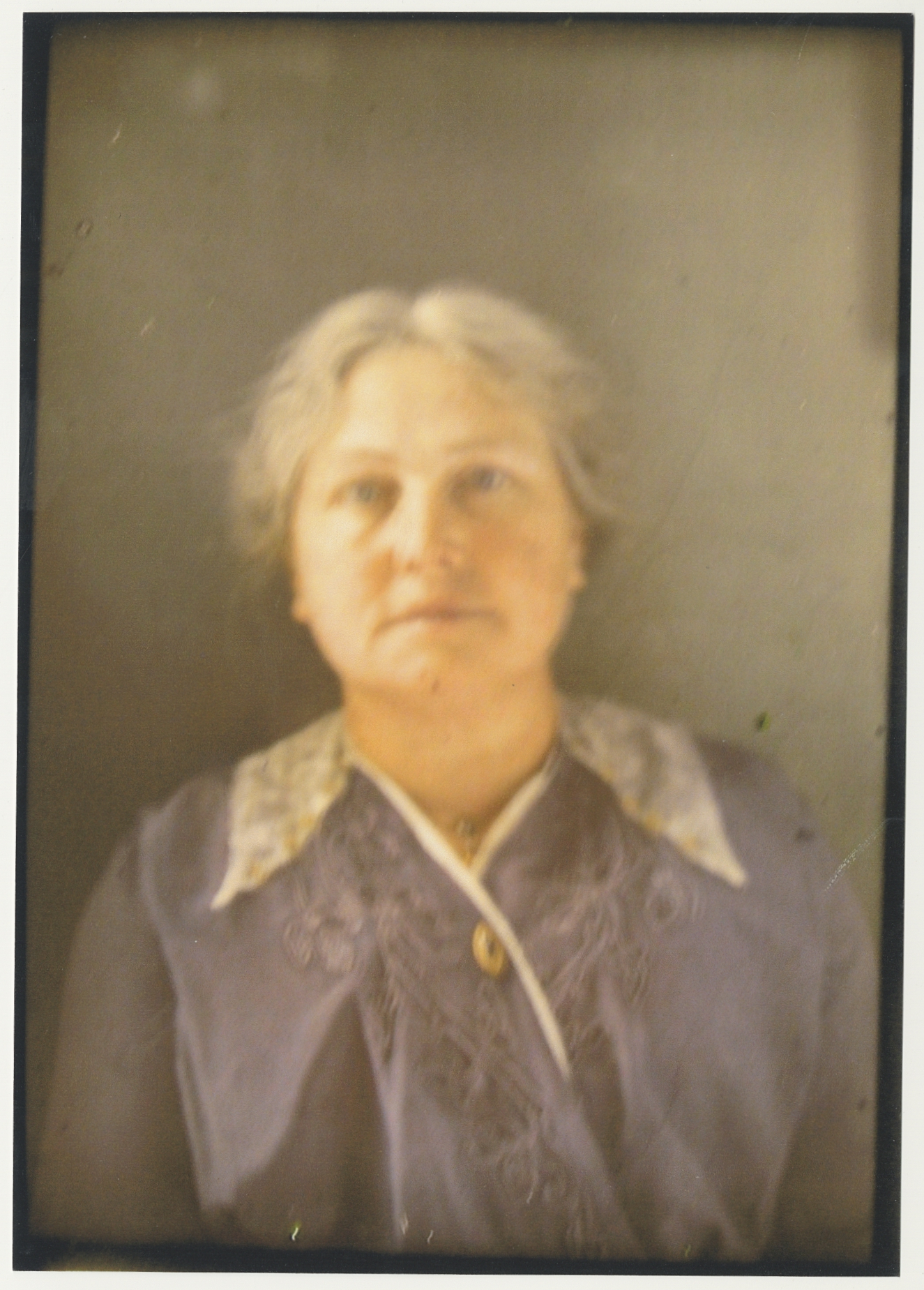
In 2016, Mackinac State Historic Parks (MSHP) received a small collection of unusual photographs. What made them so unusual was not the content, but the manner in which they were produced. These were ‘Autochrome Lumière’s’, among the earliest forms of color photography – and this exciting advancement was used right here on Mackinac Island!
What is an ‘Autochrome Lumière’?
 Between 1903-1904, Louis and Auguste Lumière patented their revolutionary new process of color photography and released it to the world in 1907 at the Paris Photo Club. The technique quickly gained popularity among photo enthusiasts across the globe, as well as artists who were drawn to the hazy, almost dreamlike quality that these images captured. Its speed and efficiency allowed the average person to access color photography, removing the notion formed by more complex techniques used previously that only professionals were capable of achieving color in their work. Until Kodak’s color film usurped it in popularity 30 years later, this technique was the method of choice for amateurs and professionals alike when color was desired, though it has fallen into relative obscurity in recent years.
How are these photographs produced?
 These images were created by coating a glass plate with, surprisingly, potato starch. This starch was dyed blue-violet, green, and red-orange to form a kind of color filter. Areas between these starch granules were filled with a fine black soot called “lampblack”, then a silver emulsion layer was added over the top of the plate. The prepared plate could be placed into a camera, but unlike traditional images, the glass side was oriented to face the lens so that the light was filtered through the starch dyes before the image could be affixed with the emulsion. The result was a negative, which would then be reverse-processed to form the positive version of the final color-filled image.
Mackinac’s ‘Autochrome Lumières’
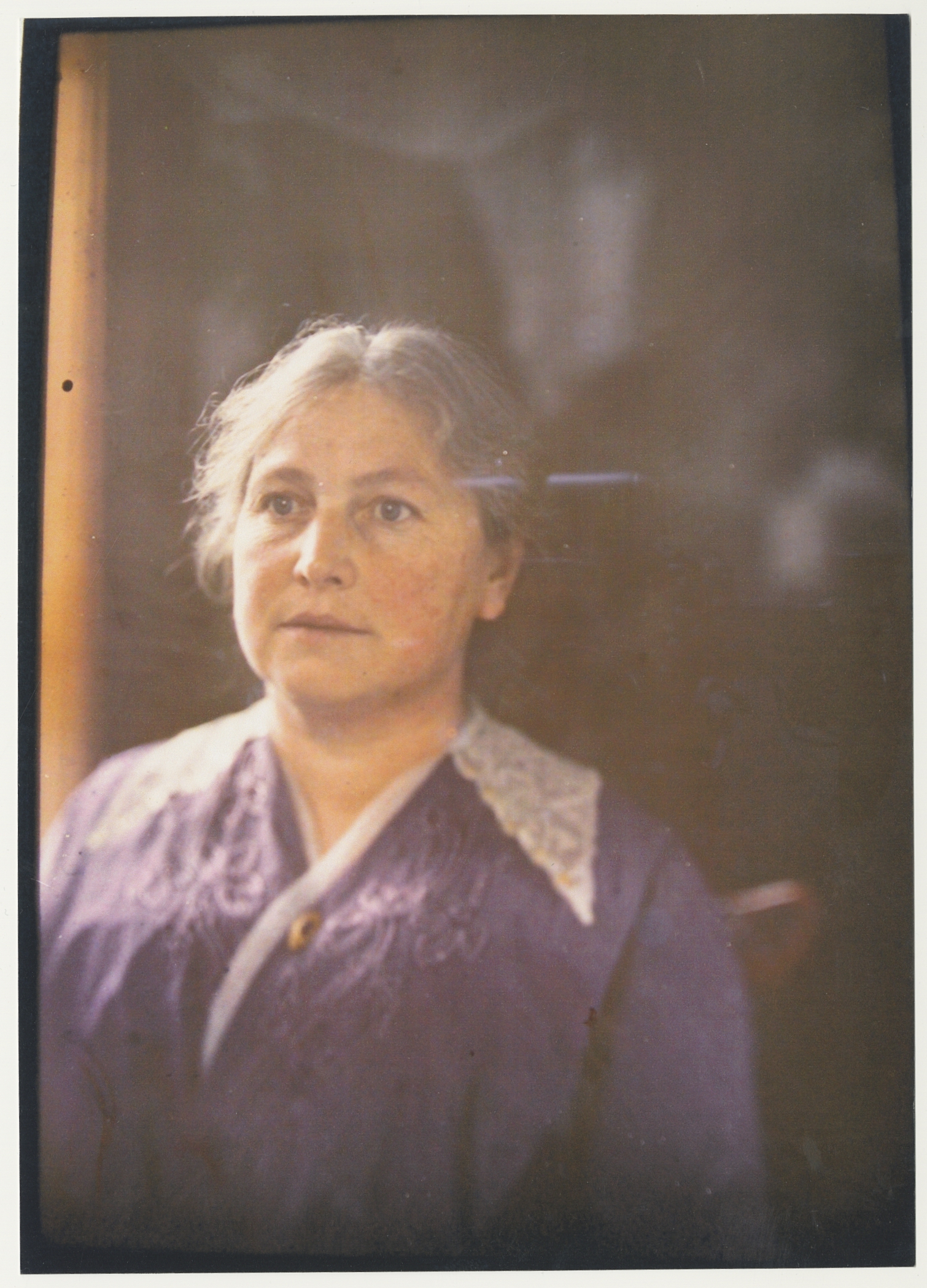 The presence of autochrome technology on Mackinac Island in the early 20th century speaks not only of the ease of the technique that enabled it to be used anywhere in the world, but also of Mackinac’s participation in the exciting early days of early color photography. Furthermore, the photos in MSHP’s collection are uniquely representative of the island itself – they feature the island’s renowned lilacs, captured by the camera lens in their naturally colored glory perhaps for the first time. Several images also depict former island resident Helen Gertrude Eagle Brown (1862-1937) who is buried in Saint Ann’s Cemetery on Mackinac Island.
The ‘Autochrome Lumières’ in MSHP’s collection are not on public display due to their environmental sensitivity and the likelihood that extended display would cause permanent, irreversible damage. However, if you are interested in conducting research on these original autochromes, appointments can be made by contacting Brian Jaeschke, Curator of Collections at Mackinac State Historic Parks. He can be reached by calling 231-436-4100 or emailing JaeschkeB@michigan.gov.
 Dig further into our collections with blog posts here, here, and here. Head over to our collections page on our website to learn even more.
Further reading about autochromes can be found at the Smithsonian Institution Archives.