
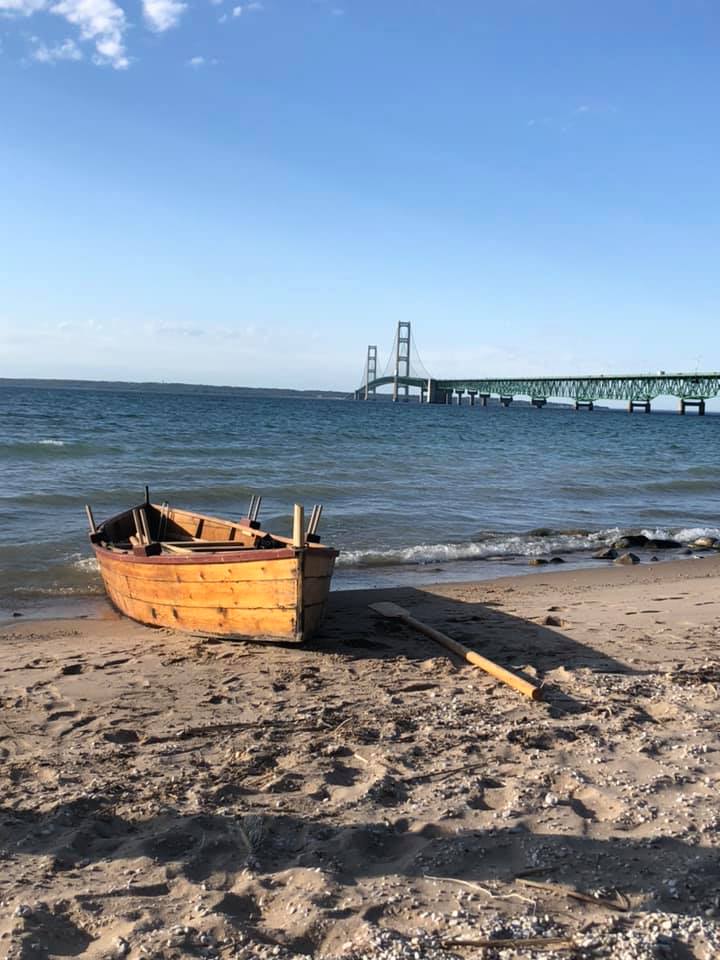
 When people think about the Great Lakes fur trade, they often picture French Canadian voyageurs paddling enormous birchbark canoes loaded with tons of furs or trade goods. Canoes played an essential role in the fur trade and formed a vital link between Michilimackinac and other Great Lakes communities. However, canoes were not the only watercraft on the lakes. Large rowboats known as batteaux carried enormous numbers of people and goods across the region. During the American Revolution, hundreds of batteaux connected Michilimackinac with military and commercial centers to the east and helped sustain the British war effort on the Great Lakes.
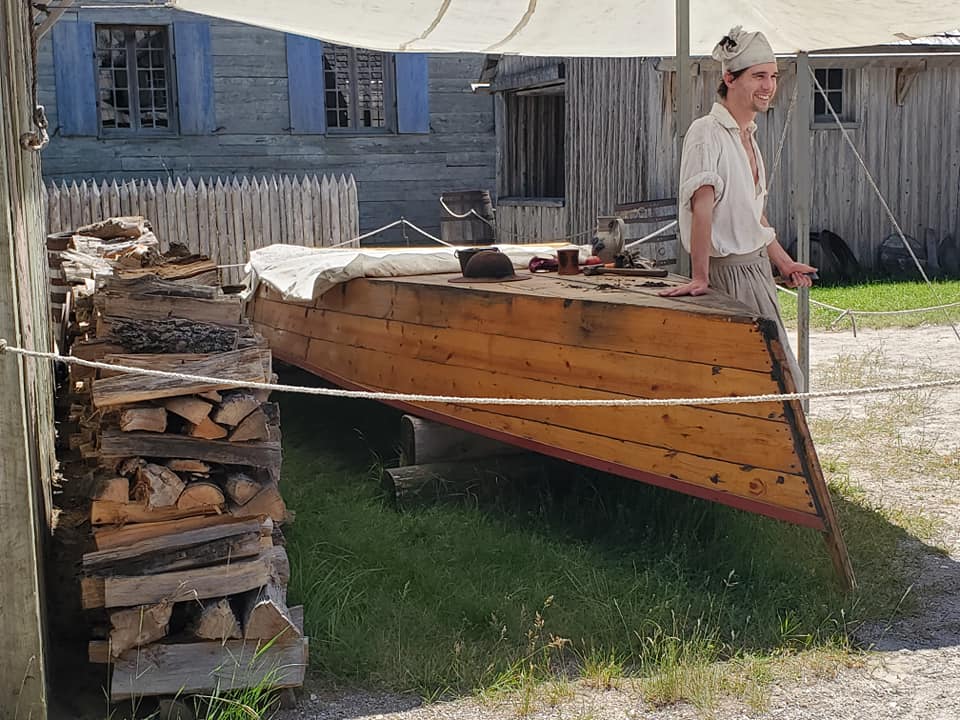
In the 18th century, builders followed few standardized plans when constructing batteaux. Although the British Admiralty relied on a standard 30-foot design for vessels intended for military service in Canada, builders produced batteaux ranging from less than 20 feet to more than 30 feet in length, with regional variations in design. Despite these differences, most batteaux shared common characteristics: flat bottoms without keels, heavy stems at the bow and stern, and butted plank construction. With basic woodworking tools, craftsmen could build a bateau quickly, without the need for skilled ship carpenters or formal shipyards. Crews could paddle, pole, or sail these vessels, but most batteaux relied on large wooden oars for propulsion.
Although canoes and sailing vessels served as the primary workhorses of the 18th-century Great Lakes, batteaux often outnumbered other types of watercraft on lakes and rivers. In 1778, for example, 374 batteaux departed Montreal for Michilimackinac and other western posts, while only 152 canoes left the city for the summer trading season. Individual merchants frequently owned or hired several batteaux. Michilimackinac merchant John Askin, for instance, sent out 10 batteaux in 1777, while trading partners Thomas Smith, William Taylor, and Edward Ripley dispatched 16 more to Detroit and Michilimackinac. A 1778 inventory of Askin’s estate listed both a “Common batea[u]” and a “Small fish [bateau],” likely intended for personal use rather than heavy trade.
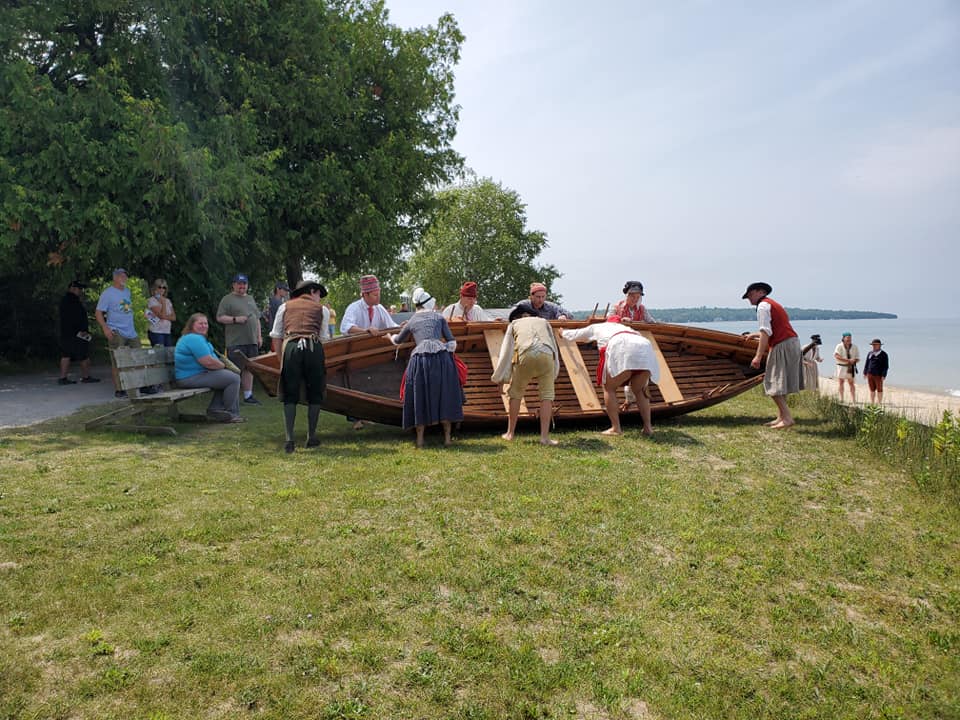 The British military also relied heavily on batteaux to move soldiers and supplies across the Great Lakes and to connect distant posts such as Michilimackinac and Detroit. Because crews subjected these craft to demanding work, they required constant repair and maintenance. In 1771, Capt. George Turnbull received £85 for mending boats, making oars, and burning pitch at Michilimackinac. By 1778, Sergeant Amos Langdon of the 8th Regiment drew nails from the engineer’s stores to repair the King’s batteaux and the wharf. Although batteaux proved more cumbersome than canoes, they could cover long distances quickly. In late September 1778, an express canoe traveled from Michilimackinac to Montreal in 10 to 14 days, while a batteau rowed by eight “active men” could make the round trip by November 10—roughly six weeks. Supplies needed to maintain these vessels, however, often proved difficult to obtain. In 1779, Major Arent DePeyster, Michilimackinac’s commanding officer, unsuccessfully requested pitch and oakum to repair batteaux. A year later, he sent those materials up from Detroit, explaining to Lt. Gov. Patrick Sinclair that they had previously been hard to procure. Boat maintenance could be a thankless task. In 1774, Lt. Col. John Caldwell, commanding the 8th Regiment at Fort Niagara, complained that “The old ones [batteaus] have been so often repaired since I came here that it is throwing money away to attempt repairing them again.” Apparently, the old adage about a boat being a hole in the water dates back further than many expect.
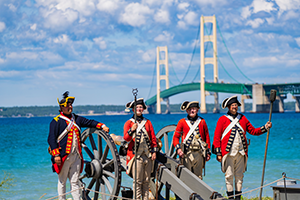
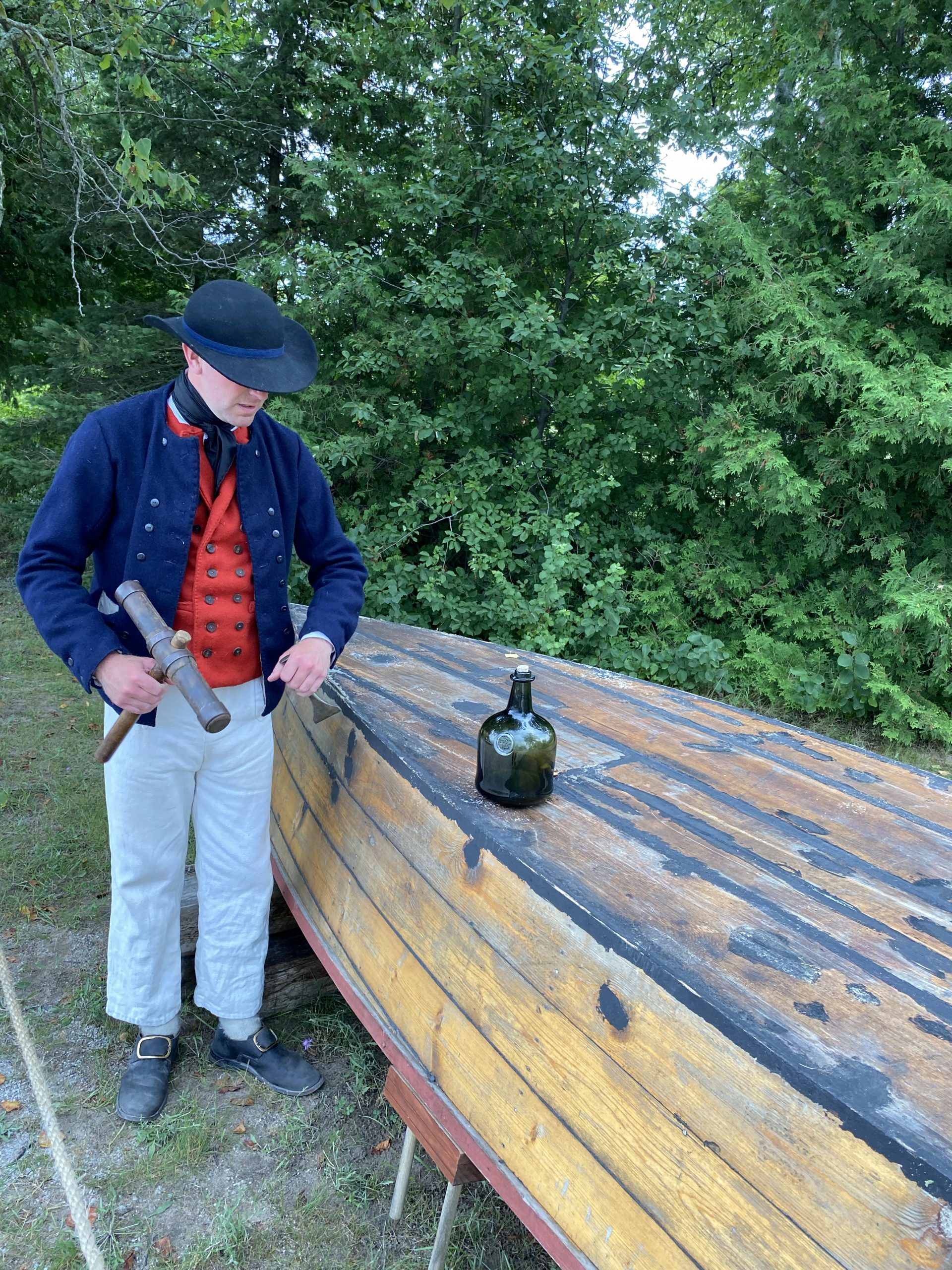 Today, Colonial Michilimackinac maintains two batteaux as part of its small interpretive fleet, alongside a 28-foot north canoe and a 35-foot Montreal canoe. Interpretive staff use these vessels to demonstrate the vital relationship between Michilimackinac and the surrounding waters of the Great Lakes, maintaining the boats and operating them during special events. This summer, Maritime Michilimackinac will focus on the roles and daily labor of Revolutionary-era sailors, voyageurs, and others who worked to keep Michilimackinac connected to the wider world by water. Weather permitting, staff will take these boats onto the water, and we hope you will join us for this special event.
Further reading: Welcome Back, Welcome’s Boat!