



“The scenery of the island is remarkably fine…” C. Donald MacLeod, October 1842
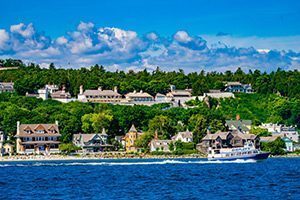
The autumn season at Mackinac is in full splendor by October. Trailing flocks of sandhill cranes fly overhead, migrating south for winter. On the ground, nearly 70 miles of roads and trails meander through mixed woodlands. Biking along Leslie Avenue feels like gliding through a kaleidoscope of scarlet maples, russet oaks, yellow birch, and rich evergreens.
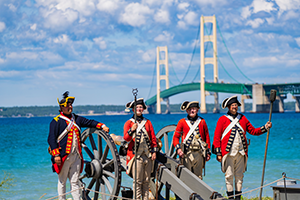
Most historical accounts and illustrated scenes of Mackinac Island originate from the busy summer tourist season. A few notable exceptions stand out, however, and are summarized below.
Capt. Henry Francis Ainslie (1803-1879)
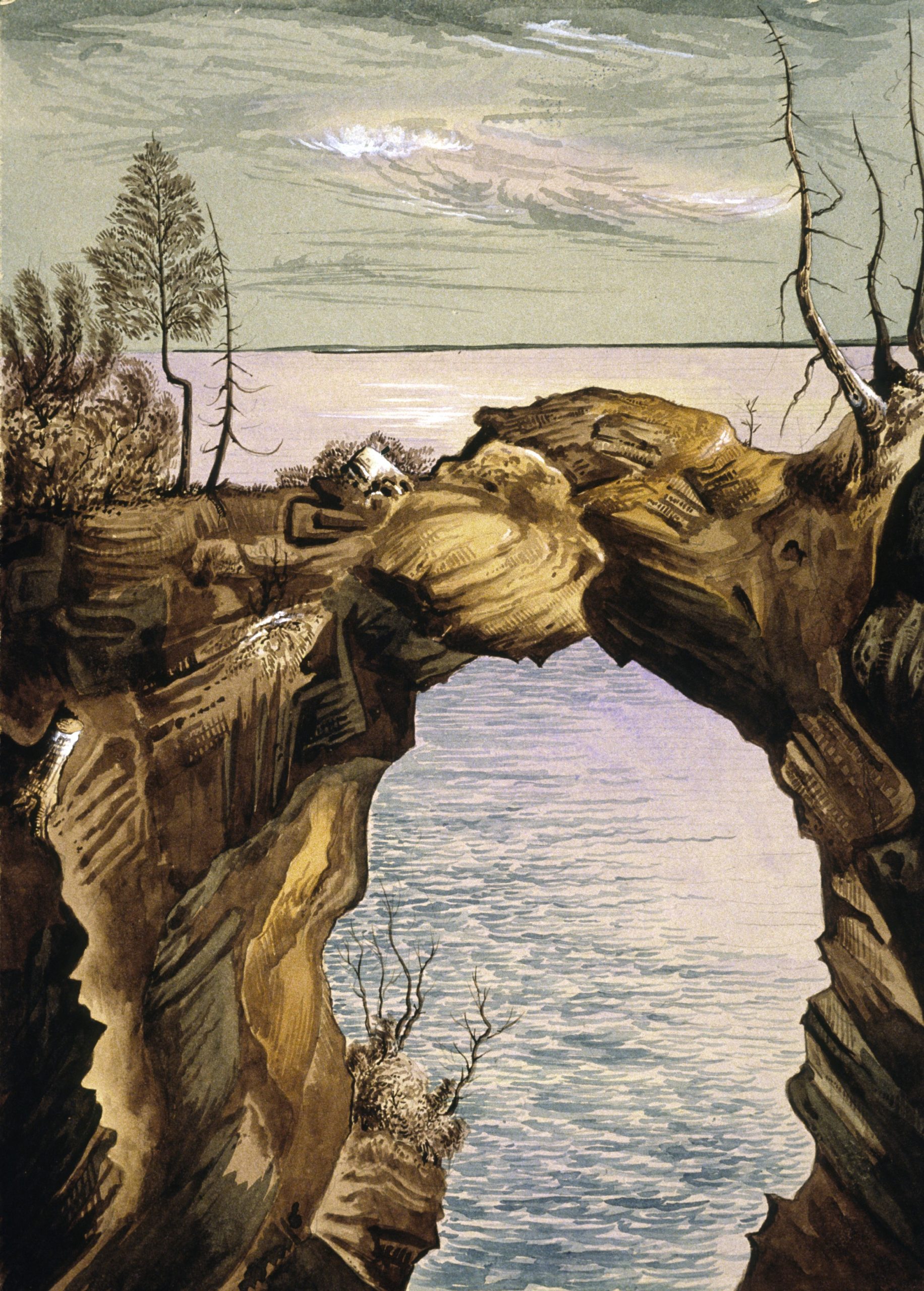
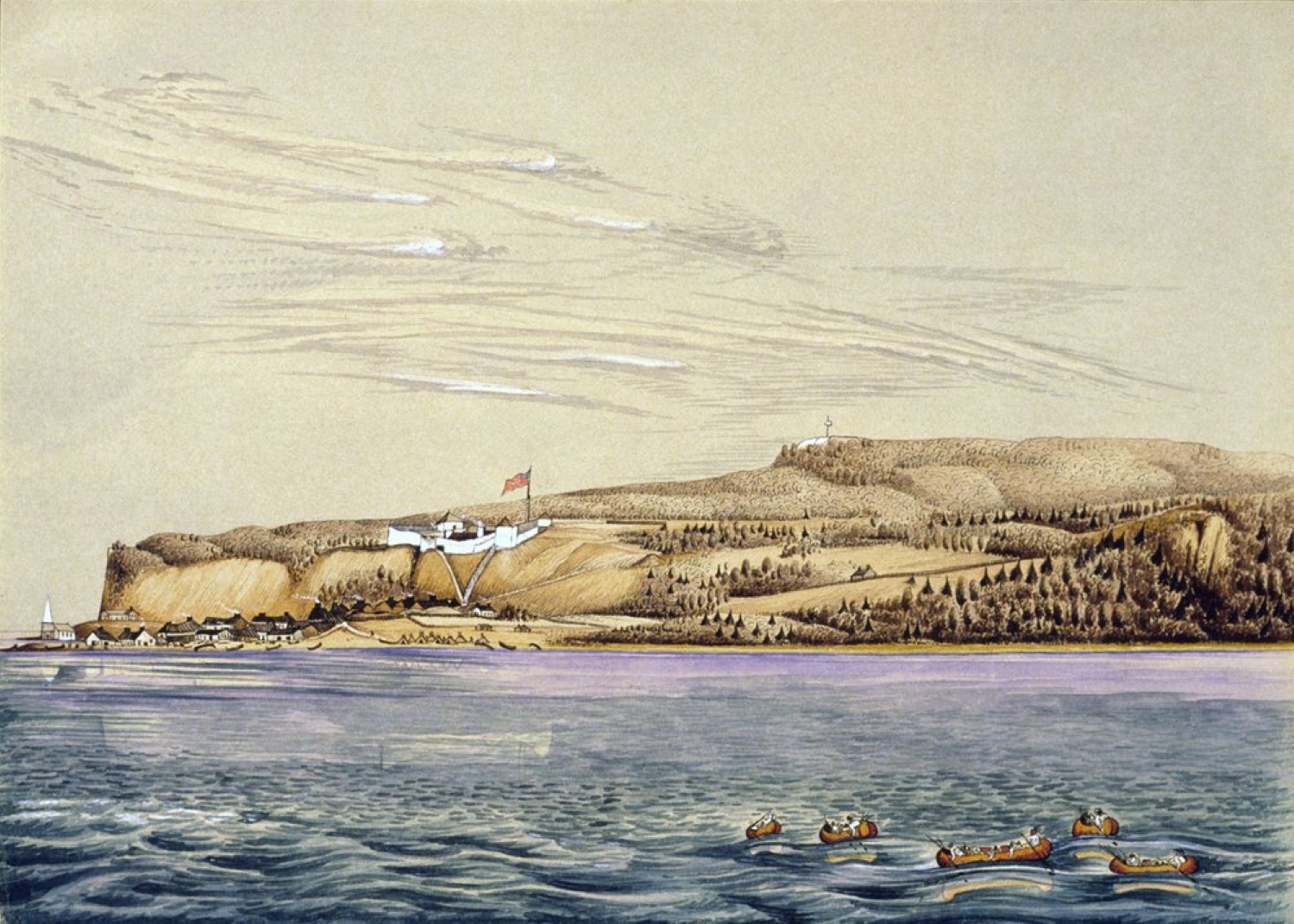
Henry Francis Ainslie visited Mackinac Island twice, in September and October 1842. The British officer had served in North America since 1834. His fall tour of the lakes was a pleasure cruise which included Sault Ste. Marie, Mackinac Island, and ports along the Lake Michigan shore. Though lacking bright colors, his subdued watercolor paintings hint at the changing autumn scene. They also illustrate Anishnaabek encampments along the shore, Arch Rock, and the white walls of Fort Mackinac.

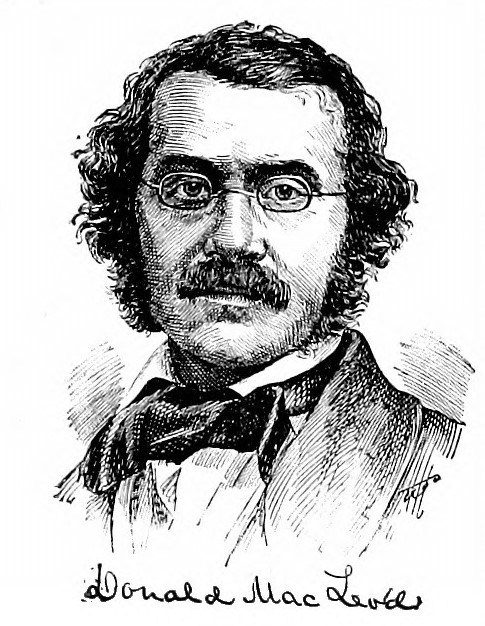
C. Donald MacLeod (1821-1865)
Donald MacLeod traveled through the Great Lakes region “to learn from actual experience, the home life and customs of the Indians.” His essay, “A Saunter in the North-West” detailed his autumn journey of 1842. MacLeod’s steamer landed at Mackinac Island about 2:00am on October 11, 1842. He wrote, “The scenery of the island is remarkably fine. This Autumn time had clad the forest with a thousand hues; and ever, between the cri[m]son-leafed maple, the purple and gold ivy and be[e]ch, and the green eternal cedar and balm dropping pine, the naked rocks start out.”
Like most visitors, MacLeod was particularly impressed by his visit to Arch Rock. He wrote, “The greatest ‘lion’ of the island is the Arch Rock, A huge limestone formation, and a really splendid specimen of natural architecture … From the top, the view is magnificent. On one side the Autumn forest, beyond which gleam the white turrets of the Fort: in front, below you, glimmer the waters of the straits, and over them, you see stretching far away, the dim outline of hills upon hills.”
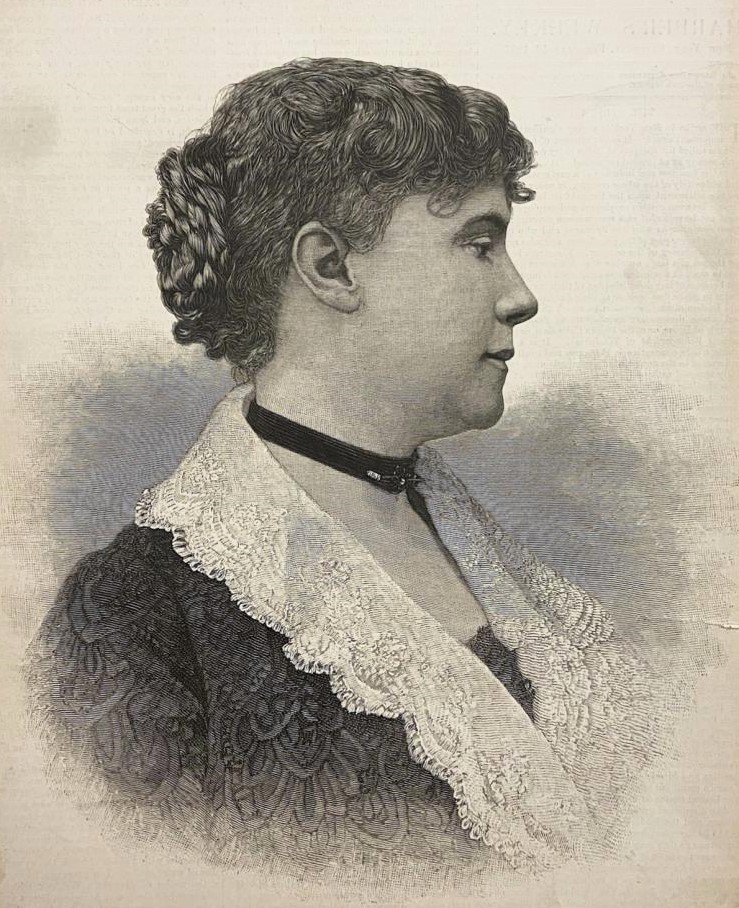
Constance Fenimore Woolson (1840-1894)
One of Mackinac’s most beloved authors, Constance Fenimore Woolson was a popular novelist, poet, and short story writer. Anne’s Tablet, a bronze sculptural plaque, was installed near Fort Mackinac in 1916 as a tribute to the author and her many works. Born into a prominent Cleveland family, Constance spent portions of her youth on Mackinac Island. Her essay, “The Fairy Island” (1870) recalled when the Woolson family stayed into the autumn of 1856. The full piece also describes a terrible September storm which caused numerous wrecks and loss of life throughout the Upper Great Lakes. She wrote:
“The summer guests at Fairy Island begin to take their departure as soon as the harvest-moon has waned; they fear the treacherous waves, and sail home over a summer sea, before the first Fall wind comes blowing from the west … After these trying days came the glowing beauty of the Indian summer, when the deep-blue sky, the purple haze in the air, the shining water, and the gorgeous autumn tints on the trees, made up a picture of rich coloring unknown in any other portion of the world.
We climbed to old Fort Holmes, and saw the whole of Fairy Island clad in maple, orange and scarlet, green pine and russet oak; we noted Round Island and Bois Blanc, like gay bouquets in the still water; we breathed the hazy air, all filled with gold-dust. Descending from the heights, we wandered through the painted woods, and brought home glowing branches to deck our cottage walls. But day by day the bright leaves fell, and day by day we piled the logs higher and higher upon our hearthstone, until, at last, we could no longer deny that
“The seasons come and go
Scarce apprehended;
Though bright have been its flowers,
Summer is ended.”
RELATED:
Autumn Berries of the North Woods
Experience History, Nature and Fun at Mackinac State Historic Parks