





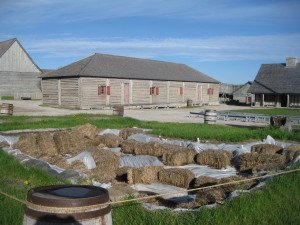
With the summer season rapidly approaching, another archaeology field season is upon us. Even though we are continuing where we stopped last August, there was some preparation necessary before we began excavating again. At the end of each season we line the site with plastic and straw bales to protect it from the weather over the winter. In the spring we have to remove all of this. This process began May 26. Then we re-established the grid strings we measure from, put out our water-screening stations and organized the other field equipment and supplies. Most of the crew arrived June 1, and after a few days of orientation and training, the field season was fully underway June 4.
 This summer we will be continuing the excavation of House E of the Southeast Row House. This row house was built in the 1730s. According to the maps we have it was always a fur trader’s house. In 1749 it belonged to a man named Charles Henri Desjardins de Rupallay de Gonneville. He is known to have traded at Michilimackinac from 1727 to 1754. He was married to Marie Charlotte Leriger de Laplante. Her sister, Marie Catherine, lived next door in House F, the end unit of the row house, with her husband, Rene Bourassa, a sometime business partner of Rupallay de Gonneville.
The 1765 Magra map indicates that at that time it was an English trader’s house. We have not excavated many English traders’ houses, so one of the big questions we are trying to answer with this excavation is how does an English trader’s house look different from a French trader’s house. We have been working on this project since 2007, and are only about half done. One of the big differences we have noticed already is the number and variety of ceramics we have found. This trader has more ceramics and more kinds of ceramics than most traders at the fort. We have also found clusters of trade goods such as fishhooks and hawk bells.
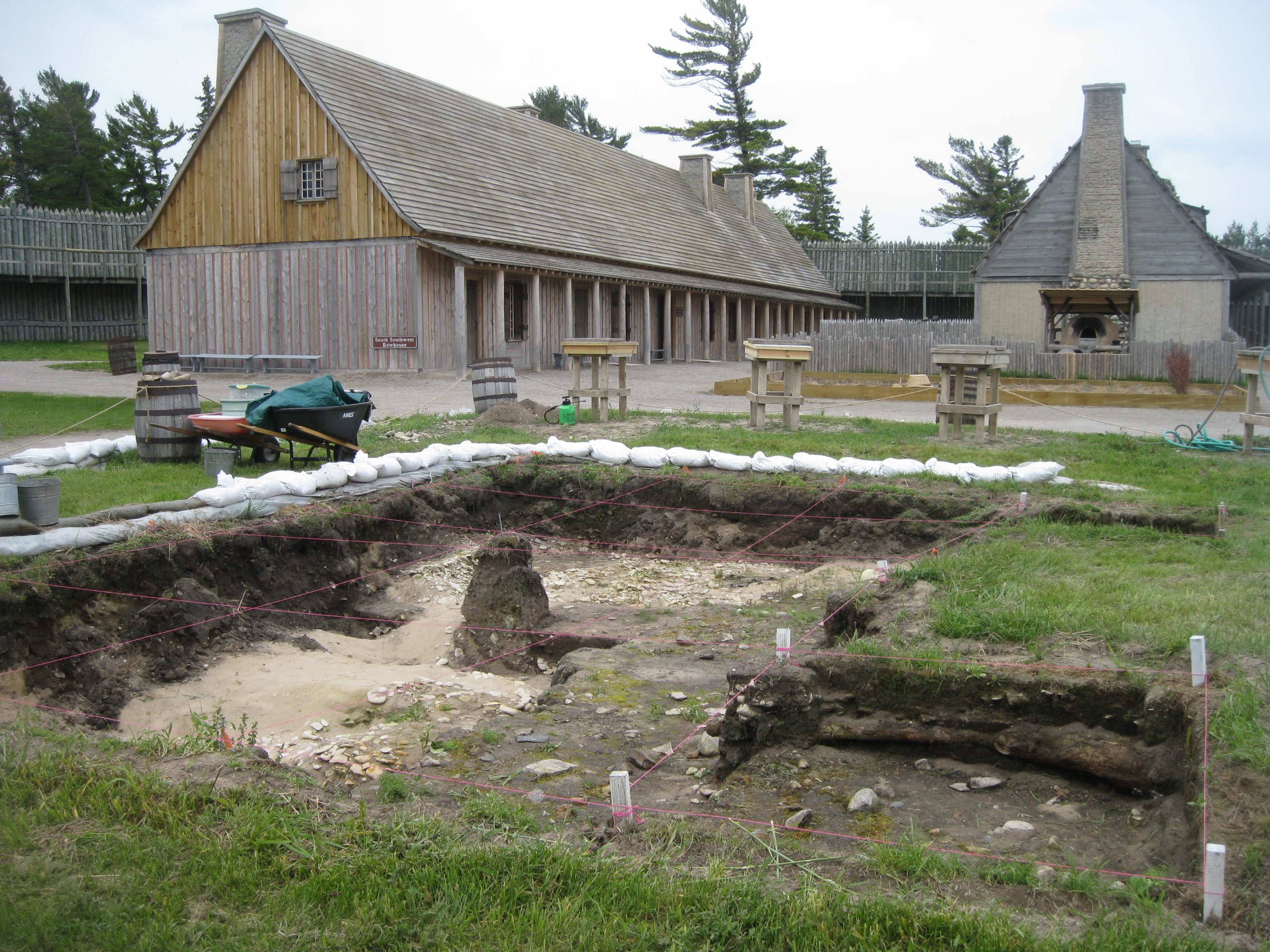 This summer we will be completing the excavation of some pits in the south yard and continuing excavation of the interior of the house. Our site is located in the middle of Colonial Michilimackinac, and the excavation will be taking place seven days a week, weather permitting, until August 22. You can watch the archaeologists work and ask them any questions you might have. We find small items, such as fish bones from the trader’s meals, seed beads and broken glass every day. If you are lucky you might visit on a day with a larger find, such as a button or cuff link.